
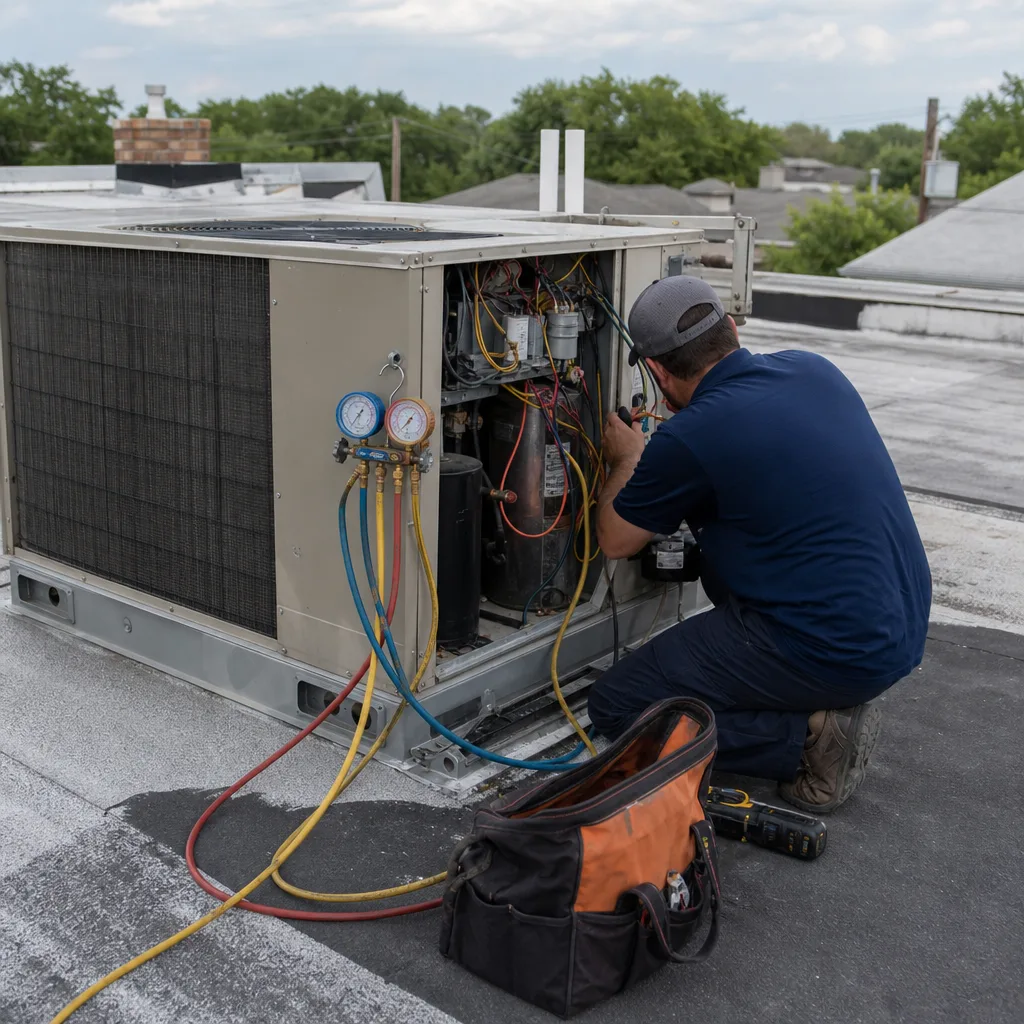
Last updated October 16, 2026
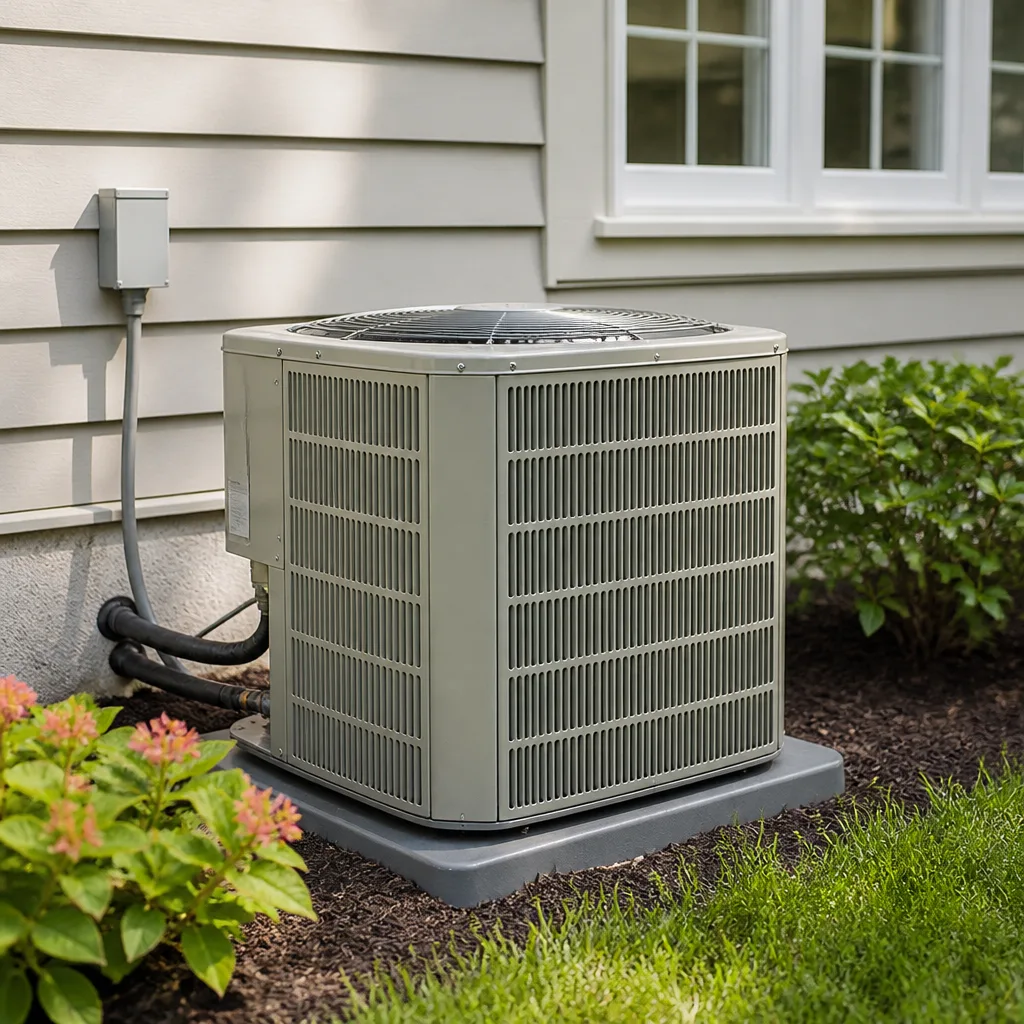 AC repair
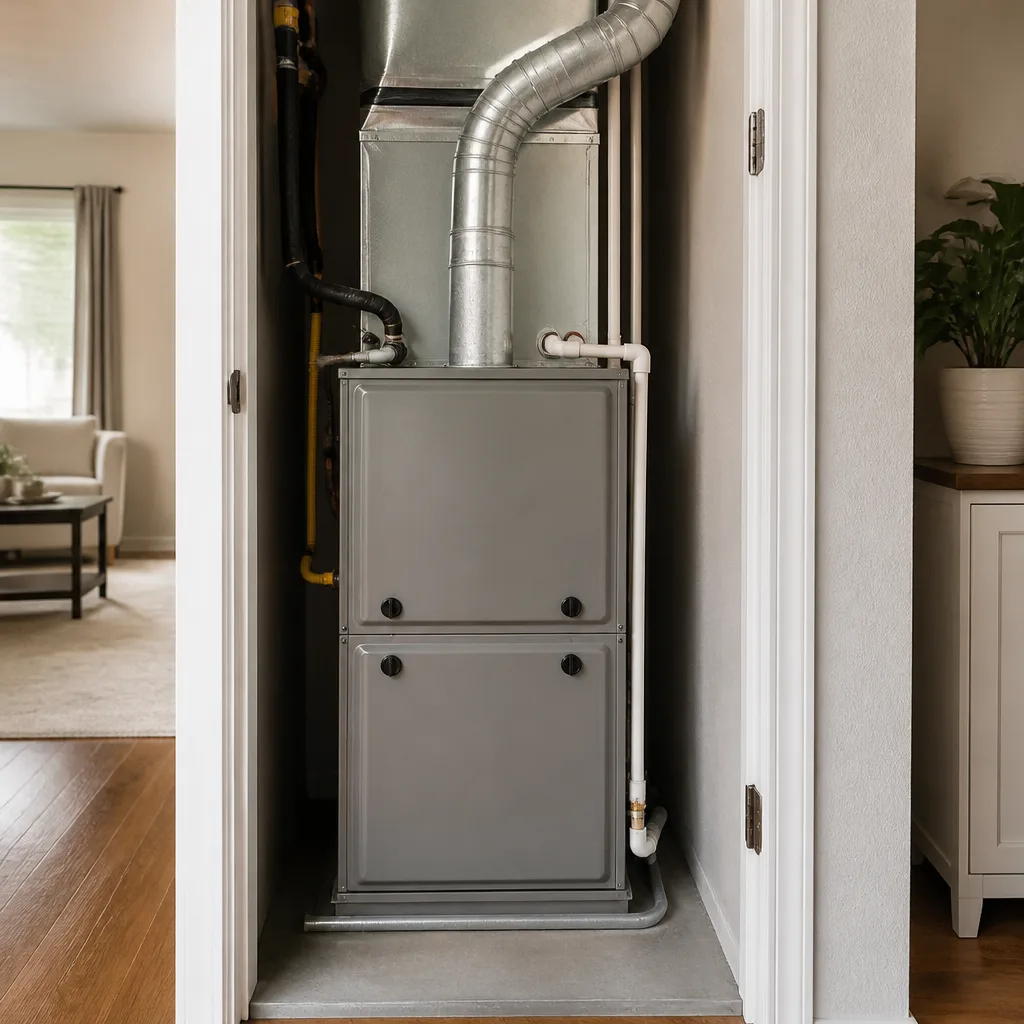 Furnace & heating
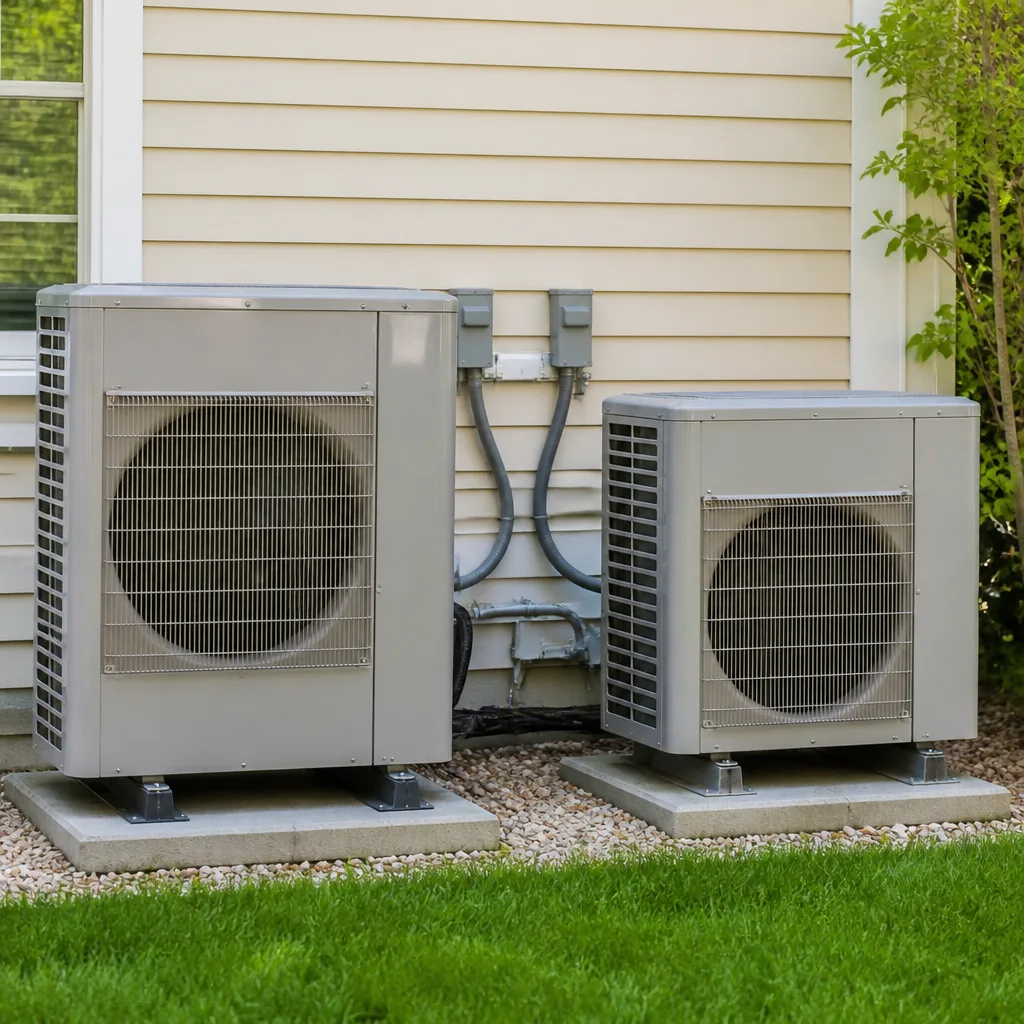 Heat pumps
 Ductless mini splits
 Carrier
 Trane
Trane Goodman
Seasonal tune-up and full diagnostic on your Carrier, Trane, or Goodman system - readings shown to you before any repair is proposed
Diagnosis first, numbers second - you approve the repair price before a single part goes in.
Get your free estimateHVAC Permits, Codes & Inspections in TX: What You Need to Know
In 2022, a Dallas homeowner listed their house in Lake Highlands and accepted an offer within a week. The inspection should have been routine. It wasn’t. The buyer’s agent pulled the city’s permit history and found an AC replacement from four years earlier with no permit on file. The deal didn’t close at the negotiated price. The seller paid for a retroactive permit, a city inspection, and $1,200 in ductwork corrections to bring the system up to code. The HVAC equipment was fine. The missing paperwork was the problem. In Dallas, permits aren’t just bureaucracy. They’re the difference between a clean sale and a deal that unravels at the inspection table. This guide explains what actually requires a permit in Dallas and surrounding cities, what the codes say in plain English, what inspections involve, and what it costs you when a contractor says “we don’t need one for this job.” For more guides & resources on protecting your home, explore our blog.
Quick Answer
In Dallas city limits, a mechanical permit is required for new HVAC system installations, full system replacements, and any work that involves moving equipment, altering ductwork, or installing a new gas line. Simple repairs, like swapping a capacitor or replacing a blower motor, don’t typically need a permit. If your contractor skips a required permit, you risk insurance claim denials, a stalled home sale, and personal liability for code violations. For exact requirements on your specific job, call the City of Dallas Building Inspection Division or ask a licensed contractor to verify before work begins.
Styles & brands we work with
Table of Contents
- What Actually Needs a Permit in Dallas vs. the Suburbs
- The Codes, in Plain English: IRC Section, Dallas Mechanical Code, and What They Mean for Your Ducts
- What a Dallas HVAC Inspection Actually Looks Like: Rough-In to Final
- The Insurance Risk: What Happens When a Claim Meets an Unpermitted Install
- The Resale Risk: How Missing Permits Kill Home Sales
- How to Check Your Own Permit History in Dallas Before You Buy or Replace
- What a Dallas Mechanical Permit Costs and Who Pulls It
- Common Mistakes to Avoid
What Actually Needs a Permit in Dallas vs. the Suburbs
The City of Dallas uses the 2021 International Residential Code, with local amendments in the Dallas Mechanical Code. The rule that matters most to homeowners is straightforward: if you are installing a new AC system, replacing an existing system in full, moving equipment, or modifying ductwork, you need a mechanical permit. A repair that swaps a failed part for a like-for-like replacement does not. Put a new capacitor in the condensing unit? No permit. Rip out a 12-year-old Goodman system and install a new Lennox unit? You need a permit, full stop.
But here’s the part most guides gloss over: the threshold changes when you cross the Dallas city line. Plano, Frisco, and Garland each operate their own building inspection departments with different interpretations of “repair versus replacement.” In Plano, a condenser replacement alone (outdoor unit only, paired with the existing indoor coil) is generally treated as a repair and doesn’t trigger a permit. In Frisco, the same work often does require a permit because the city views any change to the refrigerant-side equipment as an alteration. Garland splits the difference: a permit is required if the new outdoor unit’s capacity changes by more than 10% or if the evaporator coil is replaced. These differences are not technicalities. They determine whether your home carries an open code issue.
What actually triggers a Dallas permit in practice:
- Full system replacement: New condenser and evaporator coil together, or a furnace and AC replacement, always requires a permit.
- New installation: A first-time AC system in a home that never had central air, or a mini-split added to a garage or addition, requires a permit.
- Equipment relocation: Moving a condenser from one side of the house to another requires a permit because pad placement, setbacks, and refrigerant line routing are all code-governed.
- Ductwork changes: Replacing more than 25% of the existing duct system, adding new supply runs, or installing a new return air drop triggers a permit.
- Gas line work: Any change to the furnace’s gas supply, including adding a new gas line or resizing an existing one, requires a separate plumbing permit.
When a contractor says “we don’t need one for this job,” the right response is to ask one question: “Will you put that in writing on our contract?” Watch how fast the tone shifts. Contractors who routinely skip permits rarely want that statement documented, because the Texas Department of Licensing and Regulation and the City of Dallas both take an interest in contractors who perform work that requires a permit without pulling one.
The Codes, in Plain English: What Dallas Duct, Refrigerant, and Setback Rules Actually Say
The Dallas Mechanical Code doesn’t have to read like a foreign language. Three areas matter for an average Dallas replacement or repair: duct sealing, refrigerant handling, and equipment setbacks. Staying on top of these issues is part of Seasonal HVAC Care for Dallas: Year-Round Homeowner’s Guide.
Duct sealing: The 2021 IRC, section M1601.4.1, requires that all duct joints and seams be sealed with mastic or UL-approved tape, not fabric duct tape. In Dallas, interpretations also require that ductwork in unconditioned spaces (attics, which in Dallas routinely hit 130°F in July and August) be insulated to R-8. When our technicians walk a Dallas attic for a AC maintenance visit, the most common failure we note is duct tape that has dried and peeled, leaving conditioned air pouring into the attic. That’s not just an efficiency problem. It’s a code-compliant installation that has fallen out of compliance, and it matters at resale.
Refrigerant handling: Section 608 of the Clean Air Act, enforced by the EPA, requires that anyone opening a refrigerant circuit that contains R-410A or R-22 hold a Section 608 certification. The City of Dallas piggybacks on this: if a permit is pulled for your AC replacement, the installer must record the refrigerant charge and confirm that the old refrigerant was recovered, not vented. Venting refrigerant is a federal violation. A contractor who vents your old R-22 into the air to save time on recovery is saving themselves about 45 minutes and exposing you to liability you didn’t know existed.
Equipment setback: Dallas code follows IRC M1305.1.3, which requires a 30-inch clearance on the service side of the condensing unit and 30 inches of working space in front of the electrical panel on the unit. In practice, this means your condenser cannot be shoehorned into a narrow side yard where two homes sit 6 feet apart. We regularly see older Dallas bungalows in neighborhoods like Winnetka Heights and Junius Heights where a previous owner squeezed a condenser into a space that technically violates the setback requirement. It passes no inspection that anyone actually performs, and it’s a flag when the house is sold.
What a Dallas HVAC Inspection Actually Looks Like: Rough-In to Final
A Dallas HVAC permit involves two inspection points for a full system replacement, or one for a straightforward swap. Knowing what happens at each step prevents a homeowner from standing around confused while a city inspector works through a checklist. Review our AC Repair Maintenance Checklist for Dallas Homeowners to stay prepared.
Here’s the step-by-step timeline for a typical Dallas full system replacement:
- Permit application: Your contractor files the mechanical permit with the Dallas Building Inspection Division before any equipment is touched. The permit includes the equipment model numbers, the installation location, and the contractor’s state license number.
- Rough-in inspection: If ductwork is being added, modified, or resized, the city sends an inspector after the new duct is hung but before insulation and drywall cover it. The inspector checks duct sizing, hanger spacing (every 4 feet in Dallas), R-8 insulation on supply and return plenums, and that mastic is on every joint. Rough-in typically gets scheduled 1 to 3 business days after the contractor calls in the request.
- Final inspection: After the system is installed and running, the inspector returns to verify proper electrical disconnects, refrigerant line insulation, condensate drain routing to a proper termination point (IRC M1411.3), and clearances around the equipment. In Dallas, the final inspection cannot be scheduled until the rough-in passes, if one was required.
- Permit closure: Once the inspector signs off, the permit is marked “closed” in the Dallas permit portal. This is the document you want a copy of. It’s the single piece of paper that ends most insurance and resale disputes before they start.
Dallas inspection scheduling has improved significantly over the past two years, with most rough-in and final inspections scheduled within 48 to 72 hours of the contractor’s request. In the suburbs, expect Plano to schedule within 1 to 2 days, Frisco within 3 to 4 days, and Garland within 3 to 5 days during peak cooling season, which in North Texas runs from late May through September.
If the inspector fails your installation, the contractor must correct the issue and call for a reinspection. This is where you find out what kind of contractor you hired. A company with a Dallas AC repair track record that pulls permits on every qualifying job treats a reinspection as an obligation to fix promptly. A contractor who doesn’t pull permits simply never has anything to reinspect, which is exactly the problem.
The Insurance Risk: What Happens When a Claim Meets an Unpermitted Install
Homeowners file AC-related insurance claims for two reasons: a lightning strike that damages the compressor, or a secondary event like a power surge or a house fire that involves the HVAC system. In both scenarios, the insurance carrier’s adjuster will ask one question before they cut a check: “Was this system permitted?”
If the answer is no, here’s what typically happens in Texas:
- The claim gets flagged for investigation: Standard Texas homeowners policies, including those written by larger carriers, contain language excluding damage that results from work performed without required permits. The insurance company’s position is simple: if the installation was illegal, the insurer didn’t underwrite the risk of that installation.
- The payout gets reduced or denied: In the most common outcome, the carrier denies the portion of the claim related to the unpermitted system and pays only the damage that would have occurred regardless. A storm-related roof claim where the adjuster discovers an unpermitted AC unit in the attic rarely has the entire claim denied, but the AC-related portion frequently is.
- The homeowner becomes personally liable: If an unpermitted installation causes damage to someone else’s property (a refrigerant line leak that damages a neighboring wall, or a condenser that falls through a rotted deck onto a parked car), the insurer’s denial of the AC portion means the homeowner pays out of pocket.
We’ve walked Dallas homes after these claims and the pattern is consistent: the carrier doesn’t care whether the contractor was supposed to pull the permit. In Texas, the homeowner holds the permit responsibility for work on their property. You can’t outsource that obligation by pointing at the contractor’s invoice.
The Resale Risk: How Missing Permits Kill Home Sales
The Lake Highlands story at the top of this guide isn’t an isolated incident. Dallas is one of the hottest relocation markets in the country, and a meaningful percentage of buyers are moving from states where they expect mechanical permits on every major system. Their realtors pull permit history as a matter of course. When a prior unpermitted HVAC install shows up, three things happen in sequence.
First: the buyer’s inspector flags it in the written report. In Dallas, buyer’s inspectors specifically look for a permit sticker on the electrical panel near the AC disconnect. No sticker usually means no permit. Second: the buyer’s agent requests the seller to close the permit retroactively, which means paying the permit fee, paying a city inspector, and paying whatever corrections the inspector requires. Third: if the seller refuses or the corrections are extensive, the buyer walks. In a 2023 survey of Dallas-area realtors conducted by a local title company, unpermitted work was cited as the reason for 14% of failed resale contracts that involved homes over 20 years old.
The cost to the seller is never just the permit fee. It’s the retroactive inspection, the corrections, the delay, and often a price concession to keep the deal alive. Compare that to pulling the permit on day one: the permit fee was a few hundred dollars and the inspection happened once, on schedule, while the contractor was still on the job.
How to Check Your Own Permit History in Dallas Before You Buy or Replace
Dallas makes this process easier than most homeowners realize. The city’s public permit portal allows anyone to search by address and view building, electrical, plumbing, and mechanical permits going back to the early 2000s. You don’t need to log in, and you don’t need to call anyone.
Here’s how to check a Dallas property’s permit history in under 10 minutes:
- Go to the City of Dallas Building Inspection Division web page and open the “Permit Search” or “Public Search” tool (the city reorganizes its site occasionally; searching “Dallas permit search” from the main city homepage works).
- Enter the property address without abbreviations. Use “Mockingbird Lane” not “Mockingbird Ln.”
- Filter the results by permit type and select “Mechanical.” This shows every HVAC permit associated with the address, including the date, the contractor name, the work description, and the status (issued, closed, or expired).
- If you see a mechanical permit with a “closed” status, the work was inspected and passed. If you see a permit that is stuck in “issued” status from several years ago, it means work was permitted but never given a final inspection. That’s a loose end to resolve before listing.
- If you see no mechanical permit for a system that is clearly younger than 10 years, the system was installed without a permit, unless it was a repair-only job.
Do this before you buy a house, not after. A $50,000 HVAC system replacement is a significant line item, and discovering that the existing system carries an open or missing permit after closing means the problem is now yours. The same check before you replace your own system confirms whether the prior work has any open issues that could complicate your new permit application.
What a Dallas Mechanical Permit Costs and Who Pulls It
A mechanical permit for a residential HVAC replacement in Dallas typically runs $150 to $300, depending on the valuation of the work. The permit fee is a flat fee based on the contractor’s stated job value, not a percentage. Some contractors add a small administrative charge on top of the city fee for the time spent filing and scheduling. In surrounding cities, expect similar fees: Plano runs $100 to $250, Frisco $150 to $300, and Garland $100 to $200 for a standard system replacement.
Here’s the key point: the contractor should pull the permit, not the homeowner. Texas requires that a licensed HVAC contractor perform permitted work, and part of that contractor’s responsibility is filing the permit application and standing for the inspection. If a contractor asks you to pull the permit yourself “because it’s cheaper,” that’s a red flag. In most Dallas-area cities, a homeowner can pull a mechanical permit for work on their own home, but if a contractor is performing the work and they want you to be the permit holder, it usually means they don’t want their name on the city’s records for that job. That’s the kind of arrangement that protects the contractor and exposes you.
Ask any contractor this specific question before you sign: “Will you pull the mechanical permit in your name and list me as the property owner on the application?” The right answer is yes without hesitation. We pull permits on every qualifying job at Brandt HVAC Co Dallas, in our name, with the property owner listed, and we hand the homeowner a copy of the closed permit when the work is done.
Common Mistakes to Avoid
- Believing “like-for-like replacement doesn’t need a permit.” In Dallas, like-for-like component swaps (same brand, same capacity, same location) don’t trigger a permit. But the moment the capacity changes, the equipment moves, or the ductwork is altered, the city considers it new work. A contractor’s casual assurance doesn’t override the mechanical code.
- Not checking the permit history before buying. The single cheapest insurance policy in a Dallas home purchase is 10 minutes on the city’s permit portal. Realtors do it, home inspectors do it, and buyers increasingly do it. Sellers who do it first fix problems at their own pace and cost.
- Accepting “we’ll pull the permit after the work is done.” Dallas requires the permit to be active before work begins. A contractor who installs first and permits later is asking you to trust that an inspector will approve something that was never inspected during construction.
- Using a contractor who suggests splitting the job to avoid a permit. If a contractor proposes installing the condenser this week and the furnace next week “so it stays under the permit threshold,” that’s an attempt to structure around the code. Dallas builders call this “permit gaming,” and it’s not subtle.
- Falling for the “I’ll do it cheaper without a permit” pitch. The savings is typically $200 to $350, which is roughly the permit fee plus the contractor’s administration time. That’s the trade – 300 dollars today for an uninsurable liability that could cost $1,200 in corrections, $2,000 in buyer concessions, or a full claim denial later.
- Not keeping the closed permit document. The permit is not a receipt you can lose. Keep the closed permit with the equipment manual and the original invoice. It’s the document your insurance agent and a future buyer will ask to see.
- Assuming the city will catch an unpermitted job. Dallas doesn’t send inspectors around to random single-family houses checking for recent AC work. The permitting system relies on the person pulling the permit, which means the enforcement happens at resale, at claim time, and during lender-required inspections. By the time it’s caught, the contractor who saved you $300 is long gone.
Frequently Asked Questions
Yes, if you’re replacing the full system (outdoor condenser plus indoor coil, or a furnace and AC combination), you need a mechanical permit from the City of Dallas. Simple component repairs, like replacing a capacitor, contactor, or blower motor, do not require a permit. Your contractor should pull the permit in their name before work starts.
A residential mechanical permit in Dallas typically costs $150 to $300, based on the job value. The contractor pays the city fee and may add a small filing charge. This is a fixed fee, not a percentage of the project cost.
Yes, Dallas allows homeowners to pull a mechanical permit for work on their own primary residence, but the work must still be performed by a licensed HVAC contractor for refrigerant and gas-related tasks. In practice, a reputable contractor pulls the permit in their name because they are accountable for the inspection.
The buyer’s agent or inspector will likely pull your permit history and flag the missing permit. Before closing, you’ll need to pull a retroactive permit, pay for a city inspection, and correct any code violations the inspector identifies. This can range from a few hundred dollars for minor fixes to several thousand if ductwork or installation problems are found.
It depends on the claim type and your policy, but most Texas carriers can and do deny the AC-related portion of a claim when the system was installed without required permits. If the unpermitted system causes damage to a neighbor’s property, you can be personally liable because the carrier denied coverage.
Yes. We pull mechanical permits on every qualifying Dallas job in our name, with the property owner listed, and we provide a copy of the closed permit when the work is done. Call (325) 312-3269 for a free estimate and to confirm whether your specific job requires a permit.
See the difference
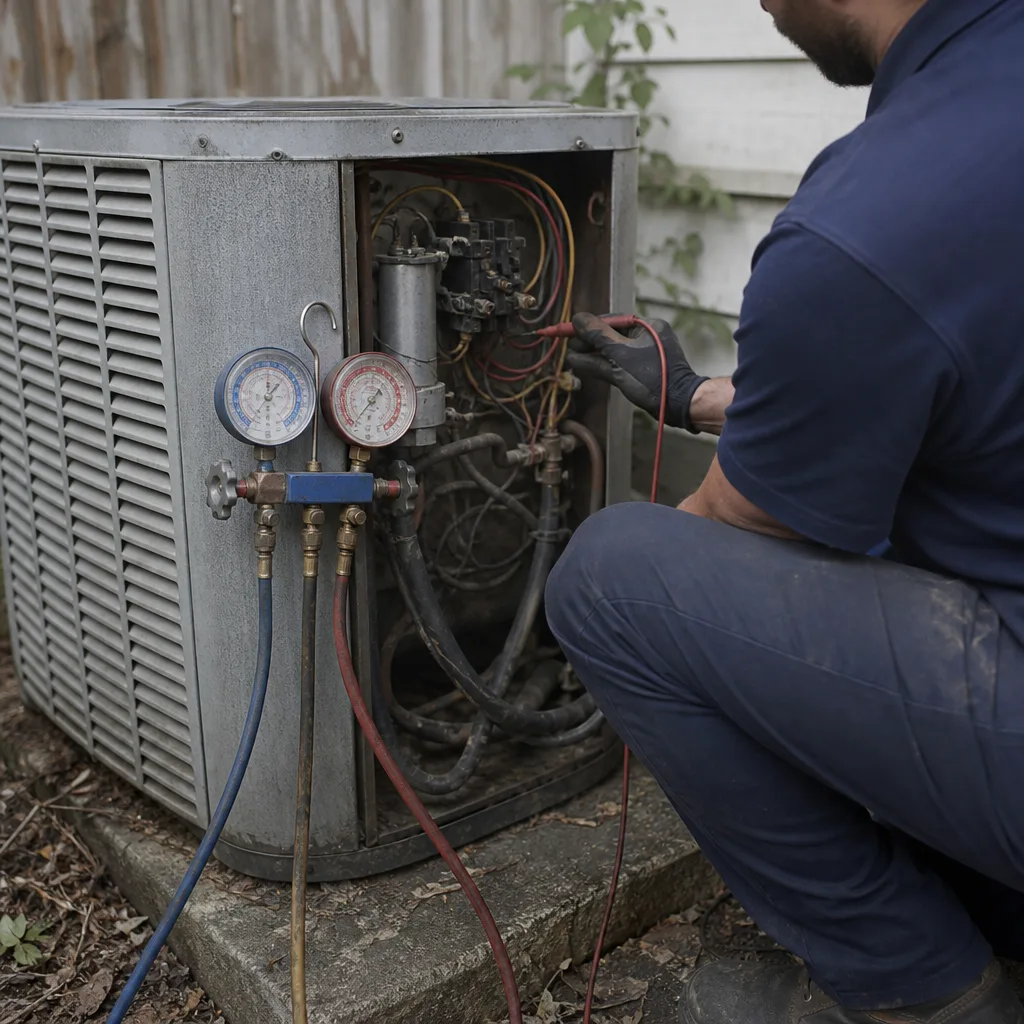 Before
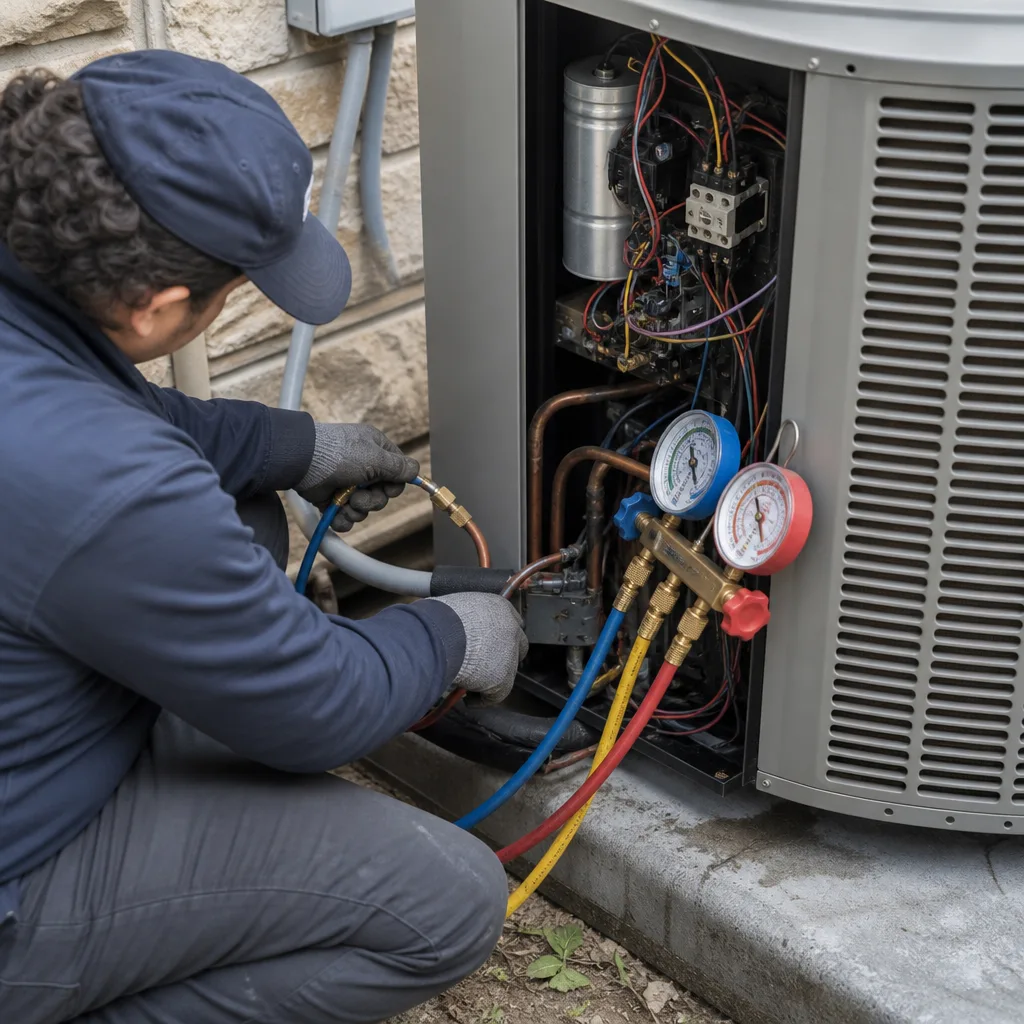 After
After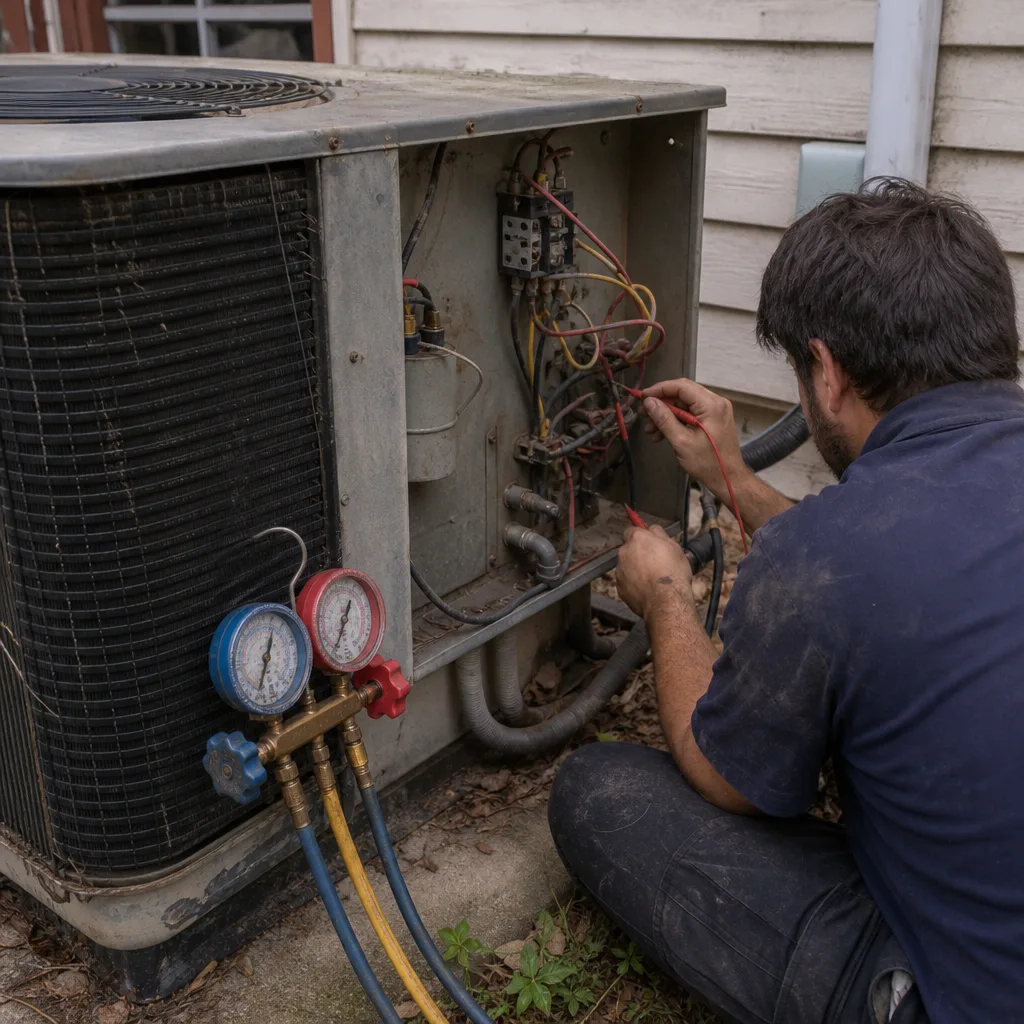 Before
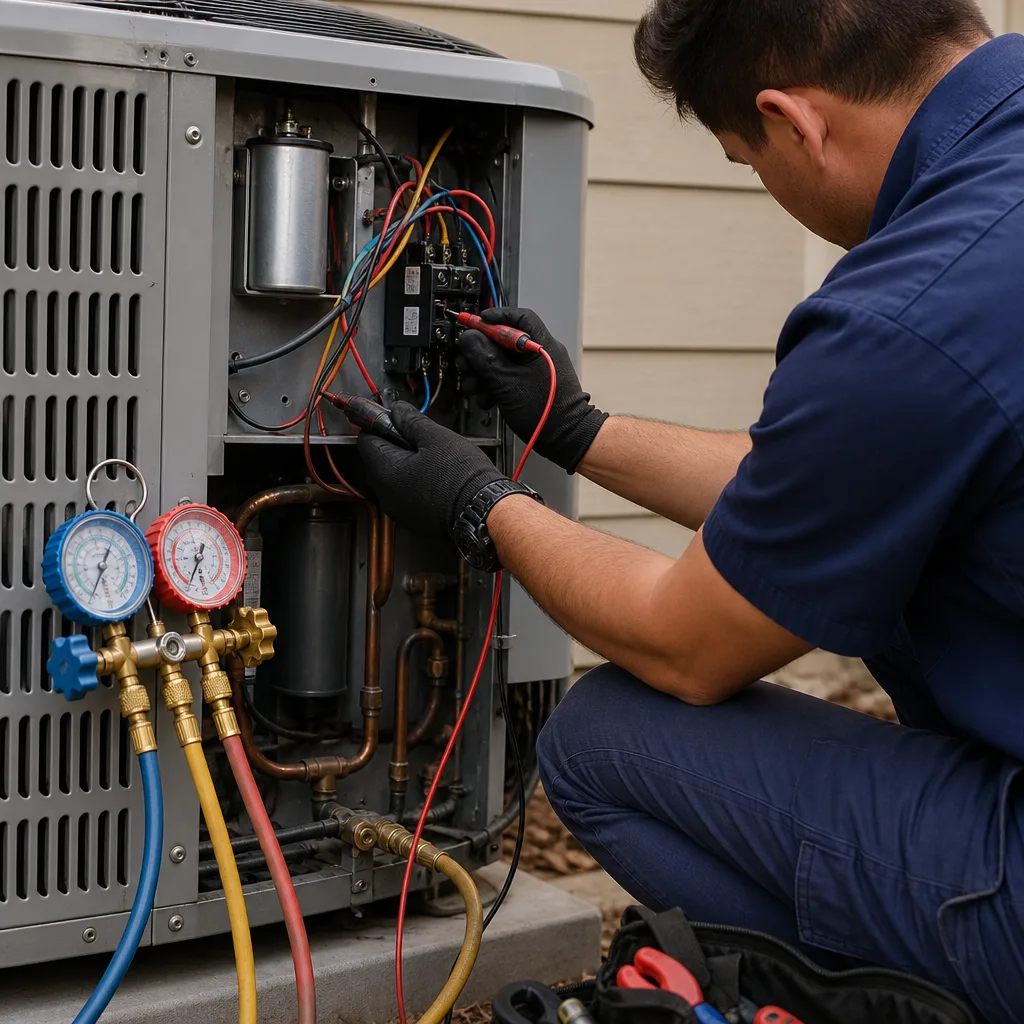 After
After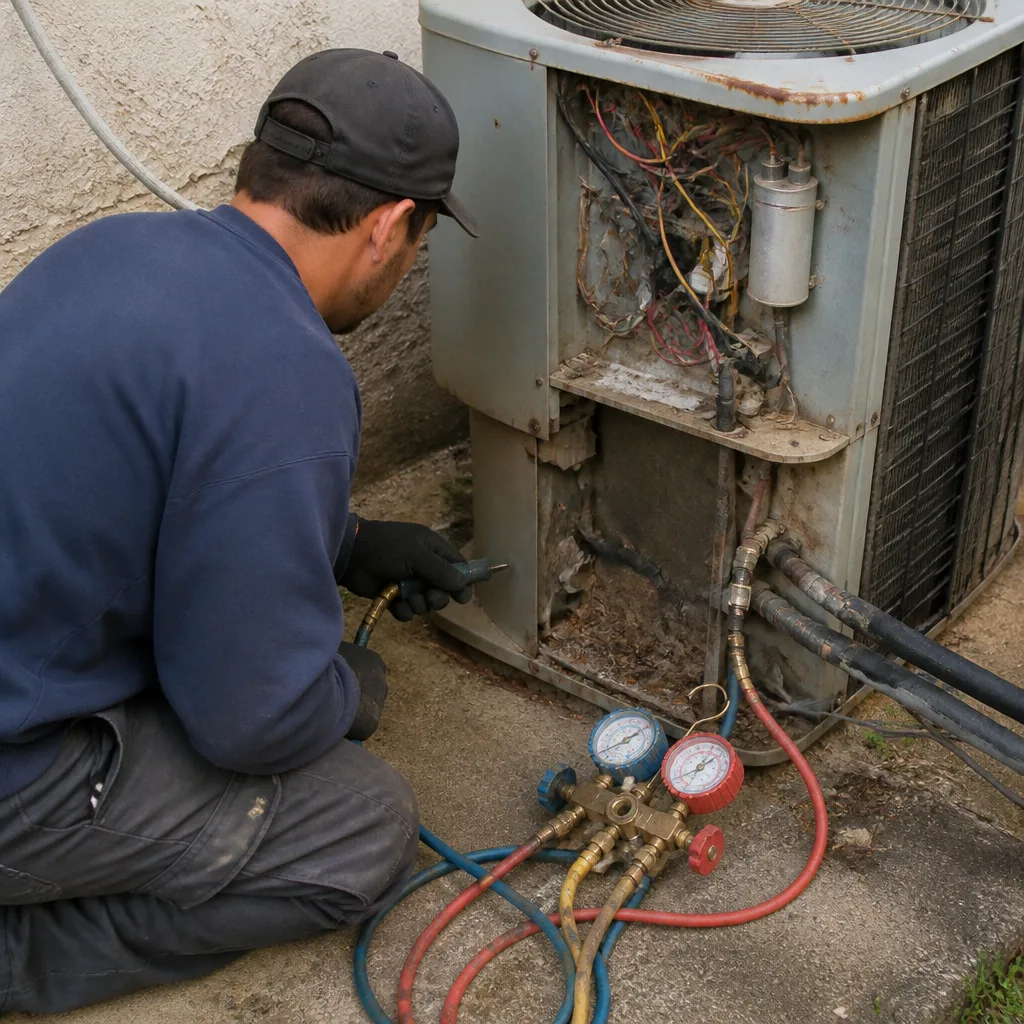 Before
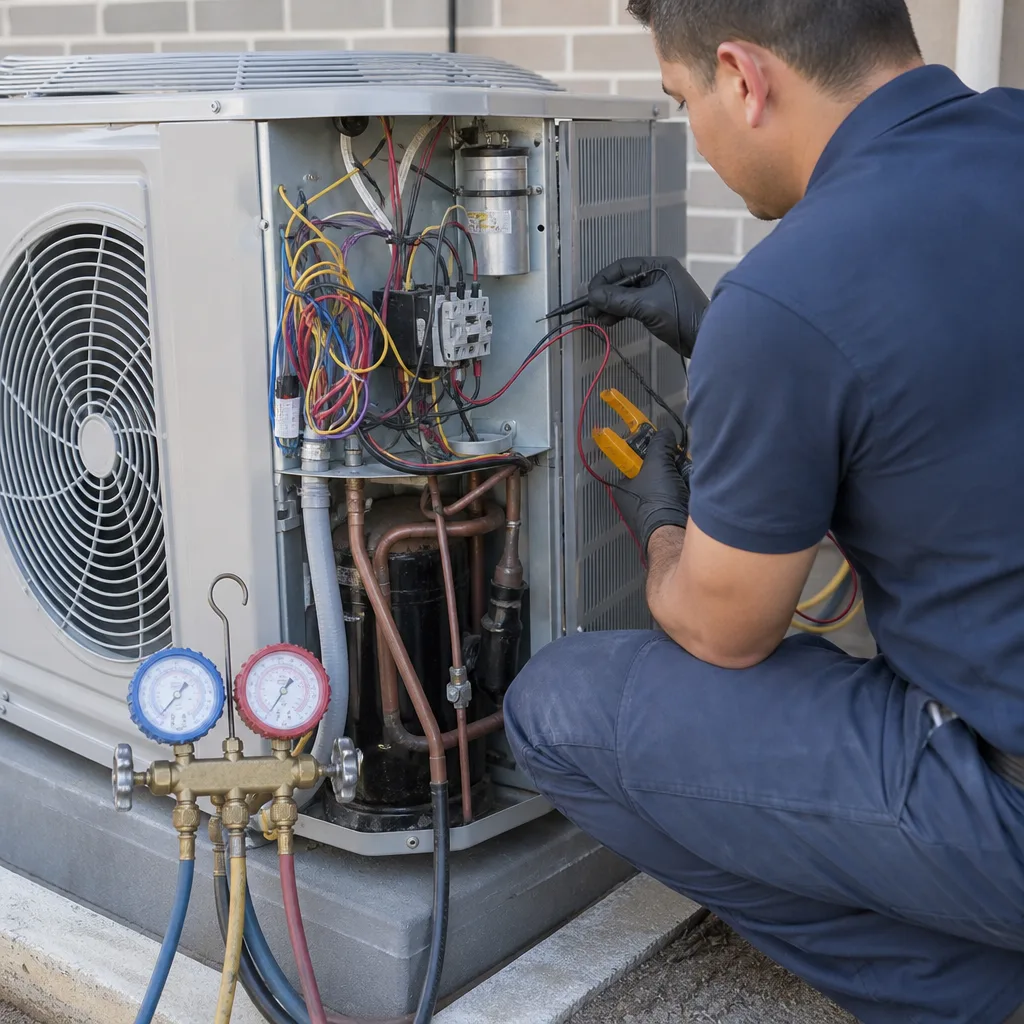 After
AfterWhen to Call a Professional
Any licensed contractor should handle permit paperwork without you ever touching a city portal. But there are specific moments when calling a professional first is the only sensible move: your system is more than 12 years old and you need a repair that’s going to cost more than half the system’s value (that’s a replacement conversation, not a repair); you’re buying a home and the inspection flagged the HVAC system for an unknown installation date; or an AC-related claim was just denied and you need an honest assessment of the system’s actual condition. In those circumstances, a contractor who knows Dallas code and works with the city’s inspection process every week saves you more than the service call. We’ve seen more than a few homeowners spend $400 on a repair that should have been replaced, because no one explained what the inspector or adjuster is actually going to ask about. Furnace repair in Dallas follows the same logic: age, permit history, and code compliance determine whether you repair or replace, and that conversation costs nothing upfront. AC Maintenance in Dallas is where you catch the permission and code issues early, before they become a closing-table problem. Brandt HVAC Co Dallas offers free estimates in Dallas – call (325) 312-3269.
The Bottom Line
A Dallas mechanical permit costs a few hundred dollars. Skipping one can cost thousands. The math is simple if you understand the stakes: unpermitted HVAC work voids insurance claims, complicates home sales, and puts you, the homeowner, on the hook for code compliance. Dallas and its suburbs have different thresholds for what requires a permit, so don’t take a contractor’s word for it. Pull your own permit history from the Dallas portal before you buy or replace. Hire a contractor who pulls permits in their own name and hands you the closed permit when the inspection passes. And if anyone offers to do the job cheaper without a permit, ask yourself what else they’re skipping.
Written by Devin Marlowe, Owner at Brandt HVAC Co Dallas, serving Dallas since 2003.