
Last updated October 16, 2026
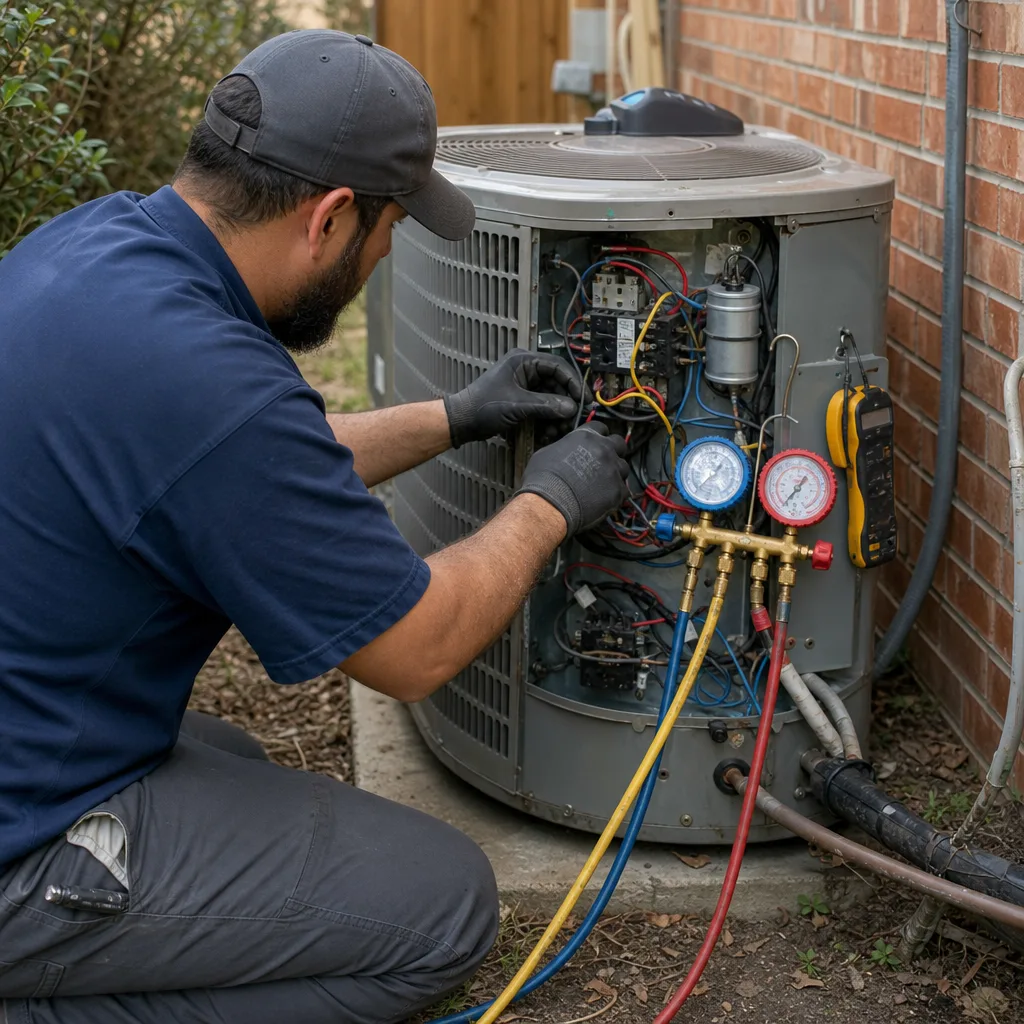
 AC repair
 Furnace & heating
 Heat pumps
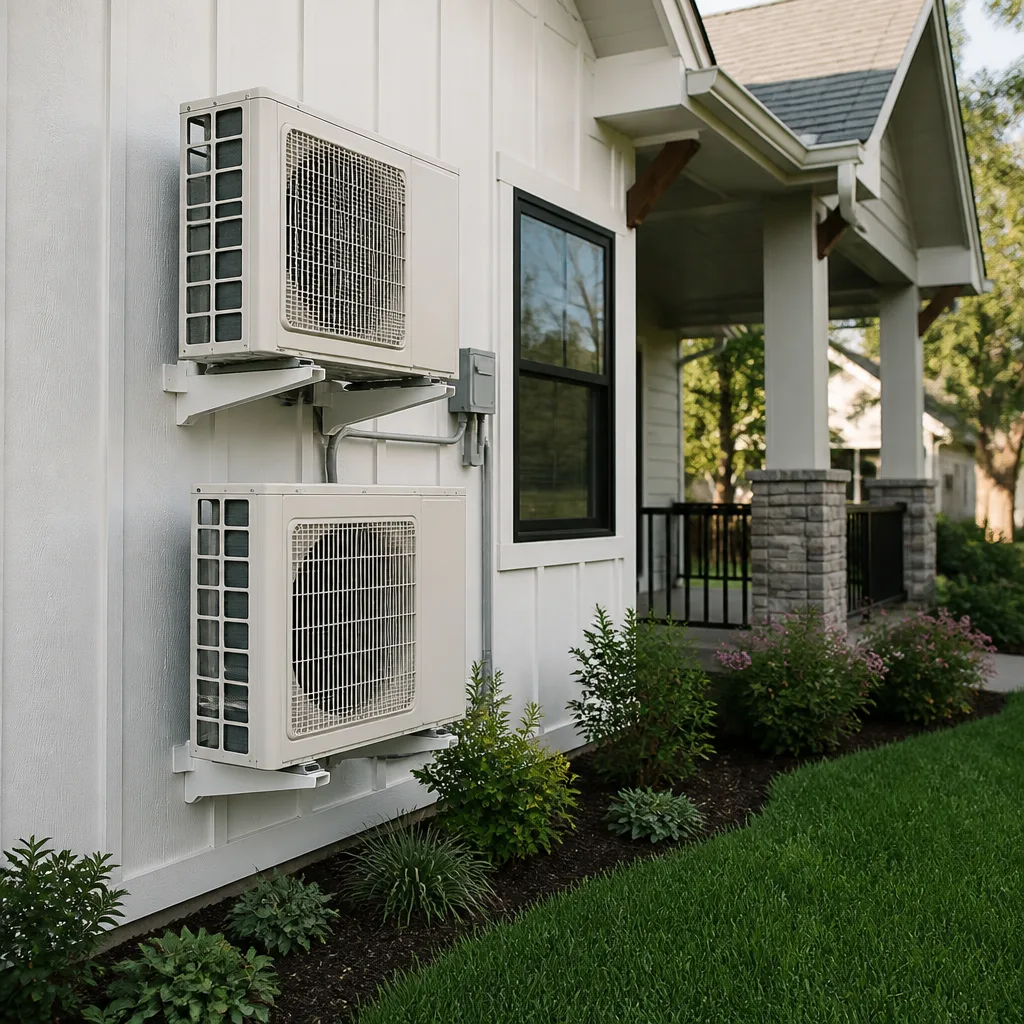 Ductless mini splits
 Carrier
 Trane
Trane Goodman
Seasonal tune-up and full diagnostic on your Carrier, Trane, or Goodman system - readings shown to you before any repair is proposed
Diagnosis first, numbers second - you approve the repair price before a single part goes in.
Get your free estimateHVAC Warning Signs: A Dallas Homeowner’s Reference Guide
Here’s something that surprises a lot of Dallas homeowners: the most common AC failure we see in July isn’t a dead compressor. It’s a dirty condenser coil that should have been cleaned in April. Most HVAC warning-sign guides give you a list of symptoms but never tell you what the symptom actually means, how fast you need to act, or what waiting will cost. This guide is different. We’ll walk you through the warning signs that matter most in Dallas specifically, pair each one with the likely mechanical cause, give you an honest urgency rating, and tell you what it typically costs to fix now versus later.
Styles & brands we work with
Quick Answer
The five HVAC warning signs Dallas homeowners should never ignore are: ice on the outdoor unit in summer, a sudden unexplained jump in your electric bill, warm spots between rooms, sounds you can identify by type (clicking, hissing, or popping), and indoor humidity that won’t drop below 55% when the AC is running. Any one of these means your system is working harder than it should. The good news: most are under $400 to fix if you catch them early, and at least two of them are things you can check yourself in five minutes.
Table of Contents
- The Dallas HVAC Triage Table: What’s Urgent and What Can Wait
- The Three Sounds Dallas Homeowners Misidentify
- Why Your Electric Bill Went Up: The Dallas-Specific Warning Sign
- Ice on the Outdoor Unit in Summer: Refrigerant or Filter?
- The Humidity Warning Sign Most Dallas Homeowners Miss
- Warm Spots Between Rooms: Duct Problems vs. Equipment Problems
- Short Cycling: When Your AC Starts and Stops Too Often
- Age-Related Warning Signs: Knowing When Your System Is Telling You It’s Time
- Common Mistakes to Avoid
- When to Call a Professional
- Frequently Asked Questions
- The Bottom Line
The Dallas HVAC Triage Table: What’s Urgent and What Can Wait
Not every HVAC warning sign is an emergency. Some need a technician today. Some can wait a week. Some should just be noted for your next scheduled maintenance. Here’s how we triage the most common issues in Dallas, where a July afternoon can hit 100 degrees and waiting too long turns a repair into a health and safety problem.
- Same-day urgency: No cooling at all when outdoor temps are above 90; burning smell from vents; electrical buzzing from the outdoor unit; water pooling around the indoor air handler; any sign of sparking or scorching.
- Within one week: Ice on the outdoor unit (yes, even in summer); airflow that’s noticeably weaker than last summer; a hissing sound from the indoor unit; rooms that stay 5+ degrees warmer than the rest of the house.
- Schedule at next service: Popping in ducts when the system cycles on; a slight musty smell that goes away after the first 10 minutes; outdoor unit that looks dusty but is still cooling; a $15 – $25 monthly electric bill increase you notice in spring.
The logic here is straightforward. A system that’s not cooling at all in Dallas summer heat is a health issue, especially for older adults, infants, and anyone with respiratory conditions. Ice on the unit still means the system is producing some cold air, but it’s an efficiency time bomb: left unchecked, it damages the compressor, and compressor replacement is typically $1,200 – $2,500 in the Dallas market. That’s the difference between a $200 service call and a four-figure repair.
The Three Sounds Dallas Homeowners Misidentify
Every AC system makes some noise. The question is which noises mean trouble. In our experience across Dallas, three sounds account for most of the “I think my AC is making a weird noise” calls we get, and each one means something very different.
1. Clicking at startup (capacitor)
You hear a sharp click or a series of rapid clicks when the outdoor unit tries to start, followed by either a hum or nothing at all. That’s almost always a failing capacitor. The capacitor is the part that gives the compressor and fan motor the electrical jolt they need to get moving, like the starter on a car. When it’s weak, the unit struggles to start. Most capacitor replacements in Dallas run $150 – $300, parts and labor included. If you call when you first hear the clicking, that’s a one-hour fix. If you keep resetting the breaker and letting the system limp along, a failing capacitor can damage the compressor, and that’s a $1,200 – $2,500 job.
2. Hissing at the air handler (refrigerant leak)
A steady hiss or bubbling sound coming from the indoor unit, especially with weak cooling and ice forming on the evaporator coil, is the classic sign of a refrigerant leak. The system is losing the fluid that actually moves heat out of your home, so it’s working harder while cooling less. Refrigerant leaks don’t heal themselves. They get worse, and running a low system for weeks is how compressors die. Repair costs vary depending on where the leak is: a leak at a Schrader valve or fitting might be $200 – $400 to repair and recharge. A leak in the evaporator coil can run $800 – $1,600 in Dallas. The free estimate is what tells you which one you’re dealing with.
3. Popping in ducts (thermal expansion)
This is the one Dallas homeowners worry about that usually doesn’t need any repair. When the system kicks on, the warm air inside sheet-metal ducts cools quickly, and the metal contracts, popping. When the system shuts off, the metal expands again. It’s the same physics as a car engine ticking as it cools. If the popping is occasional, happens only in the first few minutes of a cycle, and isn’t accompanied by weak airflow or dust blowing from vents, it’s normal. If the popping is loud, constant, or paired with airflow problems, then you might have a duct that’s come loose, and that’s a different conversation, covered in the warm-spots section below.
Why Your Electric Bill Went Up: The Dallas-Specific Warning Sign
Your electric bill is the most honest diagnostic tool in your house. It doesn’t care what the AC looks like from the outside. It just reports how hard the system is working. In Dallas, where cooling season runs from May through October, a bill that jumps significantly without a matching change in your usage is a warning sign competitors rarely mention.
Here’s the number worth remembering: a 20% increase or more over the same month last year, with no major change in thermostat settings, square footage, or the number of people in the home, usually means an efficiency problem. That’s not your imagination, and it’s not the utility company raising rates. The system is consuming more electricity to deliver the same amount of cooling. The most common causes:
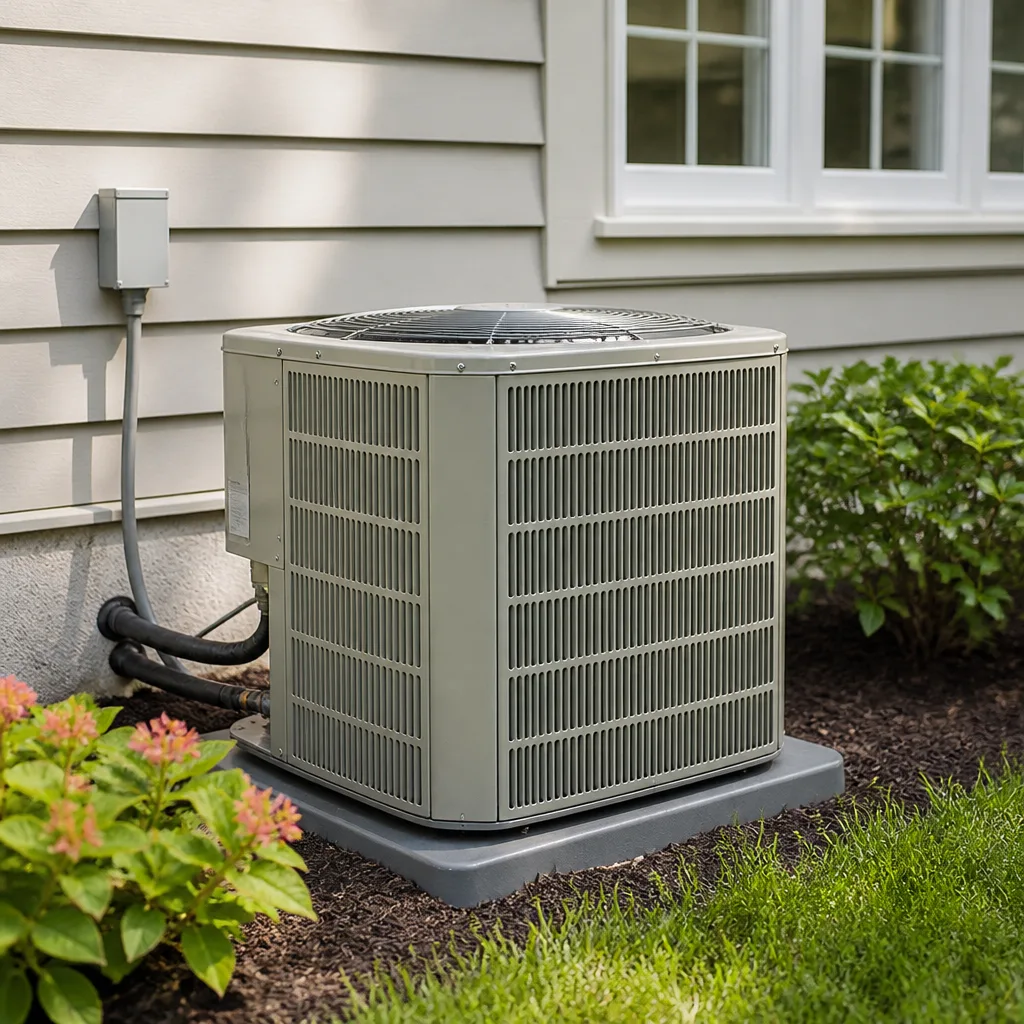
- Dirty condenser coil: The outdoor unit can’t shed heat, so the compressor runs longer and hotter. A professional coil cleaning in Dallas typically costs $100 – $200. Compared to the extra $40 – $80 a month on your bill, it pays for itself in a single summer.
- Low refrigerant: Same story as the hissing sound above. The system runs longer cycles to hit the same temperature, and longer cycles mean more kWh.
- Failing capacitor or contactor: The system starts and stops inefficiently, consuming more power at each startup. Startup is the most power-hungry moment in any cooling cycle.
- Duct leakage: In Dallas, a lot of ductwork runs through unconditioned attics that hit 130+ degrees in August. A separated or leaking duct means you’re paying to cool the attic. This one gets overlooked more than any other because the symptom, a warm room or a high bill, often gets blamed on the equipment instead of the duct.
The practical move: pull up last July’s bill and this July’s. If the difference is more than about 20% and nothing else changed, call for a diagnostic. A good AC maintenance visit in Dallas will catch the cause in the first 30 minutes.
Ice on the Outdoor Unit in Summer: Refrigerant or Filter?
Seeing ice on your AC’s outdoor unit in July feels wrong, like seeing a snowman in your backyard in August. It’s also one of the most commonly misdiagnosed symptoms in the trade, and the distinction matters before you call anyone.
Ice on the component lines or the outdoor unit in summer means the evaporator coil inside is getting too cold, usually below freezing. That happens for two very different reasons, and the fix costs very different amounts.
The dirty-filter version: $15 and five minutes
If your return-air filter hasn’t been changed in months, airflow over the indoor coil drops. The coil gets too cold, condensation freezes, and the ice expands backward through the lines toward the outdoor unit. The fix is a new filter and, ideally, letting the system defrost for a few hours. In Dallas, where dust and pet dander are a fact of life, we recommend checking filters monthly during cooling season and replacing them at least every 90 days. Homes with shedding pets or nearby construction often need 30-day replacement.
The refrigerant version: $200 – $1,600 depending on the leak
If the filter is clean and there’s still ice, the system is low on refrigerant. Low refrigerant drops the pressure in the evaporator coil, which drops the temperature of the coil below freezing, which produces the same ice. The leak has to be found and repaired before the system is recharged; adding refrigerant without fixing the leak is illegal under EPA rules and just means the system will be low again before the end of the season.
The distinction matters because a dishonest technician can show up, see ice, charge for a full refrigerant recharge at $120 – $200 per pound, and leave without ever checking the filter. We’ve seen that happen to Dallas homeowners more times than we can count. Always check the filter yourself before you call. It takes two minutes and tells you which conversation you should be having with the technician.
If you’ve confirmed the filter is clean and you still find ice, that’s a call to AC repair in Dallas. A good technician will locate the leak before touching the refrigerant.
The Humidity Warning Sign Most Dallas Homeowners Miss
Dallas summers are humid. That’s a given. But there’s a difference between normal outdoor humidity and indoor air that stays sticky even when the AC has been running all afternoon. If your house feels clammy at 72 degrees, that’s not the weather. That’s your equipment.
Two mechanical problems cause persistent high indoor humidity in spring and early summer, before the real heat arrives:
1. A failing TXV (thermal expansion valve)
The TXV regulates how much refrigerant flows into the evaporator coil. When it’s failing, the coil doesn’t get cold enough consistently, so the system removes less moisture from the air. You get cool air that feels damp and sticky. A TXV replacement in Dallas typically runs $400 – $800, parts and labor included. Left alone, a failing TXV also shortens compressor life, which turns an $800 repair into a $2,000 one.
2. Oversized equipment running short cycles
This one happens a lot in Dallas, where some contractors size systems by square footage alone without doing a proper heat-load calculation. An oversized AC cools the house so fast that it shuts off before it runs long enough to pull moisture out of the air. The result: 72 degrees and humid, all summer. The fix is more involved, often requiring a system replacement sized correctly for the home, but it’s worth knowing that no repair will fix an oversized system. The system is doing what it was built to do, it was just built too big.
The quick test: if your AC runs for less than 10 minutes at a time on a 95-degree Dallas afternoon, and the house still feels sticky, ask about equipment sizing, not just refrigerant.
Warm Spots Between Rooms: Duct Problems vs. Equipment Problems
Your bedroom is 74 degrees. The living room is 68. The thermostat says 72. Something is wrong, but it might not be the equipment. In Dallas, where a lot of ductwork runs through unconditioned spaces, a warm room is just as often a duct problem as an AC problem, and misdiagnosing it costs homeowners real money.
The story we referenced at the top of this guide is real. A warm room in one part of a Dallas home in July isn’t always a refrigerant issue. It’s just as likely a duct that separated at a flex connector under the house, a $150 repair that gets misdiagnosed as a $1,200 refrigerant recharge because the technician never looked in the crawlspace. Here’s how to tell the difference before you pick up the phone:
- Check the vents. Is the room with the warm spot getting the same airflow as the rest of the house? Hold your hand at each vent for 10 seconds. If one feels dramatically weaker, the problem is likely the duct serving that room, not the central equipment.
- Listen. A separated duct often makes a subtle flapping or rattling sound when the system kicks on, as air escapes into the attic or crawlspace.
- Feel the door gaps. If the warm room has a lower door gap or returns under the door, that’s a pressure-balance issue: the room needs a return path for air. That’s a simple and inexpensive fix.
Duct repair in Dallas typically runs $150 – $500 depending on the location of the separation and how hard it is to reach. A full duct replacement for a heavily damaged system can run $3,000 – $7,000, but that’s the exception, not the norm. The point is to ask the question: “Did you check the ducts?” before anyone tells you the compressor is failing.
For more on what a maintenance visit should include, see our Dallas AC maintenance guide.
Short Cycling: When Your AC Starts and Stops Too Often
Short cycling is exactly what it sounds like: the system turns on, runs for a few minutes, shuts off, then turns on again a short time later. It never runs a full, efficient cycle. This is a warning sign because it’s the symptom of several different problems, and each one has a different urgency and cost. In Dallas’s long cooling season, short cycling also costs you money every day it continues.
Startup is the most power-intensive moment in a cooling cycle, and it’s also the moment of maximum mechanical wear. A system that short-cycles is starting twice as often as it should, which means it’s consuming more electricity and wearing out faster. Here’s what causes it:
- Oversized system: Same issue as the humidity section. The system cools the space too fast and shuts off. The fix is system replacement, sized correctly with a proper load calculation.
- Dirty air filter or restricted airflow: The system overheats and shuts off on safety, then restarts when it cools. The fix is a $15 filter.
- Refrigerant overcharge: Too much refrigerant trips the high-pressure safety switch. The fix is correcting the charge, usually $100 – $200.
- Thermostat placement: A thermostat on a wall that gets direct afternoon sun, or near a supply vent, reads the temperature wrong and cycles the system on and off. Moving the thermostat is a $150 – $300 fix.
- Failing compressor or capacitor: Same as the clicking sound. The system can’t sustain a full cycle. The fix is $150 – $2,500 depending on which part has failed.
The number we tell Dallas homeowners to watch for: if your system starts more than 3 times per hour on a 95-degree afternoon, it’s short cycling. Note it, then call a professional. The diagnostic should be the first thing a technician does, not the last.
Age-Related Warning Signs: Knowing When Your System Is Telling You It’s Time
Dallas is hard on air conditioners. Our cooling season is six months long, and August pushes systems harder than almost any other market in the country. A 10-year-old system in Dallas has done the equivalent work of a 15-year-old system in a milder climate. That’s not sales pressure; it’s math. When a system passes about 12 years old, especially if it’s been through several Dallas summers without consistent maintenance, the warning signs change character. They’re not single-part failures anymore. They’re cumulative signs that the system is near the end of its practical life.
Here’s how to tell when repair is still worth it and when replacement is the smarter financial move:
- The 50% rule with a Dallas twist. The standard guideline is that if a repair costs more than 50% of the system’s value, replace. But in Dallas, that percentage shifts because of our cooling demands. If a repair costs more than 40% of a system that’s over 12 years old, and you haven’t already replaced the compressor or evaporator coil in the last 3 years, replacement usually makes more sense.
- Refrigerant type matters. Systems built before 2010 usually run on R-22, the refrigerant being phased out under EPA rules. R-22 now costs $100 – $200 per pound in the Dallas market. If your old system needs a refrigerant recharge, you may be looking at $800 – $1,500 for the refrigerant alone, before the leak repair. Newer systems use R-410A or newer blends, which are much cheaper.
- Multiple failures in one season. If you’ve replaced the capacitor in June and the contactor in July and now the condenser fan motor is making noise in August, the system is telling you something. The parts are failing because the system is aging. At some point, the repairs cost more than the system is worth, and the 365-day guarantee on each individual repair doesn’t change that math.
We work on all major residential brands including Lennox, Goodman, Rheem, and York. What we tell Dallas homeowners is the same regardless of brand: a well-maintained system in Dallas lasts 12 – 15 years, and the last two years are usually the most expensive. If your system is approaching that window and showing multiple warning signs, a replacement quote is a conversation worth having before the next July heat wave, not during it.
Common Mistakes to Avoid
- Assuming a warm room means a refrigerant problem. In Dallas, duct separation is just as common. A technician who doesn’t check the crawlspace is guessing, and guessing on your dime. Ask the question directly: “Did you check the ducts?”
- Ignoring a 20% electric bill increase because the house “feels fine.” The system is consuming more power for the same cooling, which means something is wearing out. That something is always cheaper to fix now than later.
- Replacing an old system with the same size without a load calculation. An oversized system is a humidity problem and a short-cycling problem for the next 15 years. The size that was wrong the first time will still be wrong.
- Adding refrigerant without finding the leak. It’s illegal under EPA rules, and it means you’ll be low again before the end of the season. A good technician finds the leak first, always.
- Running the system with ice on the unit. The ice itself is not destroying anything. The low refrigerant or restricted airflow causing the ice is destroying the compressor. Defrost the system by running the fan only, then call before the damage compounds.
- Using a $3 filter for six months because it says “90 days” on the package. In Dallas dust conditions, especially during spring pollen season, a 1-inch filter often needs changing every 30 days. Check it monthly, and hold it up to the light. If you can’t see light through it, it’s done.
- Postponing maintenance because “the system is running fine.” The whole point of maintenance is to fix problems before there are symptoms. By the time a failing capacitor makes an audible click, it has already been degrading for weeks. A seasonal AC maintenance visit catches it at the start of the failure curve, not the end.
When to Call a Professional
If any of these warning signs are active today, especially in Dallas summer, call before a small problem becomes a big one: no cooling when outdoor temps are above 90, burning smells from vents, electrical buzzing, ice on the unit with a clean filter, or a bill that’s jumped more than 20% year over year. You don’t need to diagnose it yourself; you need a technician who will check everything, including the ducts, before quoting a repair. Brandt HVAC Co Dallas home offers upfront written pricing on every job so you know the cost before work starts. Call (325) 312-3269 for a free estimate.
Frequently Asked Questions
Use the triage table above. No cooling when outdoor temps are above 90, burning smells from vents, electrical buzzing, water pooling around the indoor unit, or any sparking or scorching marks are same-day issues. Ice on the unit with a clean filter, weak airflow, and rooms that stay 5+ degrees warmer than the rest of the house can wait up to a week. Popping in ducts when the system cycles and a dusty outdoor unit can wait until your next scheduled service. Keep in mind that in Dallas, every week of delay on a refrigerant leak pushes a compressor closer to a $2,000 failure. When in doubt, call (325) 312-3269 for a free estimate and we’ll help you triage it.
Indoor water leaks are almost always a clogged condensate drain line or a rusted drain pan. In Dallas, the high humidity of late summer means your AC pulls more moisture from the air than systems in drier climates, so drain lines work harder and clog more often. A clogged drain line is typically a $100 – $200 repair. A rusted drain pan on an older system is more expensive, often $400 – $900 because the evaporator coil has to be removed to access it. Shut the system off and contain the water with towels, then call a professional. Running the AC while it leaks will damage floors and drywall, which is a much more expensive problem than the drain line was.
Warm air from the vents in cooling mode can mean several things: the thermostat is set incorrectly (make sure it’s on “cool” not “fan”), the outdoor unit isn’t running (check the breaker), the capacitor has failed so the compressor isn’t starting, or the system is low on refrigerant. If the outdoor unit isn’t running at all, that’s the first thing to check. If it’s running but the air is warm, you may be looking at a refrigerant leak or a failed compressor. The cost difference is significant: a capacitor replacement is $150 – $300 in Dallas, while a compressor replacement is $1,200 – $2,500. A professional diagnostic is the only way to know which one you have.
Most repairs fall into three bands: minor repairs (capacitors, contactors, thermostats, drain line clears) run $100 – $300; mid-range repairs (TXV valves, condenser fan motors, duct repairs, refrigerant leak fixes at fittings) run $300 – $800; and major repairs (evaporator coils, compressors, blower motors, full refrigerant recharges on R-22 systems) run $800 – $2,500. The biggest variable in Dallas is refrigerant type. Older R-22 systems cost significantly more to recharge because the refrigerant itself is being phased out and is now $100 – $200 per pound. Always ask for a written quote before work starts. A good HVAC company puts the price in writing first, with no exceptions.
Twice a year is the right cadence for Dallas: once in spring before cooling season and once in fall before heating season. The spring visit is non-negotiable; it’s the one that catches the dirty coils, weak capacitors, and low refrigerant before summer demand turns a maintenance item into an emergency. Homes with shedding pets, nearby construction, or residents with allergies or respiratory conditions often benefit from filter changes every 30 days between maintenance visits. Skipping the spring visit in Dallas is the single most common reason for mid-July failures we see every year. A seasonal maintenance visit typically costs less than one emergency repair and prevents several of them.
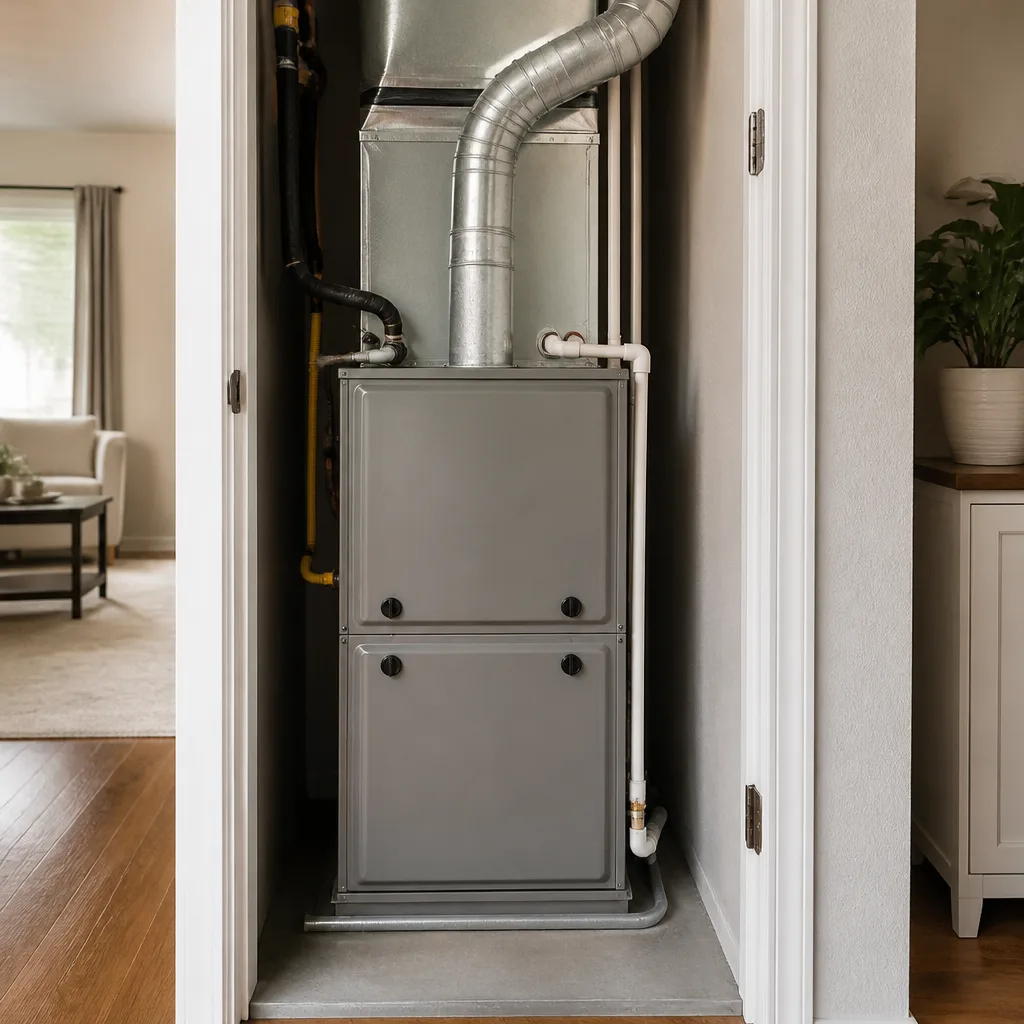
With our short, mild winters, Dallas furnaces sit unused for eight or nine months. When the first cold snap hits in November or December, the dust that settled on the heat exchanger burns off, producing a brief dusty or musty smell that goes away within 10 – 15 minutes. That’s normal. A smell that persists, a smell like burning plastic, or a smell like rotten eggs (which is the odorant added to natural gas) is not normal. Shut the furnace off and call a professional. For furnace-specific concerns, see furnace repair in Dallas.
The Bottom Line
The HVAC warning signs that matter most in Dallas are the ones that cost you money while you wait: a 20% electric bill increase, ice on the unit, short cycling, warm spots, and sticky indoor air. None of them fix themselves, and each one gets more expensive the longer it’s ignored. But knowing what you’re looking at changes the conversation. A capacitor is not a compressor. A dirty filter is not a refrigerant leak. A separated duct is not a failed unit. When you know the difference, you can’t be sold a $1,200 repair for a $150 problem. That’s the whole point of this guide, and it’s the standard we hold ourselves to at Brandt HVAC Co Dallas home. Call (325) 312-3269 and get the facts before you decide anything.
Written by Devin Marlowe, Owner at Brandt HVAC Co Dallas, serving Dallas since 2003.
See the difference
 Before
 After
After Before
 After
After Before
 After
After