
Last updated October 16, 2026
 AC repair
 Furnace & heating
 Heat pumps
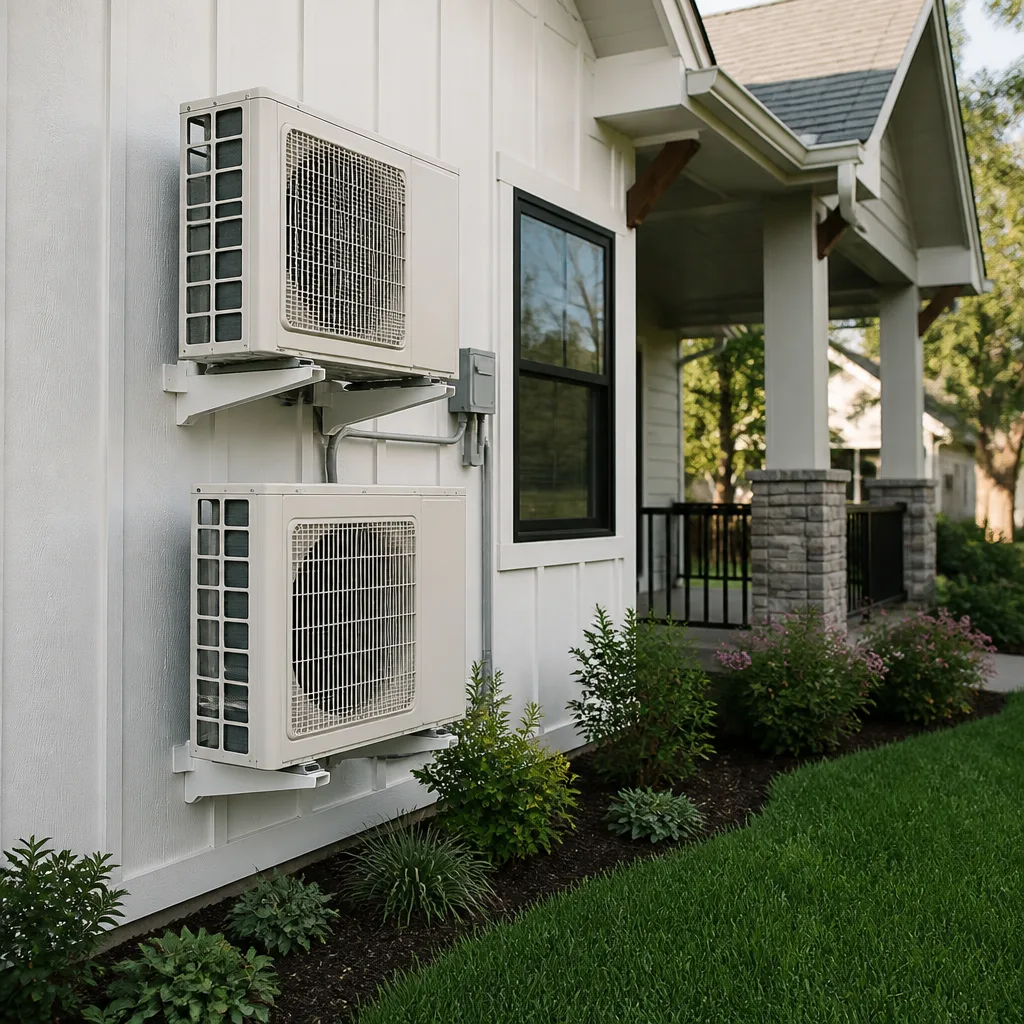 Ductless mini splits
 Carrier
 Trane
Trane Goodman
Seasonal tune-up and full diagnostic on your Carrier, Trane, or Goodman system - readings shown to you before any repair is proposed
Diagnosis first, numbers second - you approve the repair price before a single part goes in.
Get your free estimateHVAC Cost Breakdown: The Dallas Homeowner’s Reference for 2026
The same 3-ton Carrier central system installation was quoted at $6,400 and $11,200 by two licensed Dallas contractors in the same month in 2025. The equipment was identical. The difference came down to one contractor’s line-item for a Manual J load calculation, new electrical disconnect, and city permit that the other contractor simply never put in writing. This guide gives you real 2026 Dallas-market prices for the ten most common HVAC jobs, explains the four cost variables that hit North Texas homeowners harder than anywhere else, and shows you how to compare quotes line by line so you never overpay for work that was never actually scoped. For more guides & resources on keeping your system running right, see our blog.
Styles & brands we work with
Quick Answer
HVAC replacement costs in Dallas in 2026 typically run $5,800 to $9,400 for a full 3-ton system with a mid-tier brand like Carrier or Trane, while targeted repairs such as capacitor replacement run $180 to $380 and refrigerant recharges run $225 to $475 depending on the refrigerant type. Your biggest cost drivers are equipment tonnage, attic versus closet air handler placement, R-410A phase-out pricing, and whether the quote includes a proper Manual J load calculation and city permit. Always require a written price before work starts – any contractor who won’t put it on paper isn’t someone you want in your home.
Table of Contents
- Flat Price Table: The 10 Most Common Dallas HVAC Jobs in 2026
- Four Cost Variables Specific to Dallas and North Texas
- What a Manual J Load Calculation Costs and Why It Matters in Dallas
- Financing Red Flags: Deferred Interest vs. Same-as-Cash
- How to Compare Quotes Line by Line
- Oncor Rebates and How They Offset Cost
- Should You Repair or Replace?
- Common Mistakes to Avoid
- When to Call a Professional
- Frequently Asked Questions
- The Bottom Line
Flat Price Table: The 10 Most Common Dallas HVAC Jobs in 2026
These are what we actually see homeowners in Dallas paying for routine HVAC work right now. Parts and labor are separated so you can see exactly where your money goes. Prices assume a licensed, insured contractor working on a typical single-family home in neighborhoods like Lake Highlands, Oak Cliff, Preston Hollow, or the M Streets. Your specific home, equipment age, and access conditions will shift these numbers somewhat, but they should be close enough to evaluate any quote you receive.
| Job | Parts | Labor | Total Range | Time on Site |
|---|---|---|---|---|
| Capacitor replacement | $15 – $45 | $110 – $170 | $125 – $215 | 30 – 45 min |
| Condensate line flush / clear | $10 – $25 | $115 – $160 | $125 – $185 | 45 – 60 min |
| Refrigerant recharge (R-410A) | $80 – $180 per lb | $90 – $150 | $225 – $475 | 1 – 2 hrs |
| Blower motor replacement | $150 – $350 | $180 – $280 | $330 – $630 | 1.5 – 2.5 hrs |
| Condenser fan motor replacement | $90 – $220 | $150 – $240 | $240 – $460 | 1 – 2 hrs |
| Igniter replacement (furnace) | $35 – $90 | $115 – $180 | $150 – $270 | 45 – 90 min |
| Thermostat replacement (smart, installed) | $120 – $280 | $90 – $150 | $210 – $430 | 1 – 1.5 hrs |
| Duct sealing (per system, aeroseal or mastic) | $300 – $600 | $500 – $900 | $800 – $1,500 | 3 – 6 hrs |
| Full system replacement (2.5-ton, 14 SEER2) | $3,200 – $4,400 | $1,800 – $2,800 | $5,000 – $7,200 | 1 day |
| Full system replacement (4-ton, 17 SEER2) | $4,800 – $7,000 | $2,200 – $3,400 | $7,000 – $10,400 | 1 – 2 days |
One note on refrigerant: R-410A is being phased out under EPA rules, and prices have climbed steadily since 2024. By mid-2026, expect R-410A to cost 20 to 40 percent more than it did in 2023. Newer systems use R-454B or R-32, which are cheaper per pound but require compatible equipment. If your system is ten years old or older and needs a significant recharge, that’s a strong signal to look at replacement math rather than pouring money into refrigerant.
If you’re in Dallas and want a written price on any of these jobs, call our AC repair team at (325) 312-3269. You’ll get a number in writing before any work starts. No exceptions.
Four Cost Variables Specific to Dallas and North Texas
Dallas isn’t like other HVAC markets. The climate, the housing stock, and the local code environment each push costs in specific directions. Here’s what actually moves the needle in this city.
1. Attic Installation vs. Closet Air Handler
A huge share of Dallas homes, especially those built between 1960 and 1990, put the air handler in the attic. Attic work costs more. Technicians are working in 130-degree heat in July, the access is often through a narrow scuttle hole, and equipment has to be hauled up and down through an attic ladder or pull-down stairs. Labor for an attic air handler replacement in Dallas typically runs $400 to $800 higher than the same job in a ground-floor closet or garage. If your home has a closet air handler, count yourself lucky. If it’s in the attic, understand that the labor line on your quote is higher for a legitimate reason.
2. R-410A Phase-Out Pricing Impact
The EPA’s phasedown of R-410A is hitting Dallas homeowners harder than most because our cooling season runs from April through October. A system that leaks refrigerant in a mild climate might limp along. A system that leaks in 105-degree Dallas heat fails fast. As R-410A supplies tighten through 2026, expect per-pound prices to climb further. The practical impact: a recharge that cost $200 in 2020 might cost $380 to $500 by late 2026 on an older system. If your system needs more than two pounds of R-410A, ask your contractor to run the numbers on replacement instead.
3. City Permit Fees by Municipality
Permit fees vary widely across the metroplex. The City of Dallas mechanical permit for a residential system replacement typically runs $75 to $200 depending on system size and scope. Addison, Richardson, Garland, and Plano each have their own fee schedules, and some are meaningfully cheaper or more expensive than Dallas proper. Here’s what you need to know: a legitimate contractor pulls the permit, passes the cost through to you as a line item, and schedules the required inspection. For full details, see our guide to HVAC Permits, Codes & Inspections in TX: What You Need to Know. A contractor who says a permit “isn’t needed for this job” on a full system replacement is either cutting corners or doesn’t want the city inspecting their work. In Dallas, a permit is required for full system replacements, new installations, and most ductwork changes. Repairs generally don’t need one.
4. Oncor Rebate Offsets
Oncor, the transmission utility serving most of Dallas, offers rebates for high-efficiency heat pumps and air conditioners through participating contractors. For 2026, rebates typically range from $300 to $1,500 depending on SEER2 rating, system type, and whether the job includes a matched indoor unit. The rebate is applied at the time of installation by the contractor, not mailed to you later. Here’s the catch: the contractor has to be enrolled in the Oncor program to process it. Ask specifically: “Are you an Oncor participating contractor, and what rebate does this system qualify for?” A contractor who can’t answer that question is leaving money on the table that should be yours.
What a Manual J Load Calculation Costs and Why It Matters in Dallas
A Manual J load calculation is the engineering process that determines exactly how many tons of cooling and BTUs of heating your specific home needs. It accounts for square footage, window area and orientation, insulation levels, ceiling height, air leakage, and Dallas’s specific climate data. The calculation itself typically costs $150 to $400 as a standalone service, or it’s included in a properly scoped installation quote as a line item.
Here’s why it matters in Dallas specifically. Our climate is brutal: 100-degree summer days, 20-degree winter nights, high humidity, and intense direct sun. A home in Dallas that needs a 2.5-ton system based on actual load data might get a 3.5-ton or 4-ton system sold to it by a contractor who never ran the numbers and assumes bigger is safer. Oversized systems cost more upfront, cycle on and off too frequently, fail to dehumidify properly, and wear out faster. In our experience across Dallas neighborhoods, we regularly see systems that are half a ton to a full ton oversized because no one ever calculated the actual load.
How to spot a quote that skipped the Manual J:
- No load calculation line item or mention. A legitimate installation quote lists it, even if it’s bundled into the price.
- The contractor never measured your home. If they quoted a system size based on “what was there before” without measuring windows, checking insulation, or asking about additions, they didn’t run the load calculation.
- The tonnage equals the old system exactly. Sometimes that’s right, but it should be a result of calculation, not assumption. Homes get additions, new windows, better insulation, or tree cover changes.
- The quote came in under 15 minutes. Proper measurement and calculation takes time. A thorough first visit for a system quote runs 45 to 90 minutes in the home.
If a Dallas contractor won’t show you the Manual J results, ask why. The answer tells you what kind of installation you’re really buying.
Financing Red Flags: Deferred Interest vs. Same-as-Cash
Most full system replacements in Dallas are financed. The financing products fall into two broad categories, and the difference between them can cost you thousands of dollars.
Legitimate 0% deferred interest: The financing company charges no interest during the promotional period, and if you pay off the balance in full before the period ends, you pay exactly the financed amount. These offers typically run 12 to 18 months on HVAC work and are offered through established lenders. Read the fine print: some charge a retroactive penalty if you miss a payment or are one day late finishing the payoff.
Same-as-cash with retroactive interest: This is the one that hurts Dallas homeowners. The product is marketed as “no interest if paid in full within 12 months,” but if you fail to pay it off in time, the lender charges you all the interest that would have accrued from day one, often at 25 to 29 percent APR. On a $9,000 system, that’s a $2,600-plus charge appearing out of nowhere because you missed the payoff deadline by a week.
What to ask before signing any HVAC financing:
- If I don’t pay this off in full during the promotional period, what interest rate applies and from what date does it start accruing?
- Is there a minimum monthly payment that actually pays the balance down within the promotional period, or will I still owe money when it ends?
- Are there origination fees, prepayment penalties, or late-payment penalty interest?
- Is this a fixed-rate installment loan or a retail credit card product?
Fixed-rate installment loans from credit unions or the contractor’s financing partner are generally more predictable than retail card products. If you’re comparing quotes, ask both Dallas contractors to show you the same loan term and structure so you’re comparing apples to apples.
How to Compare Quotes Line by Line
Here’s a sample quote breakdown for a 3-ton system replacement in Dallas. This is what a properly scoped quote should look like. The left column shows what you want to see as separate line items. The right column shows what gets buried when a contractor is trying to hide something.
What a Legitimate Dallas Quote Shows
- Equipment (condenser unit): Brand, model number, tonnage, SEER2 rating. Example: “Carrier 25SCA536, 3-ton, 15.2 SEER2.”
- Equipment (air handler or furnace + coil): Matching model numbers. A mismatched system loses efficiency and voids some warranty coverage.
- Installation labor: Flat labor charge for the full job, including removal of old equipment.
- Duct modifications or transitions: Any sheet metal work needed to connect new equipment to existing ducts.
- Electrical work: Disconnect replacement, whip, breakers if required.
- Refrigerant lines: Flushing or replacement, especially when changing refrigerant types.
- Condensate drain: New pan, float switch, piping changes.
- City permit: Fee amount and statement that contractor handles scheduling and inspection.
- Manual J load calculation: Listed as performed and confirming tonnage selection.
- Startup and commissioning: Refrigerant charge verification, airflow settings, thermostat programming.
- Warranty terms: Written explanation of what’s covered, for how long, and by whom.
What Gets Buried in Vague Quotes
- “Full installation included” with no breakdown of what “full” means.
- No model numbers. “3-ton system” is not specific enough. Model numbers tell you exactly what you’re getting and let you verify efficiency ratings.
- No permit line. The contractor either isn’t pulling one or is padding the price with an undisclosed fee.
- No mention of ductwork. If your existing ducts need modification, that’s real money, and it shouldn’t surprise you mid-job.
- No refrigerant line scope. On a system change-out, especially when switching refrigerant types, lines need flushing or replacement. Ignoring this is a short cut.
- Warranty described as “we stand behind our work” without specifics. A written warranty states the coverage period, what’s included, and what voids it.
Bring this list to every quote meeting. A contractor who welcomes the scrutiny is one you want working in your home. If you’d like to see how Brandt HVAC Co Dallas structures our quotes, call (325) 312-3269 and we’ll walk you through one before you ever commit to an estimate appointment.
Oncor Rebates and How They Offset Cost
Oncor’s 2026 residential HVAC rebate program is the single biggest savings lever most Dallas homeowners never use. The rebates apply to high-efficiency air conditioners, heat pumps, and in some cases, duct sealing. Here’s how it works in practice.
When you replace your system with qualifying equipment, the contractor applies the rebate directly to your invoice. You don’t file paperwork and wait for a check. The rebate amount depends on SEER2 efficiency rating: a 15.2 SEER2 system might qualify for $300 to $500, while a 19 SEER2 heat pump could qualify for $1,200 to $1,500. The math is worth doing: if a higher-efficiency system costs $1,200 more but qualifies for an $800 larger rebate, the net difference is $400 for a system that will save you that much in electricity within 18 to 24 months in Dallas’s climate. See our Seasonal HVAC Care for Dallas: Year-Round Homeowner’s Guide for when to schedule this work.
Two things to verify: first, the contractor must be an Oncor participating contractor. Second, the rebate applies to matched systems. Installing a high-efficiency condenser on an older indoor coil disqualifies the job. Get the rebate amount in writing on your quote.
If you’re in Dallas and considering AC maintenance or replacement, ask about Oncor eligibility when you call. A contractor who can’t speak to it isn’t doing their job for their customer.
Should You Repair or Replace?
Here’s the decision framework we use with Dallas homeowners, and it’s the same one you can apply yourself. Take the repair cost and multiply it by the system’s age in years. If the product of that math is higher than $5,000, replacement is usually the better long-term move.
Example: You have a 12-year-old system in Far North Dallas. The compressor has failed, and the repair quote is $2,200. Multiply $2,200 by 12 and you get $26,400, far above the $5,000 threshold. Replace. The system is past its expected service life in our climate, and that $2,200 buys you perhaps a year or two more before the next major repair hits.
Counter-example: Your 6-year-old Trane system in Lakewood needs a $400 blower motor. Multiply $400 by 6 and you get $2,400, well under $5,000. Repair. The system still has real life left, and the repair restores it to normal operation.
Other factors that push toward replacement in Dallas specifically:
- The system uses R-410A and needs a significant recharge. Refrigerant costs are rising, and a system that’s leaking refrigerant is a system with a failure in progress.
- The system is 12 years old or older and has needed two or more repairs in the past 18 months.
- Your summer electric bills keep climbing despite regular AC maintenance, suggesting efficiency has degraded beyond economical repair.
- You plan to stay in the home for five or more years, so you’ll actually realize the efficiency savings.
Every repair we do in Dallas comes with a written guarantee, and if it fails within the guarantee period, our AC repair team returns at no charge under the 365-Day Done Right Promise. That’s how certainty should work: you know what you’re paying, you know what’s covered, and you know who’s coming to your door.
Common Mistakes to Avoid
- Accepting a quote without model numbers. If the quote says “3-ton system” but doesn’t specify brand and model, you can’t verify the SEER2 rating, the equipment cost, or the warranty terms. Ask for model numbers written down before you consider anything.
- Skipping the permit. In Dallas, full system replacements require a mechanical permit. Unpermitted work can cause problems when you sell the home, and it skips the city inspection that catches installation errors.
- Replacing the outside unit only. If the indoor coil doesn’t match the new condenser, your system efficiency drops, the warranty may be voided, and the mismatched components wear out faster. Always replace as a matched set.
- Ignoring the ductwork. Dallas homes with attic ducts lose significant cooling to hot attics. If your ducts are leaking, a new system on old ducts is a waste. Ask for a duct inspection as part of any replacement quote.
- Not asking about the Oncor rebate. This is free money that a participating contractor should process for you. If they don’t mention it, ask. If they can’t answer, go elsewhere.
- Choosing based on price alone. The $6,400 versus $11,200 quote difference from the opening of this guide wasn’t about greed. It was about scope. Cheaper quotes often simply omit work that has to be done anyway, and you’ll pay for it later, usually at a worse moment.
- Not verifying who’s coming to your home. A legitimate Dallas HVAC company tells you the technician’s name before arrival and backs it with identification at the door. If the company can’t tell you who’s coming, that’s a security problem as well as a quality problem.
When to Call a Professional
Some HVAC situations are genuinely dangerous to handle yourself. If you smell gas anywhere near your furnace or water heater, leave the house and call your gas utility first, then a licensed professional. If your system is sparking, smoking, or tripping breakers repeatedly, shut it off at the thermostat and breaker and call someone who knows what they’re looking at. High-voltage electrical components and gas lines are not DIY territory, and in Dallas’s summer heat, a failed AC in August is a health risk for older adults, infants, and anyone with respiratory conditions. If your system has failed entirely and temperatures inside are climbing, that’s an emergency call, not a research project.
Brandt HVAC Co Dallas offers free estimates. Call (325) 312-3269 and a live person answers, day or night. We’ll tell you who’s coming, send their name and photo before arrival, and put every price in writing before work begins.
Frequently Asked Questions
A full system replacement in Dallas runs $5,000 to $10,400 depending on tonnage, SEER2 rating, and brand. A base 2.5-ton, 14 SEER2 system starts around $5,000, while a 4-ton, 17 SEER2 system from a brand like Carrier or Trane runs $7,000 to $10,400 installed. Get a written quote with model numbers and a permit line item before comparing prices. Call (325) 312-3269 for an exact quote on your home.
A capacitor replacement in Dallas typically runs $125 to $215 including parts and labor. The part itself costs $15 to $45, with the rest being diagnostic time, labor, and the service call. This is one of the most common AC failures we see in Dallas summers, and it’s usually a quick same-day fix.
An R-410A refrigerant recharge in Dallas runs $225 to $475 depending on how many pounds are needed. R-410A prices have risen sharply due to the EPA phase-out, and by late 2026 expect costs at the higher end of this range. If your system needs more than two pounds, ask whether replacement makes more financial sense.
Yes. A Manual J calculation typically costs $150 to $400 and is the only reliable way to correctly size equipment for your specific Dallas home. Without it, you risk an oversized system that short-cycles, fails to dehumidify, and wears out early in our hot, humid climate. Any legitimate replacement quote should include it.
Ask whether the product is a fixed-rate installment loan or a deferred-interest retail card. If it’s deferred interest, confirm exactly what rate applies if you don’t pay it off in full during the promotional period, and whether that interest is retroactive to day one. Fixed-rate loans from credit unions or contractor financing partners are generally more predictable.
A legitimate Dallas installation quote lists equipment with brand and model numbers, installation labor, sheet metal and duct modifications, electrical work, refrigerant line handling, condensate drain work, the city permit fee, a Manual J calculation, and written warranty terms. If any of those are missing, ask why before you sign. Call (325) 312-3269 and we’ll show you exactly how our quotes are structured.
The Bottom Line
Dallas homeowners in 2026 are paying $5,000 to $10,400 for full system replacements and $125 to $1,500 for the most common repairs, with real money on the table in the form of Oncor rebates and the cost difference between properly scoped work and vague “installation included” quotes. The single most important thing you can do is require a written price with model numbers, a permit line item, and a Manual J calculation before any work starts. The second most important thing is knowing exactly who’s coming to your door. Brandt HVAC Co Dallas has been serving homeowners with written pricing, background-checked and identity-verified technicians, and the 365-Day Done Right Promise since 2003. Call (325) 312-3269 for a free estimate from a team that tells you who’s coming before they arrive.
Written by Devin Marlowe, Owner at Brandt HVAC Co Dallas, serving Dallas since 2003.
See the difference
 Before
 After
After Before
 After
After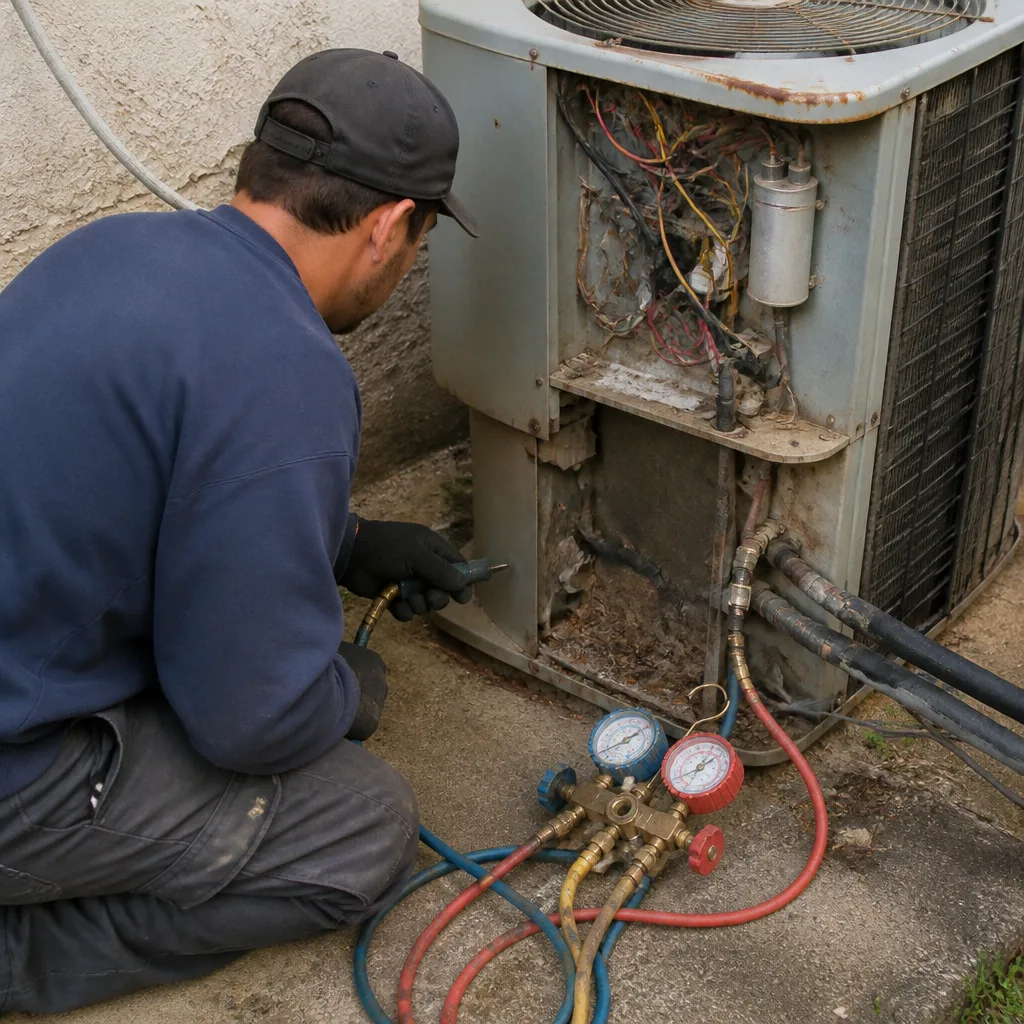 Before
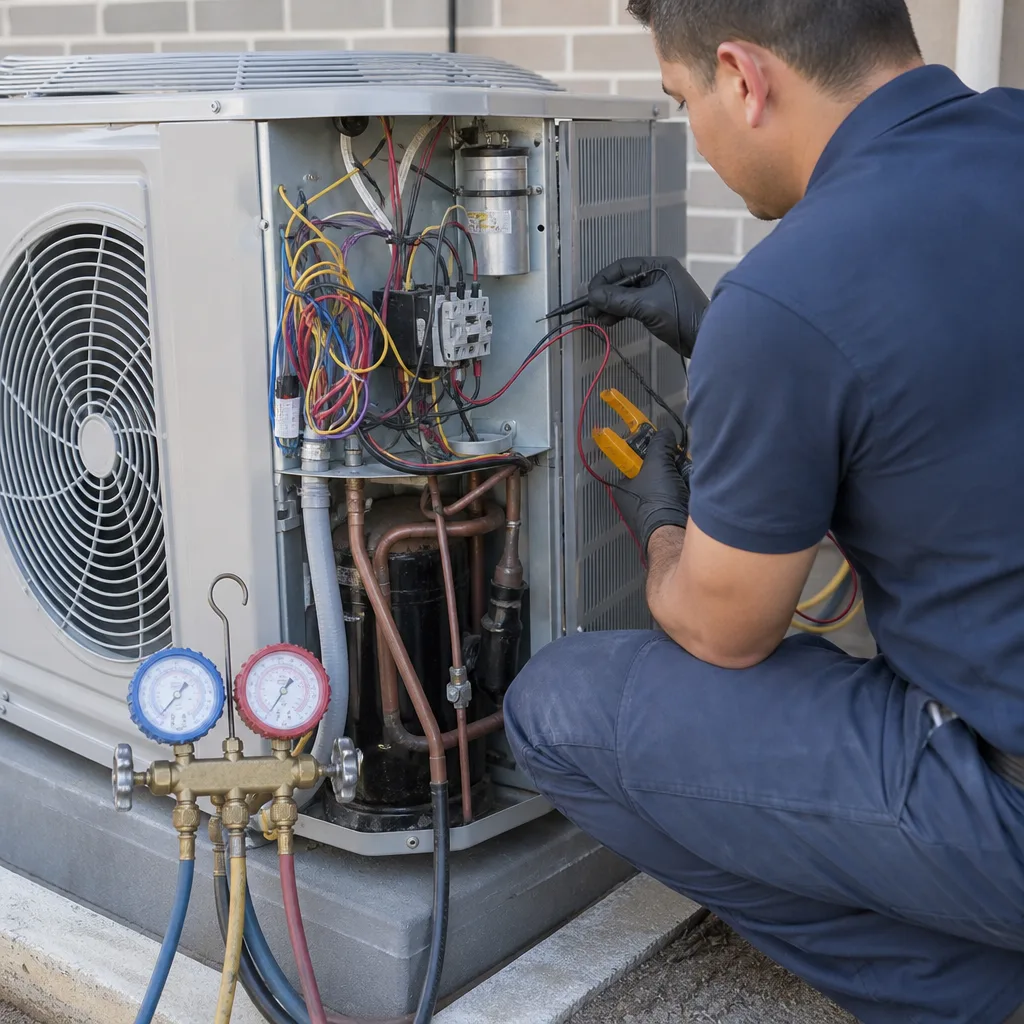 After
After