
 Goodman
 AC repair
 Furnace & heating
 Heat pumps
 Ductless mini splits
 Carrier
 Trane
TraneSeasonal tune-up and full diagnostic on your Carrier, Trane, or Goodman system - readings shown to you before any repair is proposed
Diagnosis first, numbers second - you approve the repair price before a single part goes in.
Get your free estimateGoodman Thermostat Installation: The Dallas Owner’s Guide
Goodman thermostat installation in Dallas typically runs $180 – $420 installed, including the thermostat, wiring verification, and system calibration. We stock Goodman-compatible thermostats on our trucks and can usually complete the swap the same day we diagnose the problem. Most Dallas homeowners call us after their existing thermostat stops responding, reads the wrong temperature, or shorts the system into constant cycling.
Here’s the thing about thermostats: they rarely fail all at once. Usually the first sign is a room that’s five degrees off from what the display says. Then the system starts short-cycling, or the fan runs without the compressor, and by the time we’re called the homeowner has been fighting the settings for two weeks. Devin Marlowe will tell you the same thing he tells every customer: “Tell me what’s broken, I’ll tell you what it costs, and we’ll get your house back to comfortable.”
Which Goodman Models This Applies To
The short answer: nearly all of them. Goodman thermostats, whether factory-installed on newer systems or added later, use standard 24-volt low-voltage wiring. That covers the Goodman GSX, GSZ, and GMV series, plus the Amana-branded lines that share Goodman’s engineering. If your system was made in the last 20 years, you almost certainly have a compatible low-voltage setup.
Here’s the compatibility gotcha most people don’t know: Goodman’s communicating thermostats, found on some higher-end variable-speed systems like the ComfortBridge or ComfortNet lines, are not interchangeable with standard thermostats. These use a proprietary four-wire communication protocol, not the usual R, C, W, Y, G terminals. If you swap a communicating Goodman thermostat for a standard model, the system may not run at all, or it will default to single-stage operation and lose efficiency. Before we recommend anything, we check the model plate and the wiring at the base to confirm what you’re working with.
For most standard Goodman systems, OEM thermostats and quality aftermarket options like Honeywell Home or Emerson Sensi both work well. We’re an independent service provider, not affiliated with Goodman Manufacturing, so we’ll recommend what makes sense for your system and budget, not what a brand rep wants pushed. For communicating systems, we typically recommend sticking with the Goodman or Amana replacement to preserve full functionality.
Styles & brands we work with
Signs Your Goodman Thermostat Installation Is Failing
- The display goes blank or flickers. This usually points to a dead battery, a blown low-voltage fuse, or a loose wire behind the faceplate. If the display is dead but the system still runs, the thermostat may be reading phantom settings and cycling erratically without showing you what it’s doing.
- Room temperature doesn’t match the setting. A thermostat’s internal sensor can drift over time, especially in Dallas humidity. If it reads 72°F but the house feels like 78°F, the sensor or its calibration is likely failing, and the system is running off bad data.
- The system short-cycles. When a thermostat’s temperature differential or anticipator setting fails, the system turns on and off every few minutes. That’s hard on compressors and blower motors, and it drives your electricity bill up while the house never feels comfortable.
- The system won’t turn on or won’t turn off. A stuck relay inside the thermostat can hold the system in a constant “call for cooling” or “call for heat” state. This is one of the most common failure modes we see in older Goodman thermostats, and it can cause the system to run continuously until you kill power at the breaker.
- Settings reset or change on their own. If the thermostat loses its programming overnight, or the schedule keeps defaulting to factory settings, the internal memory is failing. It’s a sign the unit is reaching the end of its service life and it’s time to replace rather than reset repeatedly.
See the difference
 Before
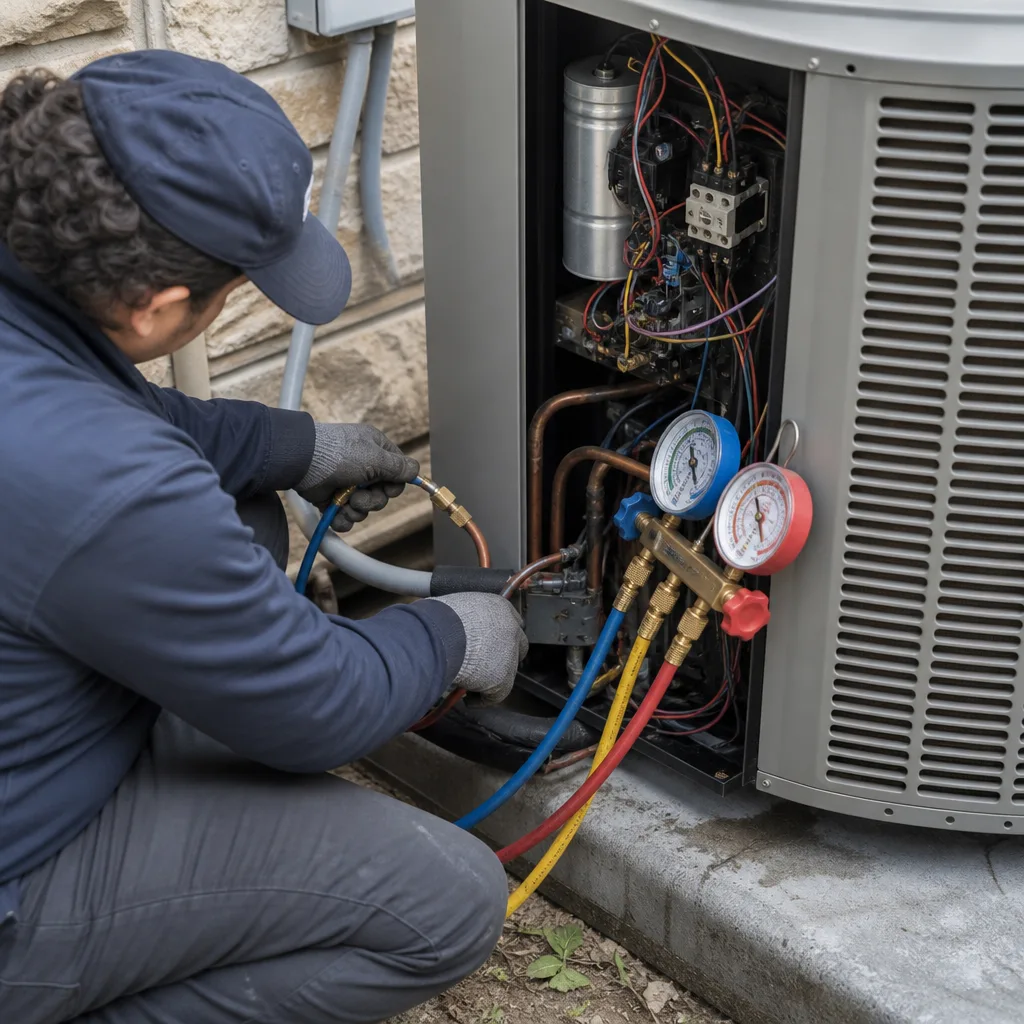 After
After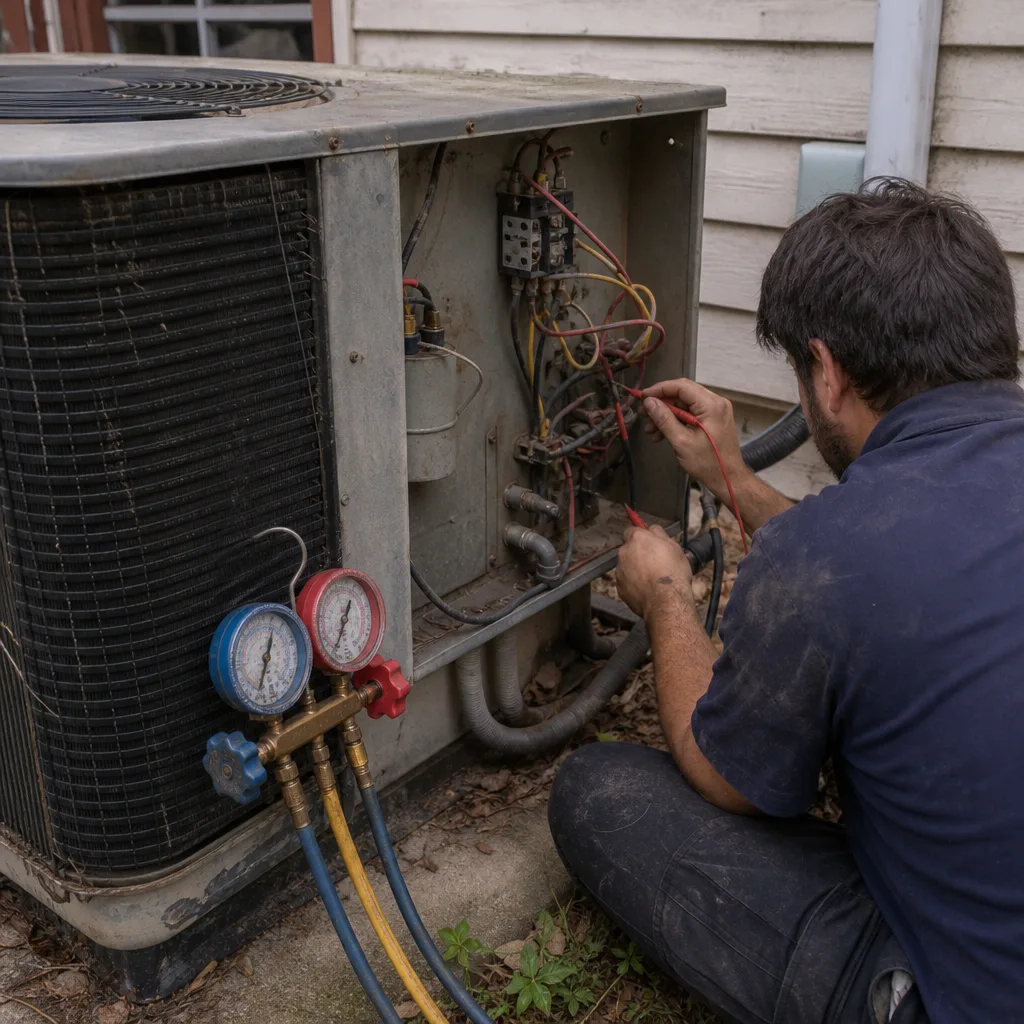 Before
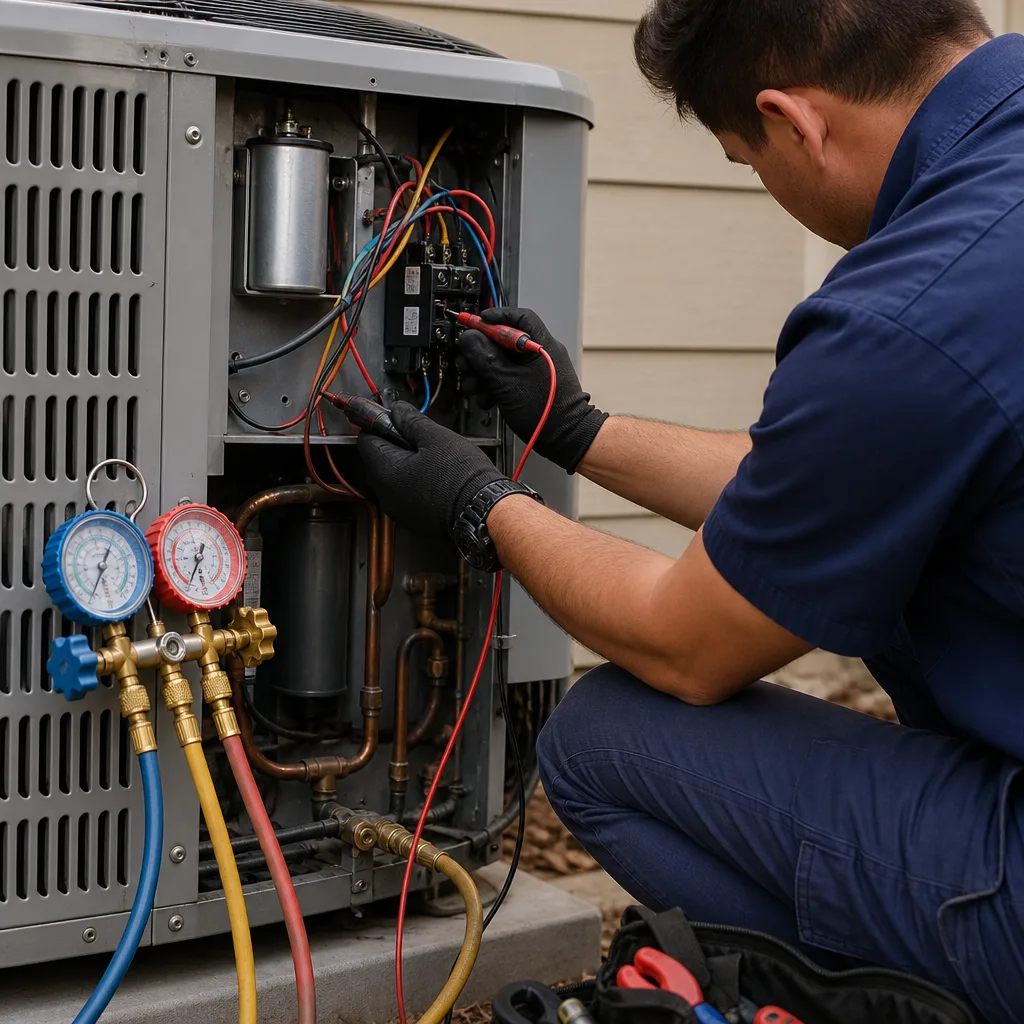 After
After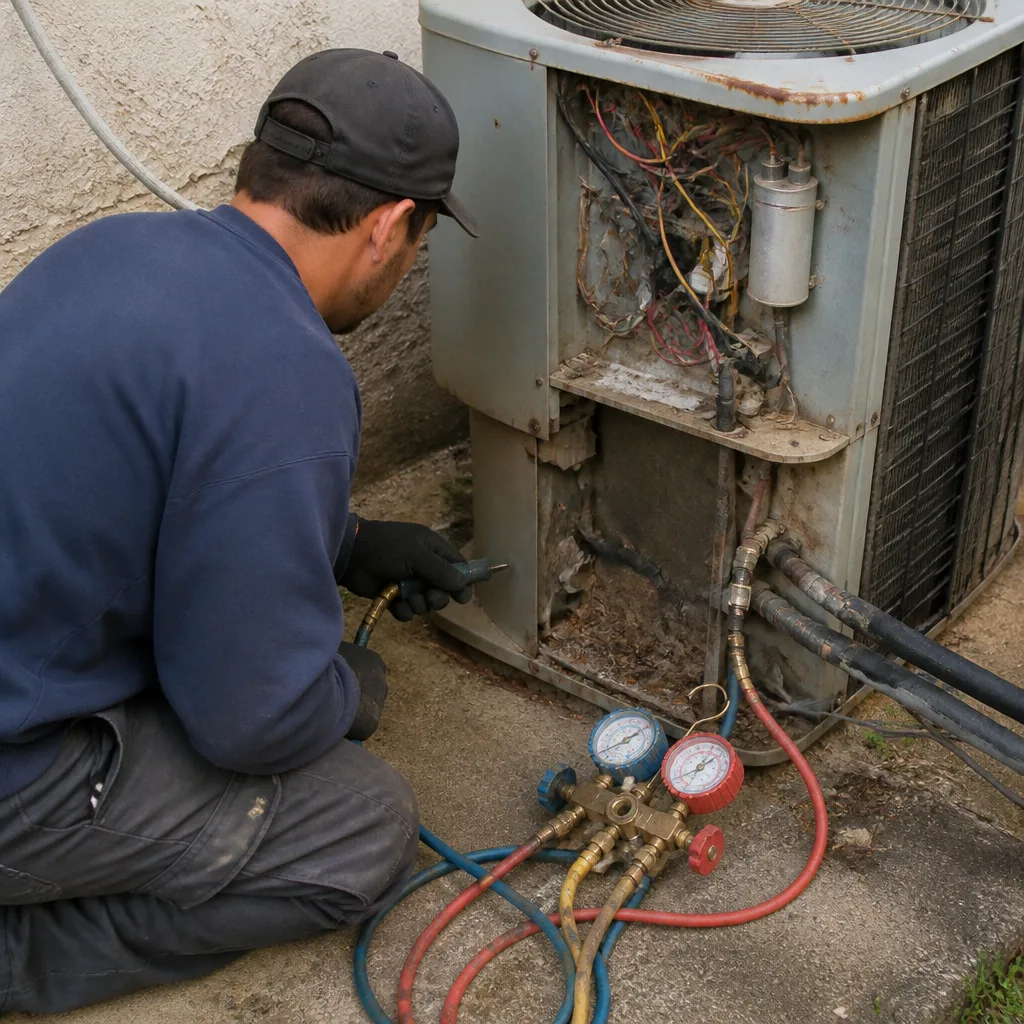 Before
 After
AfterReplacement Cost & What’s Included
For a standard Goodman-compatible thermostat in Dallas, expect:
- Basic non-programmable or programmable thermostat: $180 – $260 installed
- Wi-Fi smart thermostat (Honeywell, Emerson, Ecobee): $280 – $420 installed
- Goodman communicating thermostat (ComfortNet/ComfortBridge systems): $350 – $500 installed
That price includes the thermostat itself, the service call, wiring verification, mounting, system configuration, and a full test cycle to make sure the system runs correctly in both heating and cooling. We write the price down before any work starts, so there’s no surprise at the end. Every thermostat installation from Brandt HVAC Co Dallas carries our 365-Day Done Right Promise: if the installation fails within a year, we return and make it right at no charge. No fine print, no argument.
What drives the range? The thermostat model you choose, whether we’re running a new common wire (the “C wire”) for a Wi-Fi model, and whether your system is single-stage or communicating. Older Dallas homes with original wiring sometimes need a new thermostat cable pulled, which adds a small amount of labor.
DIY or Call Us?
Thermostat replacement looks simple, and for basic mechanical thermostats on single-stage systems, it often is. You can safely check a few things yourself: confirm the circuit breaker for the HVAC system is on, check that the thermostat has fresh batteries if it takes them, and verify the faceplate is seated correctly on its base. Sometimes a loose faceplate is the whole problem.
Where DIY goes wrong is with wiring. Low-voltage thermostat wiring carries 24 volts, which won’t shock you, but if you cross the wrong wires you can blow the low-voltage fuse on the furnace control board or, worse, damage the board itself. That’s a $200-plus mistake on top of the thermostat. Communicating Goodman systems are even less forgiving: the proprietary wiring can’t be guessed at. If you’ve got a standard system and you’re comfortable matching wire labels, go ahead. If you’re unsure, or the system is communicating, or the wiring looks like a bowl of spaghetti, call us at (325) 312-3269 and we’ll send Devin or one of our background-checked technicians. You’ll know their name and see their photo before they arrive, and they’ll show a photo ID badge at the door. No surprises at the doorbell, and no surprises on the invoice.
FAQs
A Goodman thermostat typically lasts 10 to 15 years in Dallas, though Texas heat and humidity can shorten that for thermostats mounted on exterior walls or in direct sunlight. If yours is older than a decade and acting up, replacement is usually the better call than repair.
In most cases, no. Thermostats are sealed units, and by the time the sensor, relay, or memory fails, the cost to open and repair one exceeds the cost of a new unit. We’ll always check for simple fixes like loose wiring or dead batteries first, but a genuine internal failure means replacement. Call us at (325) 312-3269 and we’ll diagnose it honestly.
A standard thermostat swap takes 45 to 90 minutes, including wiring check, mounting, configuration, and a full heating and cooling test cycle. Communicating thermostat setup on a Goodman ComfortNet system can take up to two hours because the thermostat must be paired and calibrated to the system controls.
Yes. Our trucks carry standard Goodman-compatible thermostats, Wi-Fi models, and Goodman communicating replacements for ComfortNet and ComfortBridge systems. We also stock parts and thermostats for Carrier, Trane, and Lennox systems. Most thermostat jobs are completed in a single visit.
Written by Devin Marlowe, Owner, Brandt HVAC Co Dallas at Brandt HVAC Co Dallas, serving Dallas and nearby areas.