
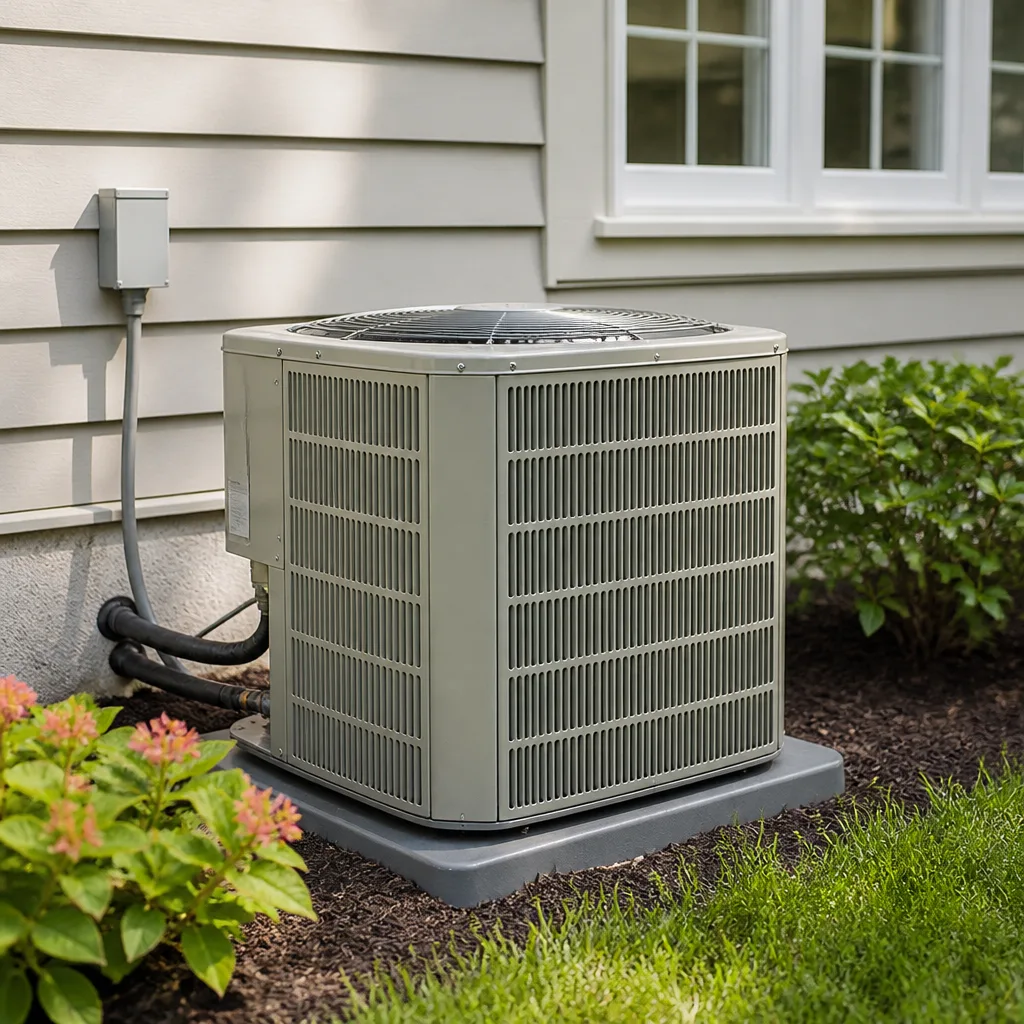
 AC repair
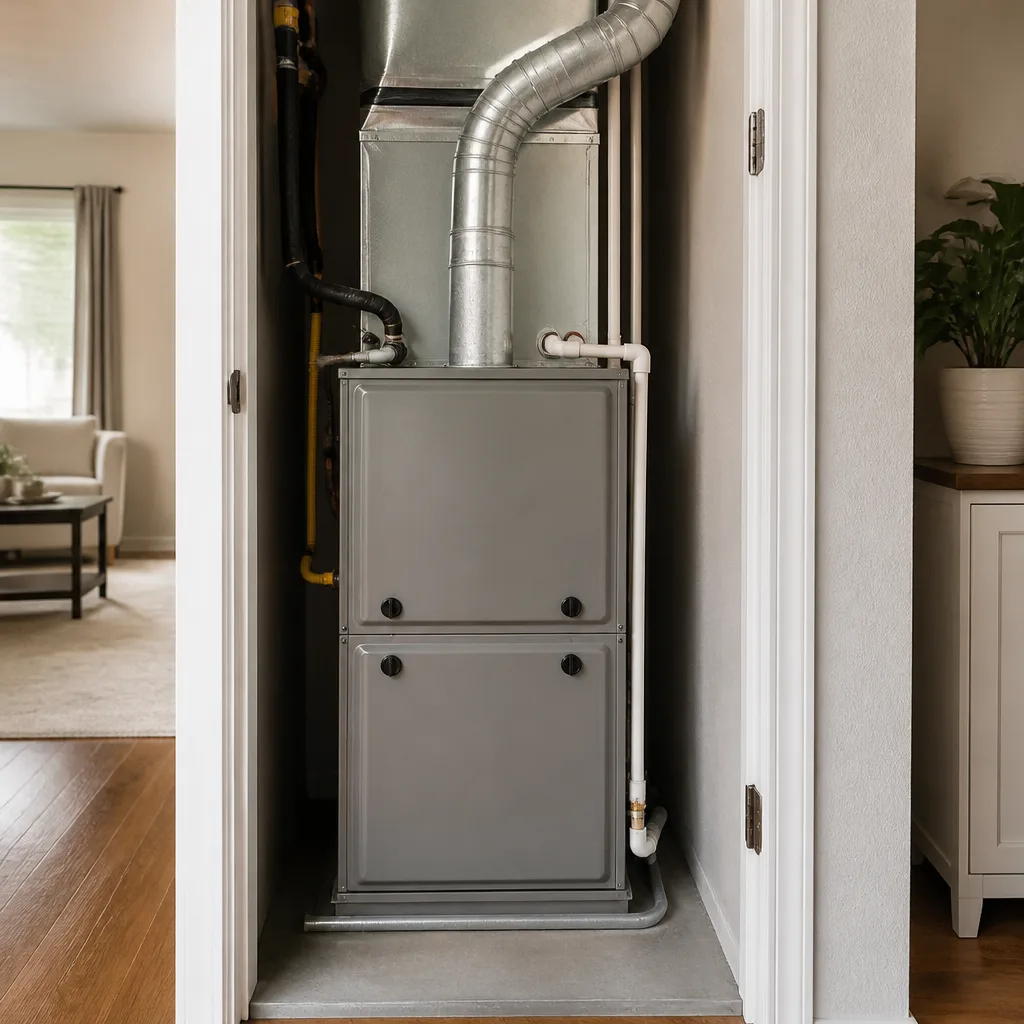 Furnace & heating
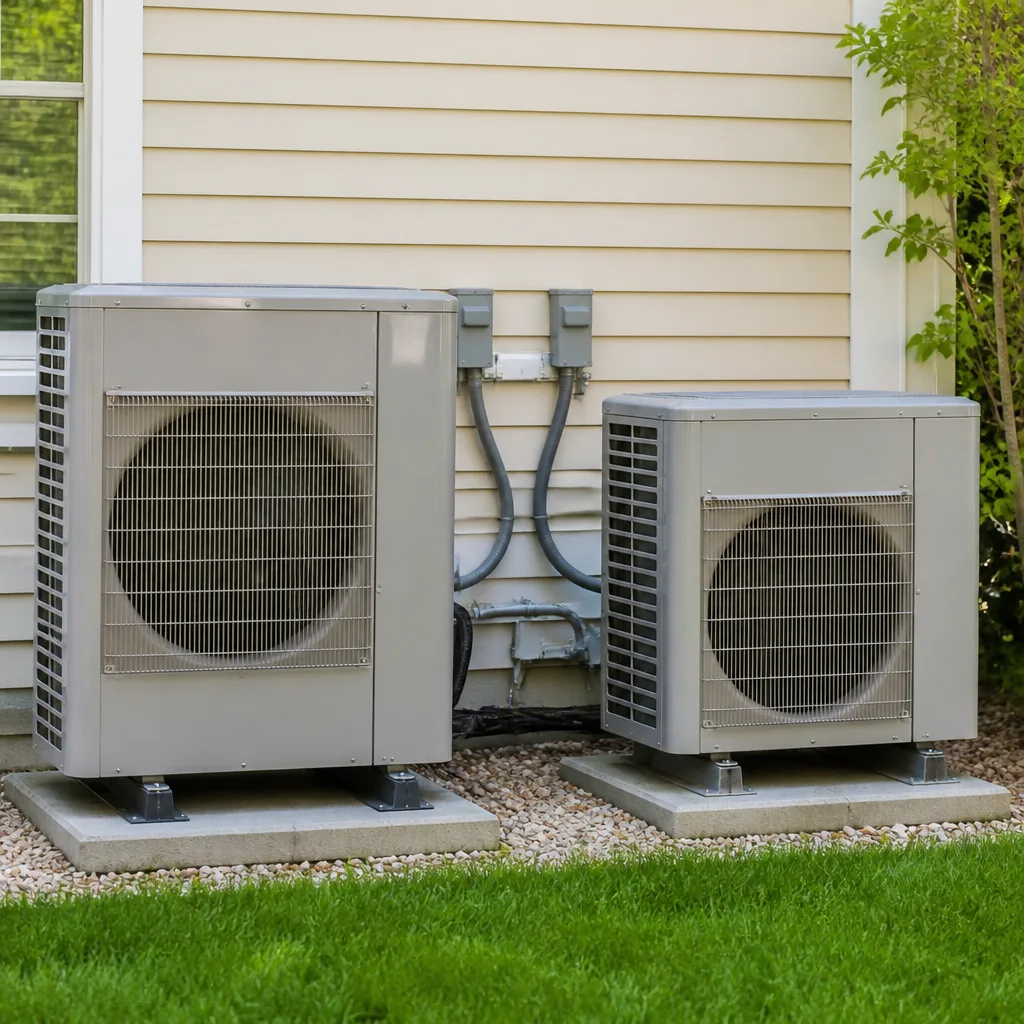 Heat pumps
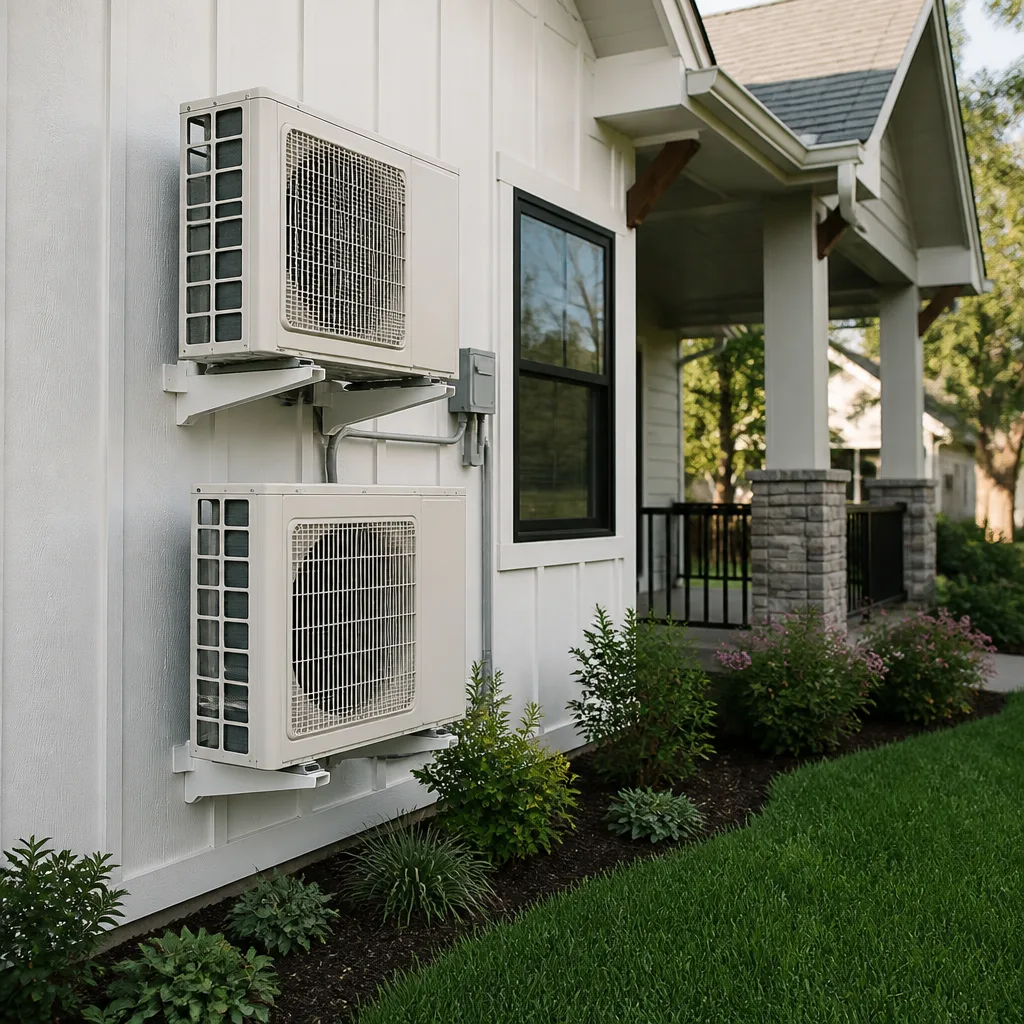 Ductless mini splits
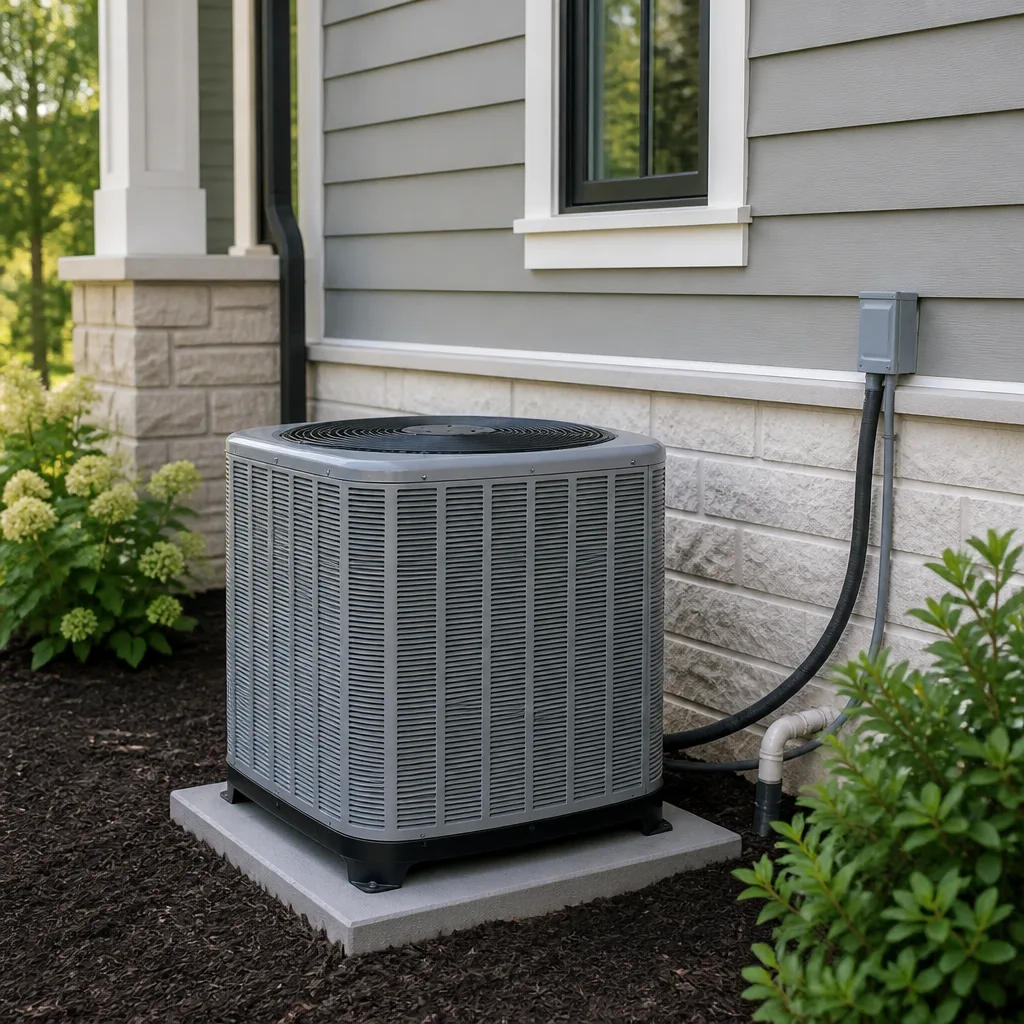 Carrier
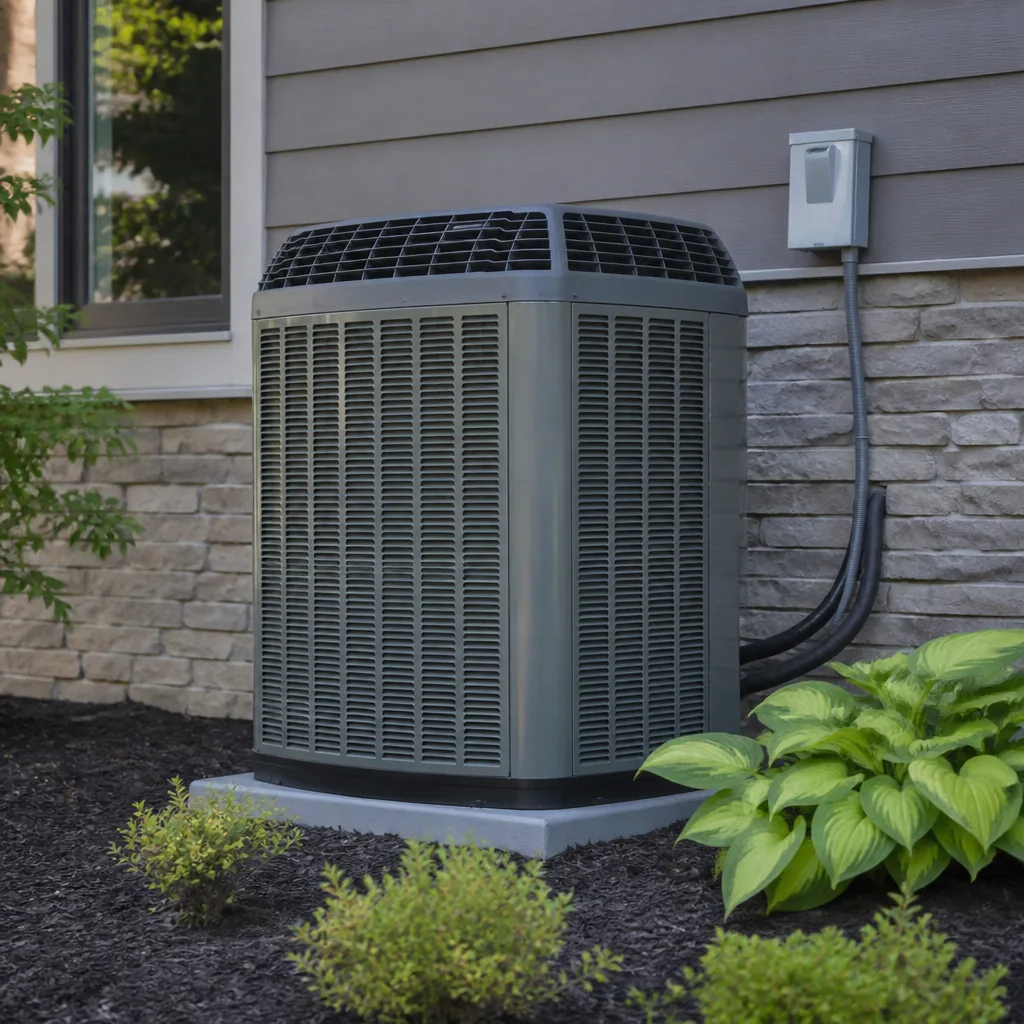 Trane
Trane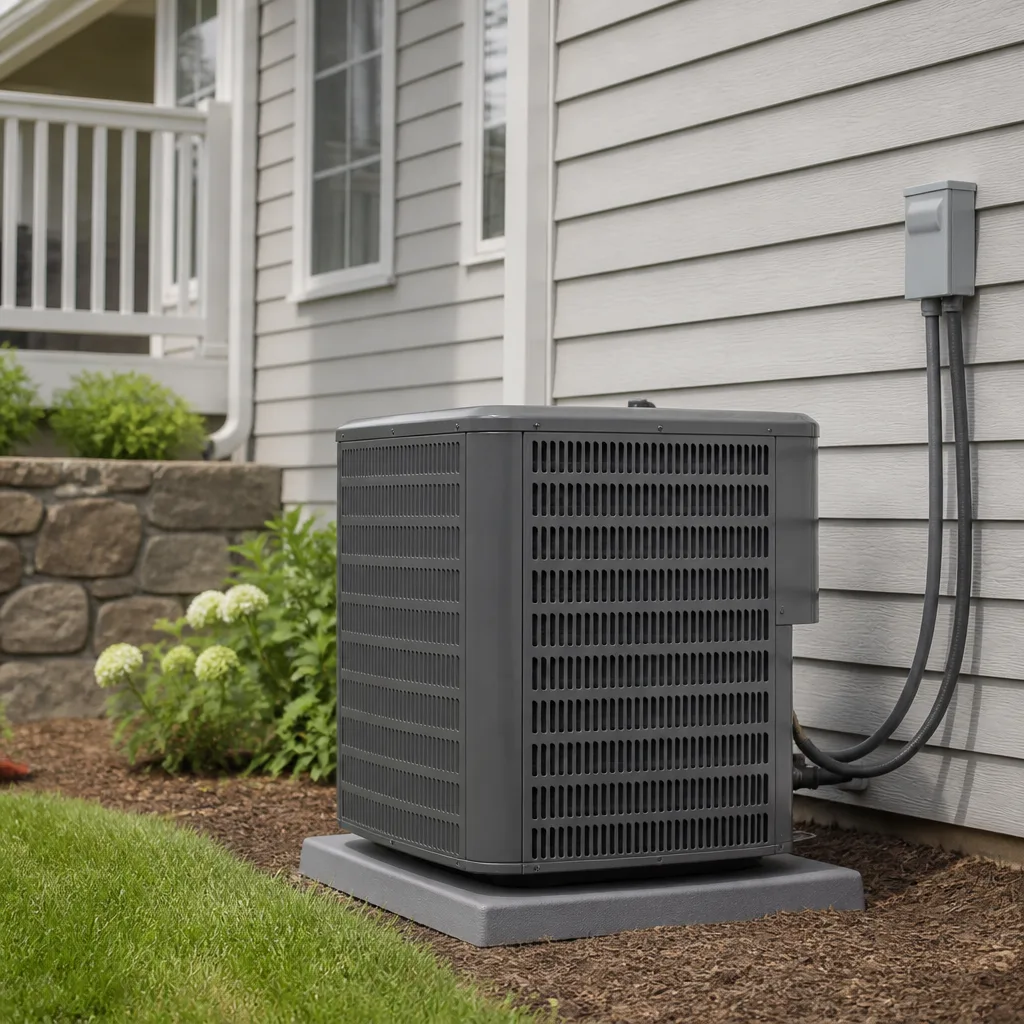 Goodman
Seasonal tune-up and full diagnostic on your Carrier, Trane, or Goodman system - readings shown to you before any repair is proposed
Diagnosis first, numbers second - you approve the repair price before a single part goes in.
Get your free estimateAmerican Standard Capacitor Replacement: The Dallas Owner’s Guide
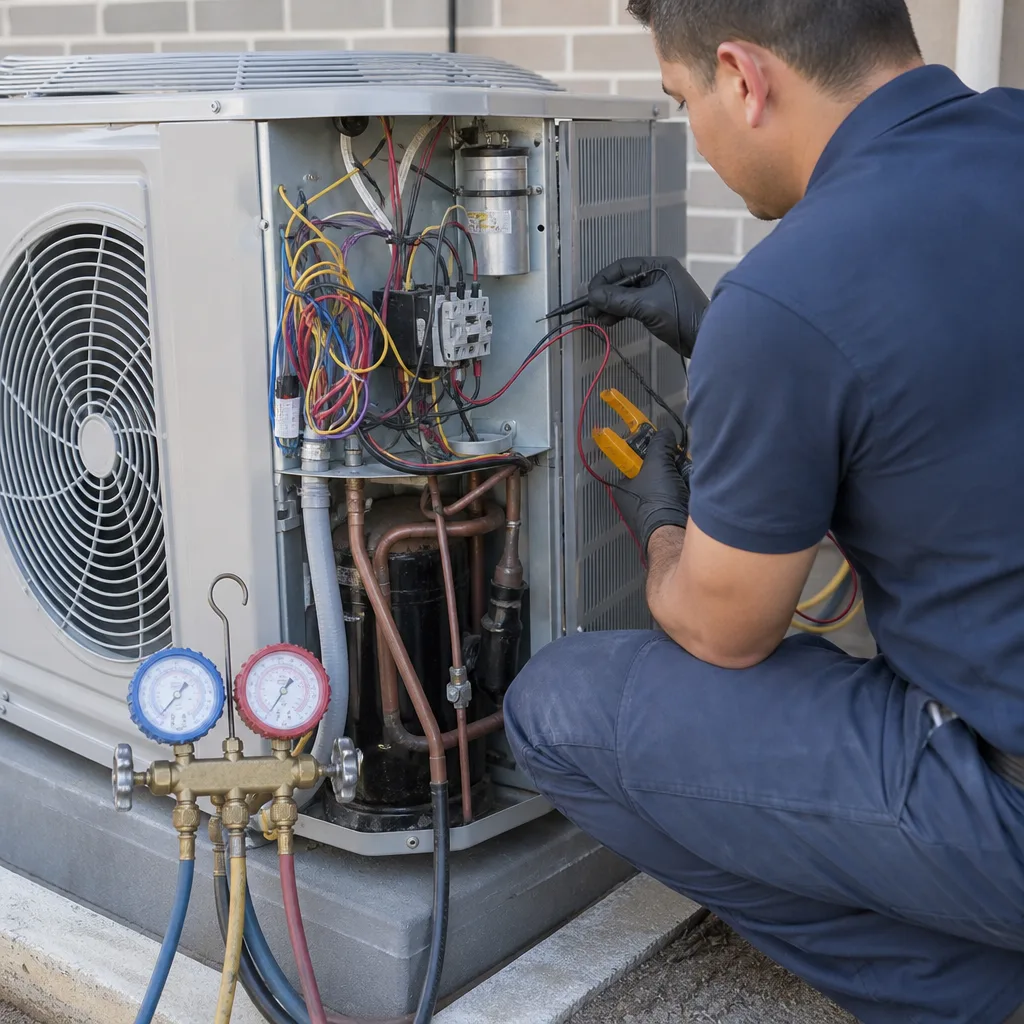
A failed capacitor is the single most common reason an American Standard air conditioner or heat pump won’t start in Dallas, and the fix is usually fast: we replace it same day, with the part on the truck, for $150 – $450 installed in most Dallas homes. The capacitor is the small cylinder inside your outdoor unit that gives the compressor and fan motor the electrical jolt they need to spin up. When it fails, you’ll typically hear a hum from the unit, feel warm air at the vents, and notice the outdoor fan isn’t turning even though the system is calling for cooling. In Dallas, where capacitors bake in 100-degree attic and outdoor heat for months at a stretch, these parts fail more often than the national average, and we replace enough of them that we keep common American Standard sizes stocked on every truck we send out.
Key takeaways:
- Typical installed price in Dallas: $150 – $450, parts and labor included
- We stock American Standard-compatible capacitors on the truck and can usually replace it same day
- Every replacement includes a written guarantee and the 365-Day Done Right Promise
- This is electrical work: if you don’t know how to safely discharge a capacitor, don’t open the panel
Which American Standard Models This Applies To
The capacitor isn’t a one-size-fits-all part, and American Standard units use different microfarad (µF) ratings depending on the model, tonnage, and whether the system is an AC or a heat pump. Most American Standard Silver, Gold, and Platinum series condensing units from the last 15 to 20 years, including the Allegiance and Heritage lines, use dual-run capacitors rated somewhere between 35/5 µF and 80/10 µF, with a voltage rating of 370 or 440 volts. The exact rating is printed right on the side of your existing capacitor, and we match that number. We don’t guess, and we don’t install whatever is closest.
One compatibility gotcha worth knowing: a capacitor rated for 370 volts can be replaced with one rated for 440 volts without any issue, but not the other way around. The higher voltage rating just means the part is built to tolerate more electrical stress, which is actually a good thing in Dallas, where voltage sags on the grid during peak summer cooling hours. We typically install 440-volt rated capacitors on American Standard units for that reason, even when the original was a 370. It’s a small upgrade that costs almost nothing and lasts measurably longer in our experience.
When it comes to OEM versus aftermarket, we’re straightforward about it: American Standard doesn’t manufacture its own capacitors. The original part in your unit was made by one of a handful of suppliers (AmRad, Genteq, Titan, or similar) and stamped with an American Standard label. We stock quality aftermarket equivalents from those same manufacturers, which are functionally identical to the OEM part and typically cost 30 – 40% less. If you specifically want the American Standard-branded box, we can order it, but you’ll pay more for the same capacitor inside.
Brandt HVAC Co Dallas is an independent HVAC service provider and is not affiliated with, endorsed by, or a dealer for American Standard. We service and repair American Standard equipment using compatible parts, and we also stock parts for Carrier, Trane, and Lennox systems.
Styles & brands we work with
Signs Your American Standard Capacitor Replacement Is Failing
Capacitors usually fail gradually, then all at once. Here are the symptoms we hear most often from Dallas homeowners before they call:
- The outdoor unit hums but the fan doesn’t spin. You’re hearing the compressor and fan motor trying to start without the electrical boost they need. This is the classic failed-capacitor sound, and the fix is usually the capacitor itself, not the motor.
- The AC starts sometimes and not others. A weak capacitor can sometimes deliver enough charge to start the system and sometimes not, especially on the hottest afternoons when the unit has been cycling. Intermittent operation is a telltale sign of a capacitor on its way out, not a ghost in the controls.
- The outdoor fan turns slowly or starts with a visible shudder. A failing capacitor under-delivers voltage, so the fan motor labors to get up to speed. You might see it spin for a second, stop, then try again.
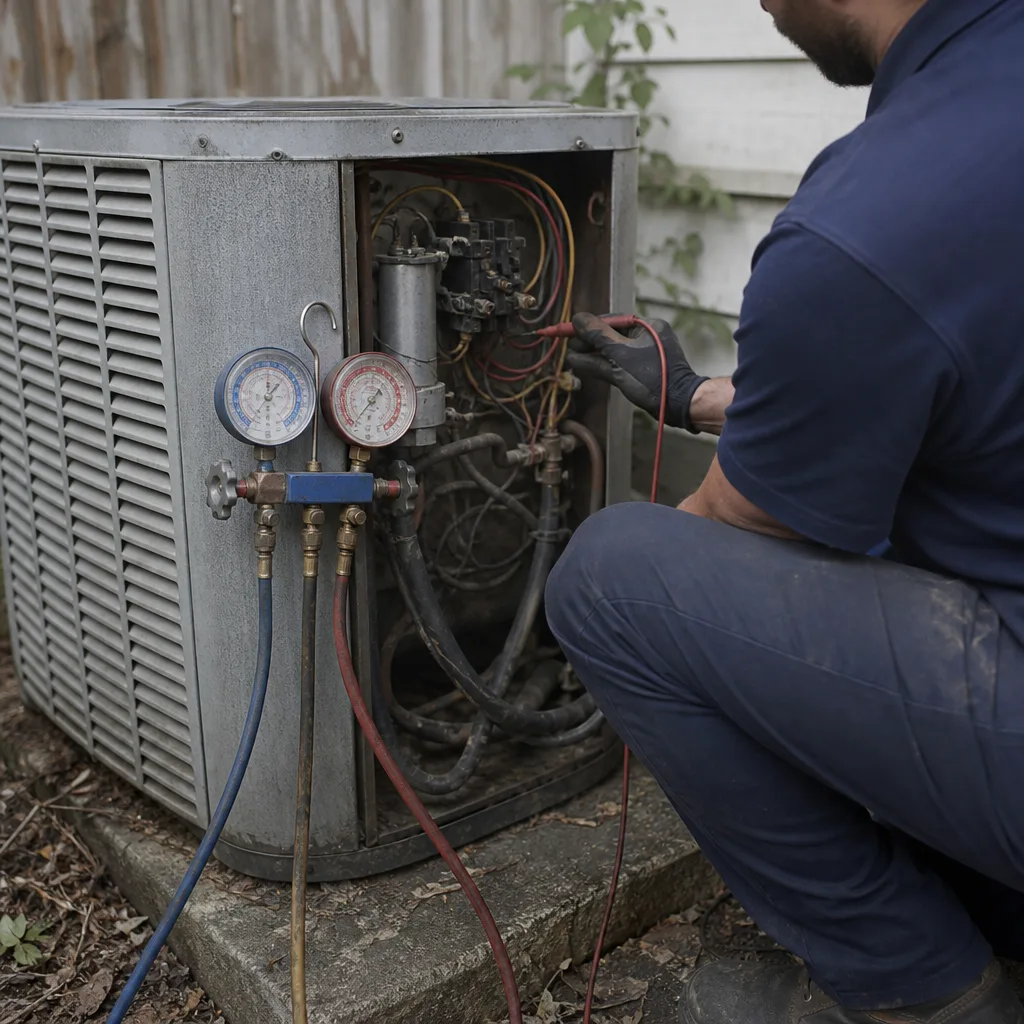
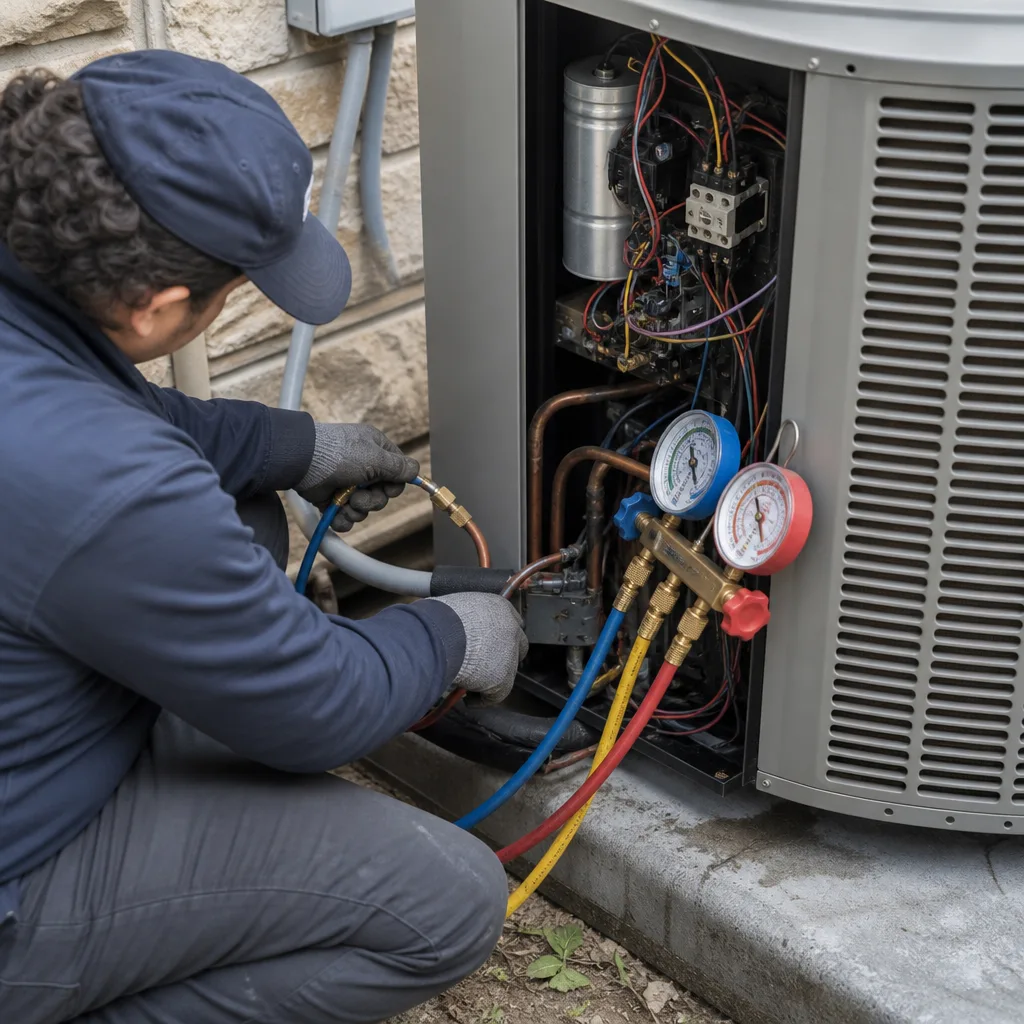
- A bulging or leaking capacitor body. The top of the capacitor should be flat. If it’s rounded upward or you see oily residue around the base, the internal dielectric has overheated and the part has failed or is close to it. This is visible only with the service panel removed, which is a job for a trained technician.
- The system trips the breaker when it tries to start. A shorted capacitor can pull enough current to trip the breaker. If this happens repeatedly, don’t keep resetting the breaker, something is genuinely wrong and it needs a professional look.
See the difference
 Before
 After
After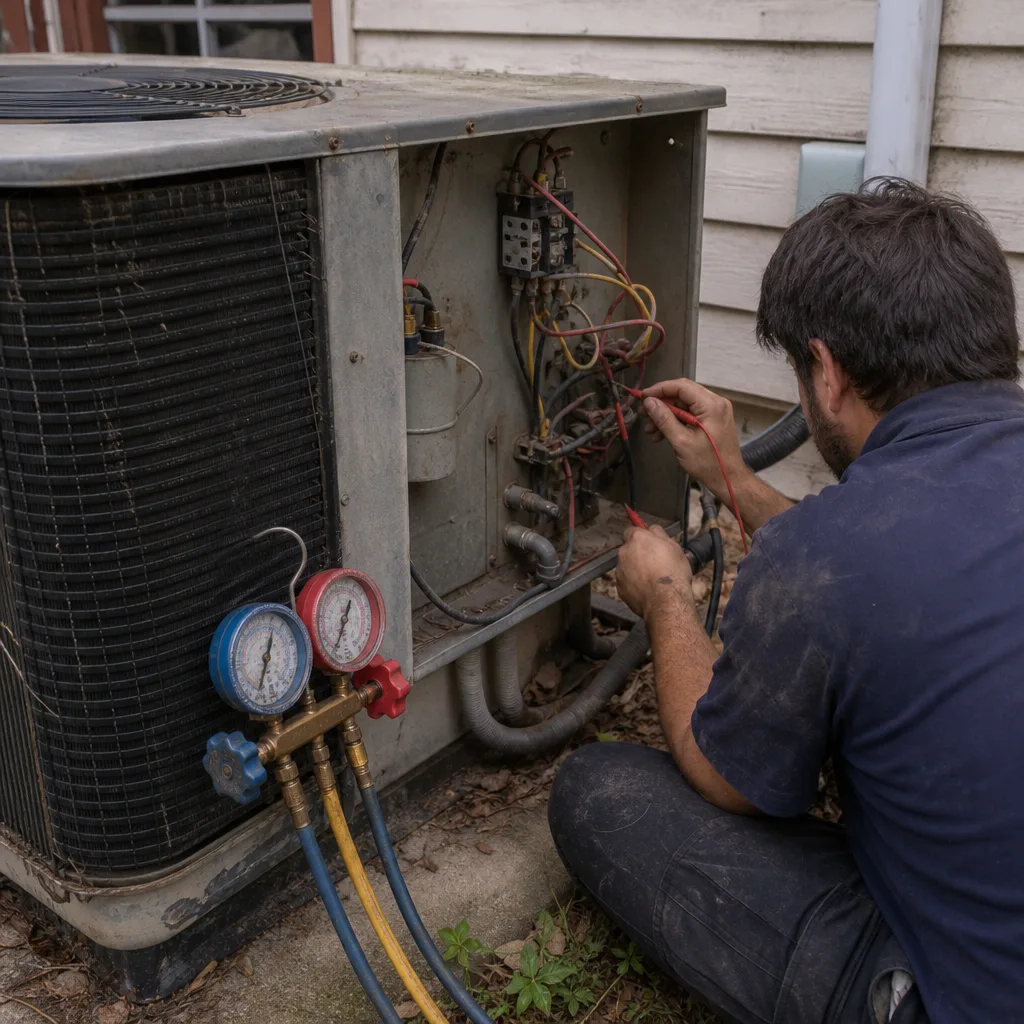 Before
 After
After Before
 After
AfterReplacement Cost & What’s Included
In Dallas, an American Standard capacitor replacement typically runs $150 – $450 installed, and most jobs land between $180 and $275. Two things drive the range: whether you have a single capacitor for both the compressor and fan (a dual-run, which is cheaper to replace) or separate capacitors for each, and which capacitor rating your specific American Standard unit calls for. Higher-µF capacitors for larger tonnage systems cost more, but not dramatically.
Here’s what we include in that price, spelled out so there are no surprises:
- The capacitor itself, matched to your unit’s exact µF, voltage, and terminal configuration
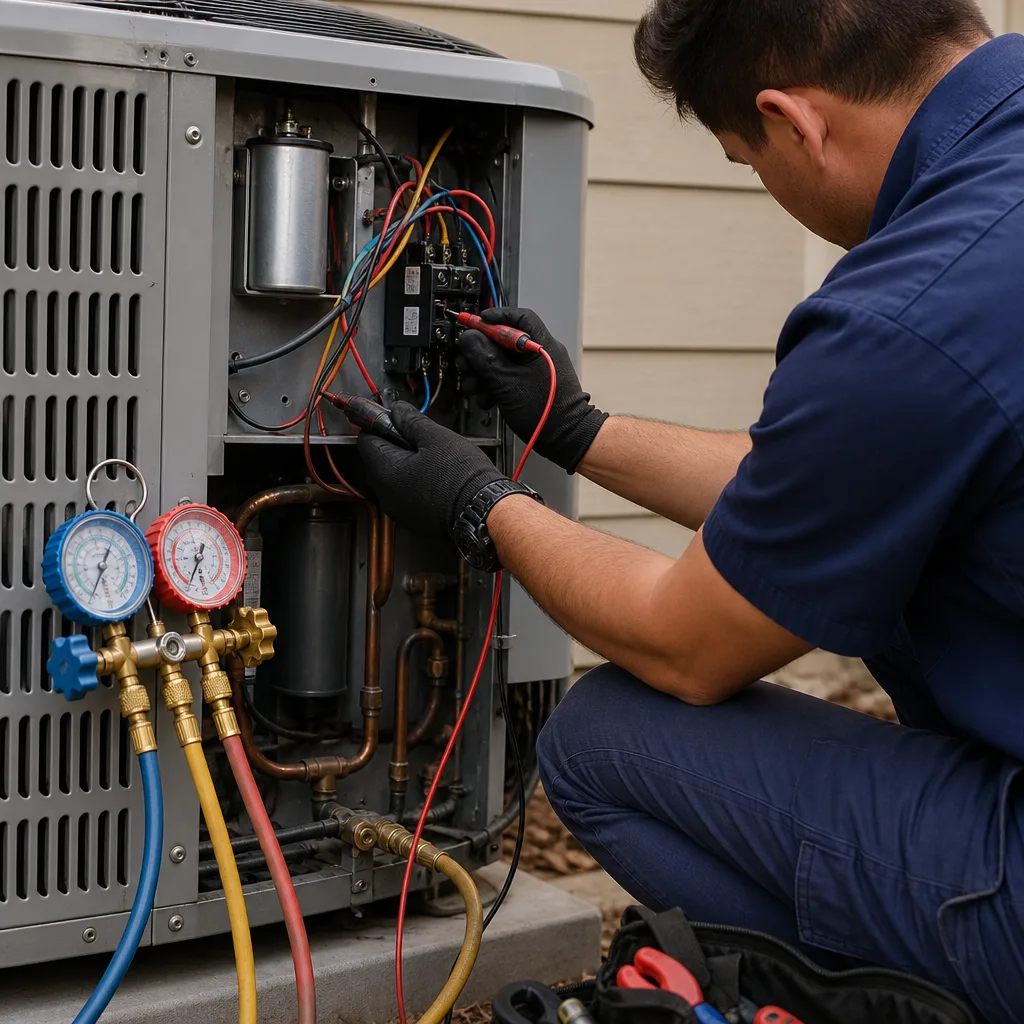
- Labor to replace it, including testing the old part to confirm it failed and testing the new part under load after installation
- A check of the contactor and wiring at the outdoor unit, because a failing capacitor often points to a contactor that’s also degrading
- Written price before we start. You’ll see and agree to the number before any work begins, every time, no exceptions
- A written guarantee on the repair. If this capacitor fails within the guarantee period, we return and replace it at no charge, covered by our 365-Day Done Right Promise
We quote the total price, not a low parts price with labor added after the fact. Devin Marlowe has always believed in telling people what a repair costs before they commit to it, and that’s the only way we’ve ever done it.
DIY or Call Us?
Here’s the honest answer, and I want to be careful with this part. A capacitor stores enough electrical charge to seriously hurt you, even when the power to the unit is off. It doesn’t discharge on its own, and the wrong move with a screwdriver across those terminals can cause a shock, a burn, or worse. This is not a part to “just take a quick look at.” Even with the breaker off and the panel removed, the capacitor itself can hold a dangerous charge for days. If you’re not trained to test and discharge capacitors safely, opening that panel is where DIY stops being worth the savings.
What you can safely do from the outside: confirm the breaker is on, check that your thermostat is calling for cooling, and listen for the hum we described above. That information helps us diagnose faster. Beyond that, leave the panel closed and call us. We’ll send a background-checked, uniformed technician, and you’ll get their name and photo before they arrive. When we show up, they’ll have a photo ID badge at the door. If the person standing there isn’t who we told you to expect, don’t open the door. Call us at (325) 312-3269 and we’ll sort it out immediately. That’s the Threshold Standard, and it’s how we’ve done every call since day one.
FAQs
Expect 5 to 10 years in the Dallas climate, but many fail sooner. The combination of extreme outdoor heat, voltage fluctuations on the grid during August heat waves, and frequent cycling shortens capacitor life measurably compared to cooler regions. If your unit is 7 years old and still on the original capacitor, it’s worth having it tested during your next tune-up. Call (325) 312-3269 and we can check it while we’re there, no extra charge when it’s part of a tune-up visit.
No. Capacitors are sealed, non-serviceable components. There is no repair path; the part gets replaced when it fails. The good news is that a replacement capacitor is one of the least expensive parts on your outdoor unit, and the swap takes under an hour in most cases.
Most American Standard capacitor replacements take 30 to 60 minutes from arrival to done. That includes confirming the diagnosis, testing and replacing the part, and verifying the system starts and runs correctly before we leave. We don’t leave a Dallas job site until the unit runs the way it should, and we can usually get to you same day for a capacitor replacement because we stock the common American Standard sizes on the truck.
We stock the most common American Standard capacitor sizes on every truck: 35/5, 45/5, 50/5, 60/5, 70/5, and 80/10 µF, in 440-volt ratings. If your unit uses an uncommon size, we can typically source it locally the same day. The only wait is the drive to your door. Call (325) 312-3269 and we’ll tell you over the phone whether your specific American Standard model needs something we keep on hand.
Tell me what’s broken, I’ll tell you what it costs, and we’ll get your house back to comfortable. That’s how Devin Marlowe runs every call at Brandt HVAC Co Dallas, and it’s how we’ll handle yours.
Written by Devin Marlowe, Owner, Brandt HVAC Co Dallas at Brandt HVAC Co Dallas, serving Dallas and nearby areas.