
Last updated October 16, 2026
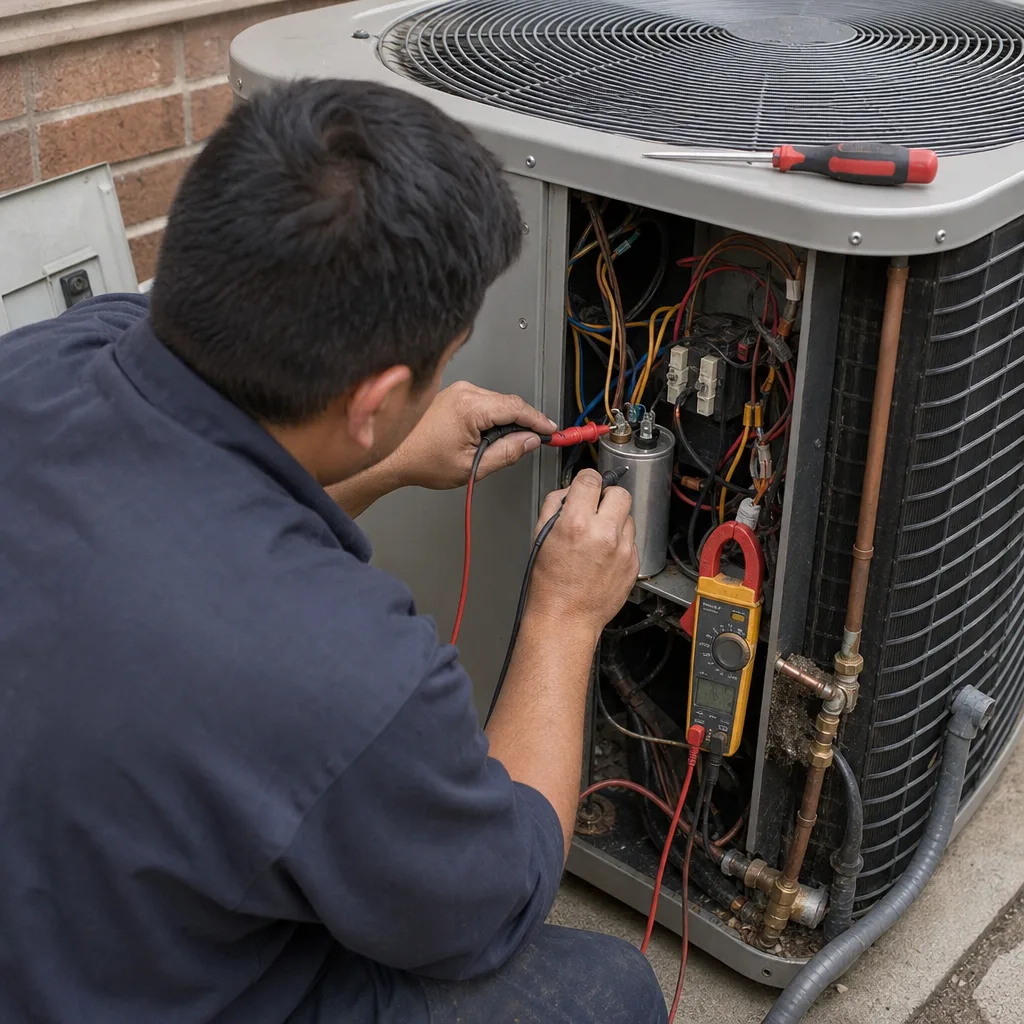
 AC repair
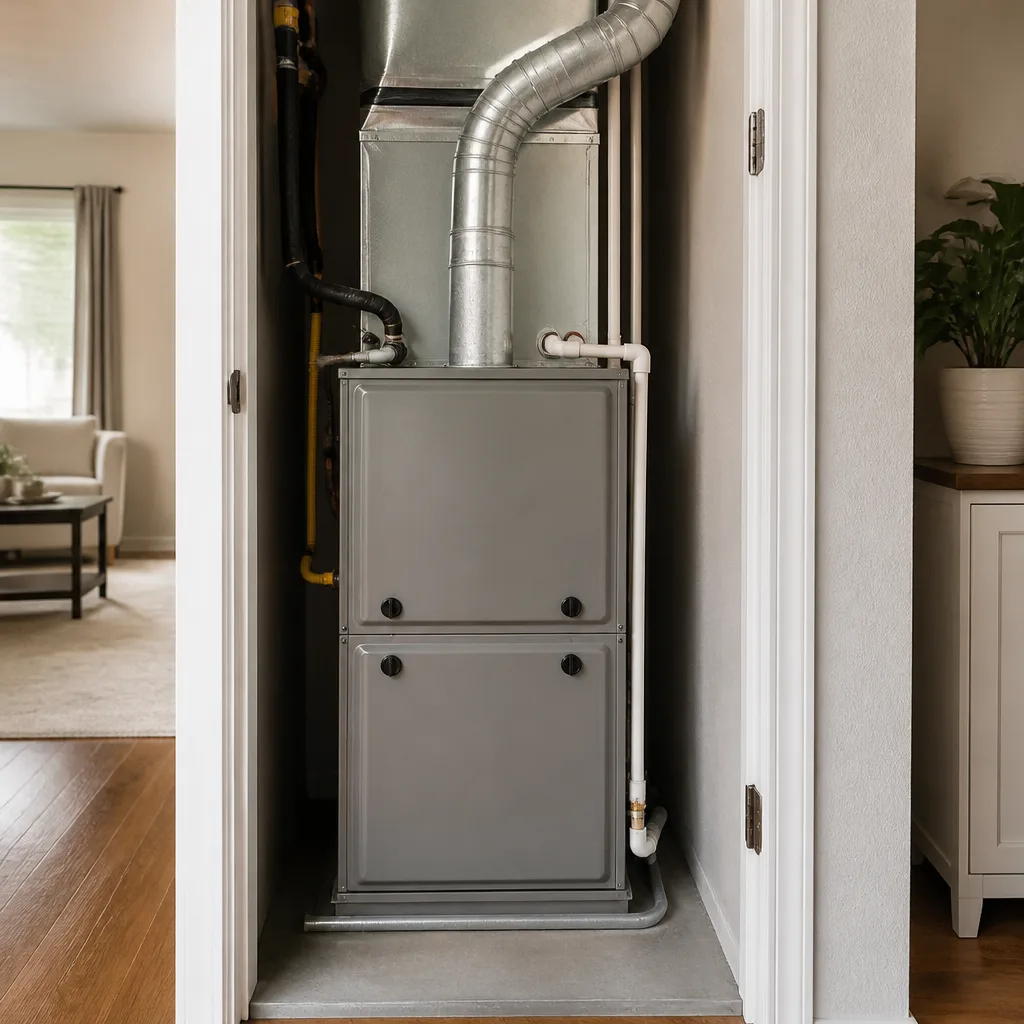 Furnace & heating
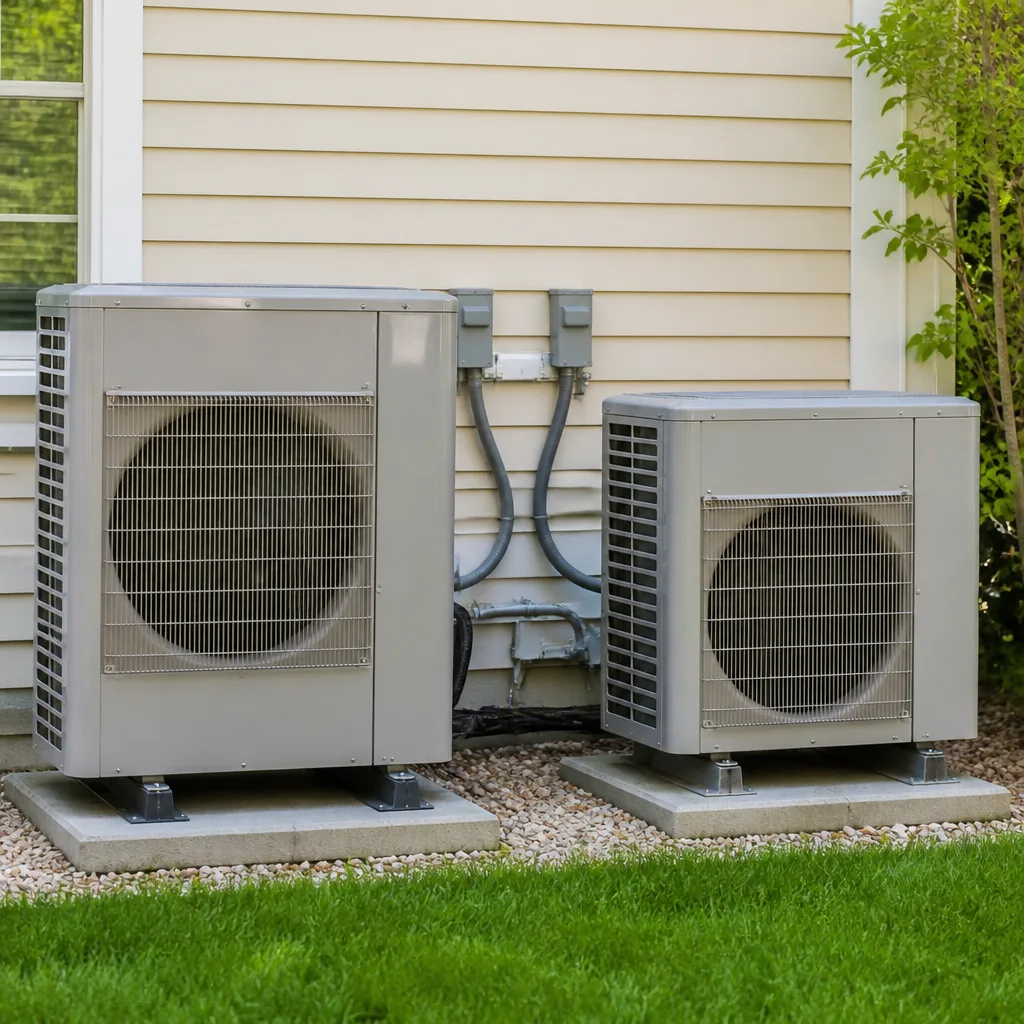 Heat pumps
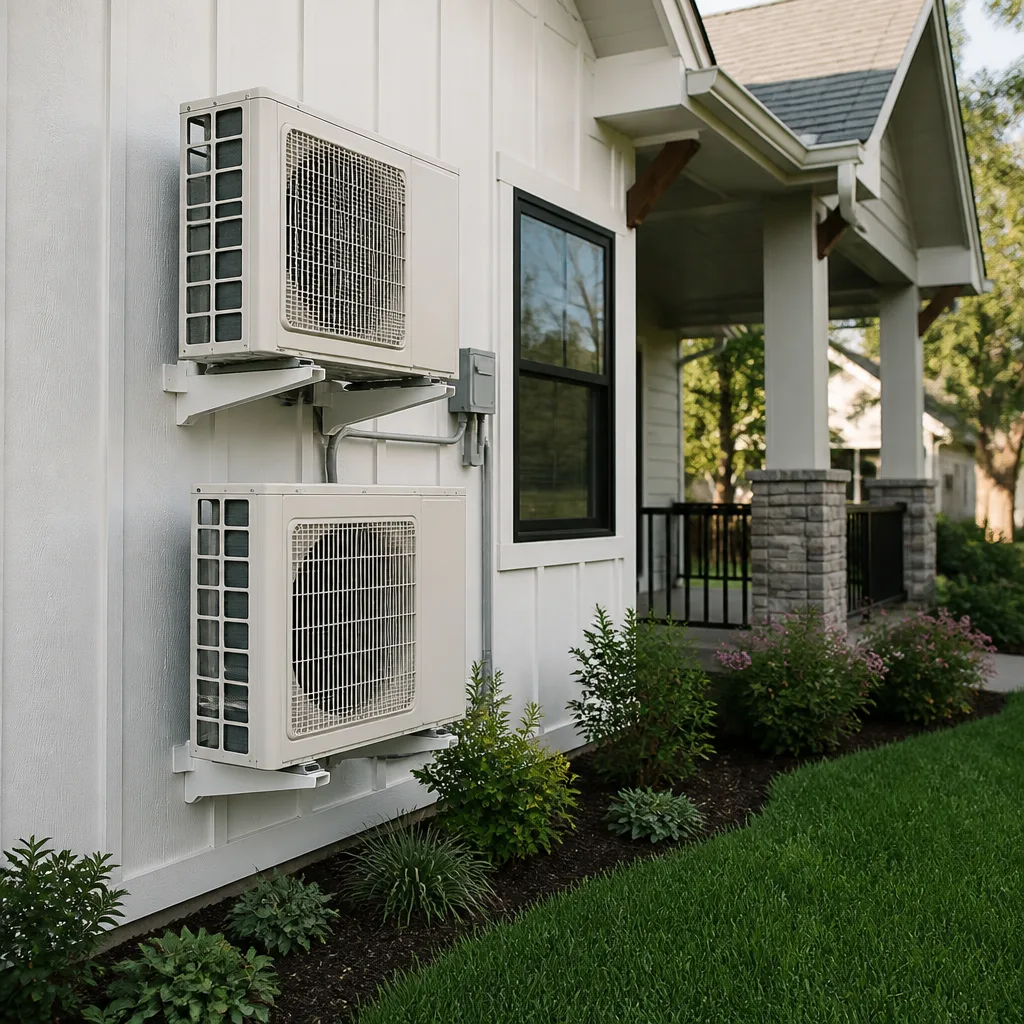 Ductless mini splits
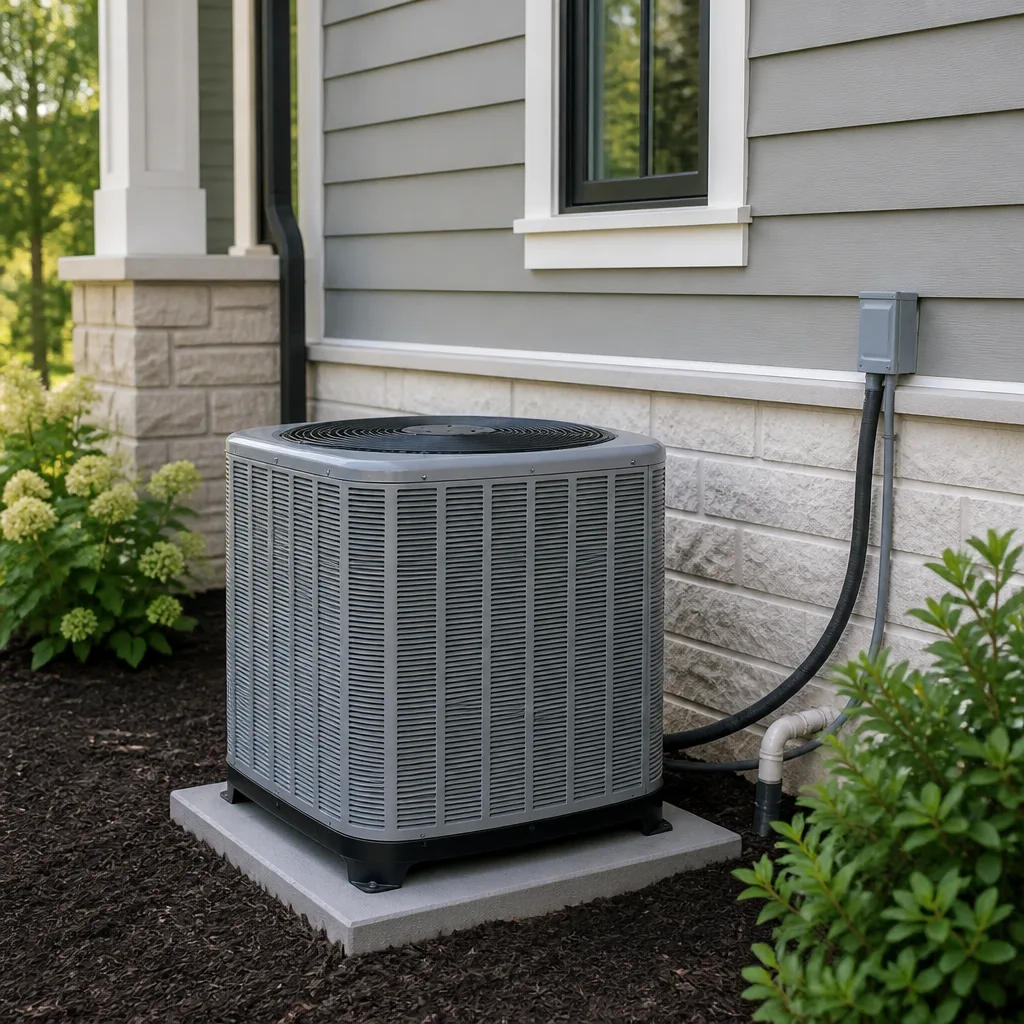 Carrier
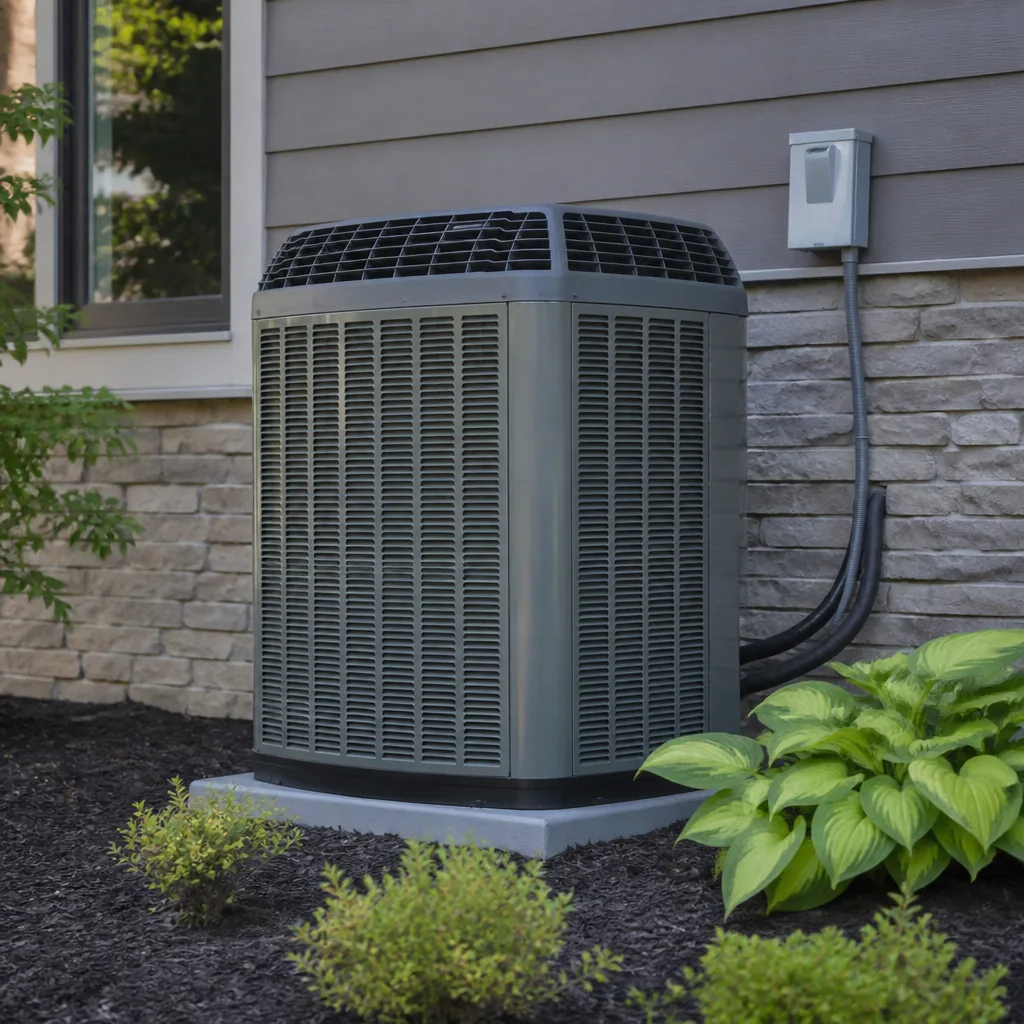 Trane
Trane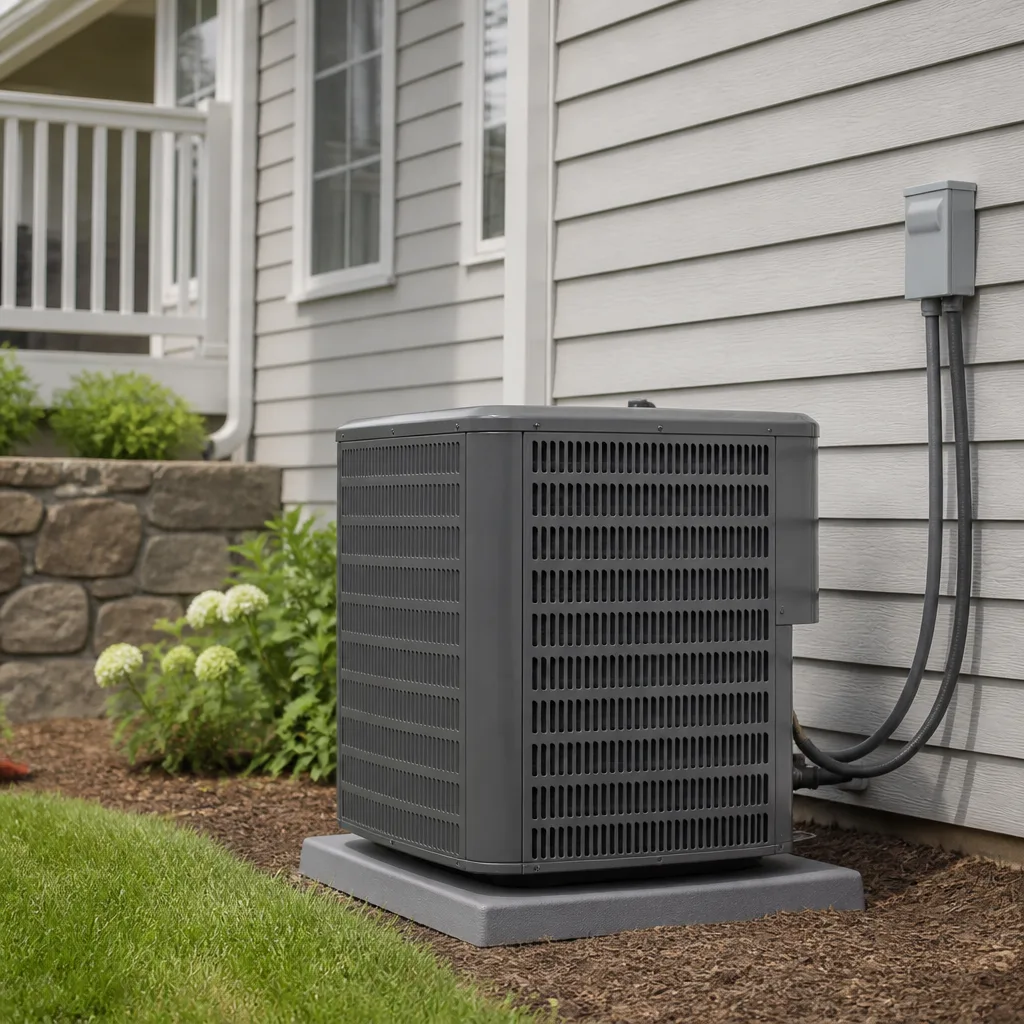 Goodman
Seasonal tune-up and full diagnostic on your Carrier, Trane, or Goodman system - readings shown to you before any repair is proposed
Diagnosis first, numbers second - you approve the repair price before a single part goes in.
Get your free estimateThe Complete Guide to HVAC in Dallas
Dallas recorded more than 30 days above 100°F in 2023, yet most HVAC guides written for “Texas homeowners” were built around Houston’s humidity, not Dallas’s dry heat and freeze-thaw clay. That distinction matters more than most people realize. This guide maps every heating and cooling decision you’ll face as a Dallas homeowner to the specific conditions of North Texas: shifting clay soil, a deregulated contractor market, utility demand-response programs, and equipment that has to handle a 70-degree temperature swing between January and July. By the end, you’ll know what actually drives repair costs here, when replacement makes financial sense, and how to avoid the mistakes that cost Dallas homeowners thousands.
Styles & brands we work with
Quick Answer
HVAC in Dallas means designing, installing, repairing, and maintaining heating and cooling systems for a climate that swings from 105°F summer days to freezing winter nights, often within the same year. Most Dallas homes use a central split system: an outdoor condenser, an indoor evaporator coil, a gas furnace, and ductwork run through the attic or slab. Expect to pay $6,500 – $14,000 for a full system replacement depending on equipment size and efficiency, $120 – $450 for most repairs, and $89 – $180 for seasonal maintenance. The biggest local factors are clay soil stress on refrigerant lines, the deregulated contractor market, and rising summer electricity rates driven by Oncor’s delivery charges.
Table of Contents
- How Dallas Climate Shapes Your HVAC System
- Why Dallas Clay Soil Matters for Your AC and Ductwork
- The Deregulated Texas Contractor Market: What You Actually Risk
- Three Climate Zones Inside the Dallas Metro
- Oncor Demand-Response Programs: What They Mean for Your Bill
- Repair vs. Replace: A Plain-Language Decision Tree
- What HVAC Repairs Actually Cost in Dallas
- Maintenance That Matters: What to Do Yourself and What to Leave Alone
- Common Mistakes to Avoid
- When to Call a Professional
- Frequently Asked Questions
- The Bottom Line
How Dallas Climate Shapes Your HVAC System
Dallas sits in a unique spot on the weather map. We’re far enough inland to avoid Gulf Coast humidity for most of the summer, but close enough that August dew points still climb into the upper 60s some weeks. That combination means your air conditioner has to handle both sensible heat (lowering the temperature on the thermostat) and latent heat (removing moisture from the air). A system sized only for temperature will leave your home feeling damp and sticky even when the thermostat says 72°F.
Winter is the real wildcard. Dallas averages about 1.5 inches of snow per year, but ice storms hit regularly enough that February 2021 left hundreds of thousands of North Texas homes without power for days, and February 2023 brought more freezing rain to the metro. Furnaces here need to handle sustained runs in the teens and occasional dips into single digits. That’s why most Dallas homes pair a gas furnace with an electric AC rather than relying on a heat pump alone. A standard heat pump loses heating capacity as outdoor temperatures drop, and when Dallas gets into the teens, that loss becomes a comfort problem. Gas furnaces don’t care what the outdoor temperature is – they burn fuel and produce heat regardless.
The swing between seasons is what kills equipment early. Your AC runs 2,000+ hours per summer in Dallas. Your furnace might run 800 hours in a cold winter. That’s a heavier load cycle than most of the country, and it means maintenance schedules should be front-loaded for summer, not evenly spaced through the year.
What This Means for Equipment Selection in Dallas
- AC sizing matters more than SEER alone. An oversized AC short-cycles: it cools the air fast, never runs long enough to dehumidify, and wears out compressors early. An undersized AC runs constantly on 100°F days and can’t hold setpoint. Both are common in Dallas because many homes were built with rule-of-thumb sizing.
- Furnace efficiency is a judgment call. A 95% AFUE furnace costs about $600 – $900 more than an 80% unit installed, and saves roughly $80 – $140 per year in Dallas gas costs. Payback is 6 – 8 years. If you plan to stay in the home longer than that, the high-efficiency furnace makes sense.
- Two-stage equipment handles the shoulder seasons better. Spring and fall in Dallas can have 40-degree temperature swings in a single day. Single-stage equipment is either full-on or full-off. Two-stage runs at a lower setting when demand is light, which keeps temperatures steadier and pulls more humidity out of the air.
Why Dallas Clay Soil Matters for Your AC and Ductwork
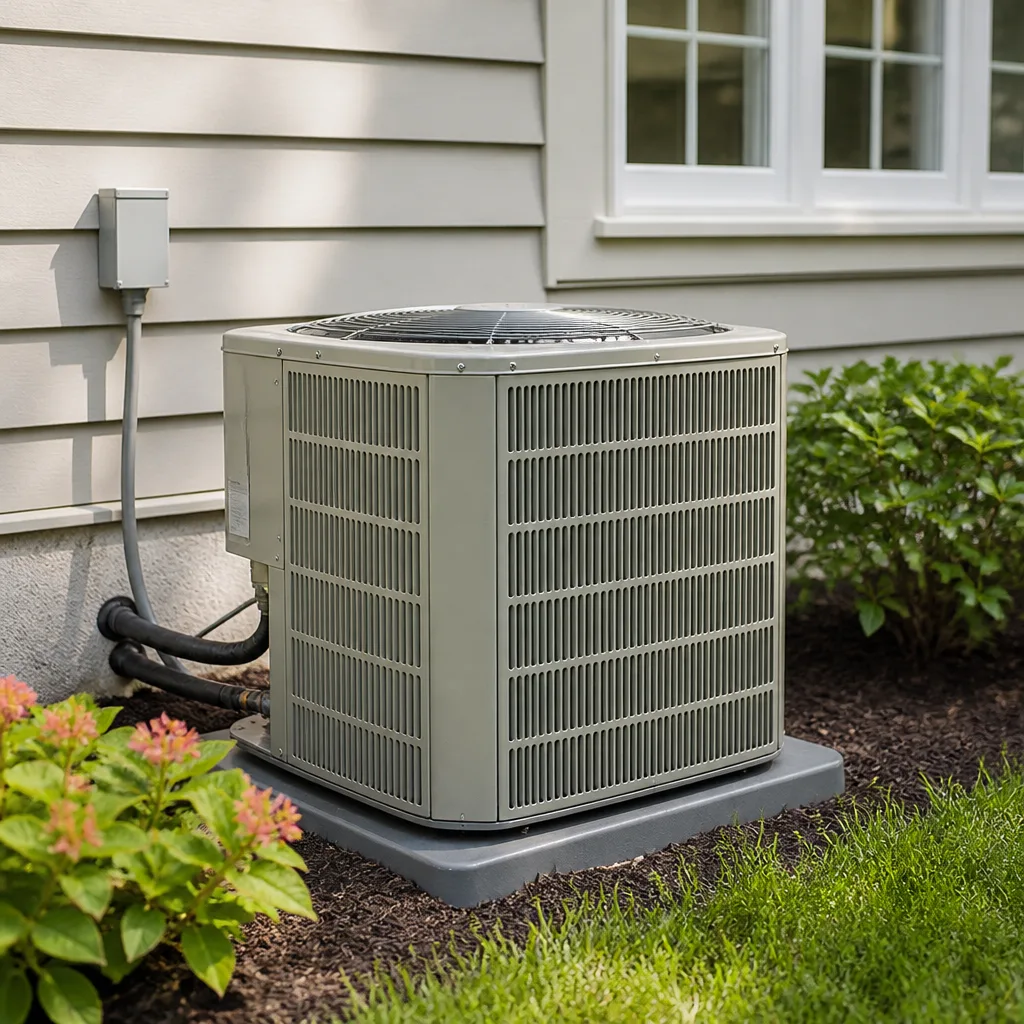
Here’s something national HVAC guides never mention: Dallas sits on expansive clay soil, and that soil moves. A lot. The clay beneath most Dallas neighborhoods – Preston Hollow, Lake Highlands, Mesquite, Garland, Richardson – absorbs water during the rainy spring and contracts during summer drought. That expansion and contraction shifts concrete slabs by millimeters, sometimes centimeters. Over a decade, a slab that has moved even a half-inch can crack PVC condensate drain lines, stress copper refrigerant lines where they enter the foundation, and pull ductwork connections loose where the plenum meets the floor vents.
In our experience running AC repair in Dallas, we see this pattern constantly: homeowners losing refrigerant charge slowly year after year, or chasing musty smells that turn out to be disconnected duct boots letting attic air into the house. The fix is not always a new AC unit. Sometimes it’s reconnecting ductwork, sealing the plenum, or rerouting a stressed line set. A technician who knows Dallas soil will check these things first. A technician who doesn’t will sell you a new compressor.
Slab-fed ductwork deserves special attention. Many Dallas homes built between 1960 and 1990 ran air ducts through the slab itself. When the slab shifts, those ducts crack, corrode, and fill with dirt, and the airflow loss can be dramatic: 20% to 40% of conditioned air ending up under the house instead of in it. If your home has slab ducts and you’ve noticed certain rooms never cool or heat properly, that’s the likely culprit. The repair is either trenching and replacing the bad sections or abandoning the slab system and running new flex duct through the attic. Both are multi-thousand-dollar jobs, but they fix the problem instead of masking it with a bigger unit.
The Deregulated Texas Contractor Market: What You Actually Risk
Texas does not require HVAC contractors to hold a statewide trade license. Electricians and plumbers have state licensing boards. HVAC technicians do not. What exists instead is a patchwork: some cities require registration, some require nothing, and TDLR regulates the refrigerants themselves but not the people handling them in every context. In practice, this means a homeowner in Dallas can legally hire an unlicensed, uninsured HVAC company to install a $12,000 system, and if the install goes wrong, the homeowner has no state board to file a complaint with and no guaranteed path to recovery.
That’s the background. Here’s what it means for you, specifically:
- Anyone with a truck and a gauge set can call themselves an HVAC company. No proof of training, no apprenticeship requirement, no test. The state won’t stop them.
- Permit requirements vary by city, and unlicensed companies often skip them. A skipped permit means no inspection, which means a bad install can go undetected until it fails – and when it does, the city won’t help you because the work was never on record.
- Insurance is often absent or inadequate. If an uninsured technician gets hurt on your property, your homeowners insurance can end up paying the claim. That’s a real risk you take when you don’t verify coverage.
- Refrigerant handling has federal EPA requirements. R-410A and the newer A2L refrigerants require certified handling. A technician who doesn’t hold an EPA Section 608 certification is legally barred from even connecting a gauge set to your system. Yet unlicensed companies do it daily in Dallas.
This is why we built our technician verification the way we did. Every Brandt HVAC technician is background-checked and identity-verified before they ever step on your property. You get the technician’s name and photo before the visit, and they show a photo ID badge at the door. If anyone arrives who you weren’t told to expect, that visit is on us and we make it right – that’s the Threshold Verified standard. You should not have to gamble on who’s walking through your front door.
Three Climate Zones Inside the Dallas Metro
The Dallas metro is not one climate. It’s three, and they call for different equipment decisions. Most guides miss this entirely.
1. The Urban Heat Island: Downtown, Uptown, Oak Lawn, Deep Ellum
Dense concrete, asphalt, and high-rise construction trap heat, and the city core runs 5 to 8 degrees warmer at night than the suburbs in July and August. An AC unit at a condo or townhome in the urban core also contends with rooftop heat gain, reduced airflow clearance, and often a smaller footprint than equipment in the suburbs was designed for. If you live in this zone, your AC runs longer hours and starts hotter than the same unit in Richardson. Condensers cramped into retention walls or stacked on high-rise ledges lose capacity faster. Equipment sizing should account for that heat load, and SEER ratings matter more here because the unit simply runs more.
2. The Inner Suburbs: Richardson, Garland, Mesquite, Irving, Farmers Branch
These areas are a mix of 1960s slab-ranch homes, 1980s two-stories, and some newer construction. The biggest climate factor is ordinary: long summer runs, occasional ice storms, clay soil everywhere. These are the homes where maintenance neglect shows up fastest, because the equipment is often 15 to 25 years old and still running on R-22. Ductwork in attics bakes in 140°F heat every summer afternoon, which means insulation quality and sealing matter as much as the AC efficiency rating.
3. The Outer Ring and Rural Fringe: Forney, Rockwall, Waxahachie, Prosper, McKinney’s Edge
More open land, fewer heat-storing surfaces, slightly cooler nights – but bigger homes, longer duct runs, and often all-electric systems where gas lines don’t reach. If you’re on a heat pump out here, winter performance matters more than it does in the core. A standard heat pump with electric resistance backup will cost noticeably more to run in January than a gas furnace, because the backup strips are expensive resistance heat. Some homeowners in this zone add a propane tank and convert to a dual-fuel setup: heat pump for mild cold, propane furnace for deep cold.
The takeaway: the same 3-ton AC that cools a 1,800-square-foot home in Mesquite might struggle in Uptown or over-perform in Prosper. Sizing is always local, and Dallas’s internal variation makes it more local than most metro areas.
Oncor Demand-Response Programs: What They Mean for Your Bill
Oncor delivers electricity to most of Dallas County and much of the surrounding metro, and they run demand-response programs that pay you to reduce consumption during peak hours. Those programs interact with your HVAC in ways that most guides never explain.
Here’s the plain-language version. When Dallas hits 100°F in August, the grid strain peaks in the late afternoon and early evening, roughly 4 PM to 8 PM. That’s also when most people’s AC units are working hardest inside the house. Oncor’s demand-response programs offer bill credits or direct payments to homeowners who agree to let the grid manager cycle their AC condenser off for short intervals during those peak hours – typically 10 to 15 minutes per half-hour. A smart thermostat, like an Ecobee or certain Honeywell models, handles the cycling automatically.
Is it worth it? For most Dallas homeowners, yes, with a caveat. The typical credit is $30 to $80 per summer, depending on the program and your usage profile. That’s not going to pay for a new system. What makes it valuable is the combination: the credit plus the fact that the program reduces the chance of rolling blackouts, which in Dallas are not theoretical. February 2021 was a winter event, but summer grid strain has prompted ERCOT conservation appeals in recent years too.
The caveat: if your home is already undersized or your AC is older and struggling, enrolling means your interior temperature will drift up during peak hours, possibly to uncomfortable levels. In our experience, these programs work best for homes with properly sized, well-maintained systems. If your AC can’t hold 76°F on a 100°F day without cycling, skip the program and fix the AC first.
You can also enroll in a demand-response program that cycles your thermostat up by only 2 to 3 degrees during peak hours rather than shutting the condenser off entirely. That mode is gentler on equipment and more comfortable inside, and the credit is usually comparable.
Repair vs. Replace: A Plain-Language Decision Tree
Every Dallas homeowner eventually faces the same question: put $800 into a 14-year-old system, or put $9,000 into a new one? Here’s the decision sequence we walk through with customers, and it will get you to an honest answer without a sales pitch.
Step 1: What refrigerant does your system use?
If your AC was manufactured before 2010, it likely runs on R-22, the refrigerant the EPA phased out of production in 2020. R-22 still exists, but it’s reclaimed or recycled stock, and the price has climbed dramatically. A typical R-22 recharge in Dallas now runs $150 – $300 per pound, and a system that holds 5 or 6 pounds will cost $750 to $1,800 for a simple refrigerant top-off. If the leak is in the evaporator coil or compressor, the repair total can push $2,500 or more. At that point, replacing the entire system with one that runs R-410A or the newer A2L refrigerants starts to make financial sense, because you’re no longer paying scarcity pricing on refrigerant every time you need a top-off.
Step 2: How old is the system, and what’s the compressor warranty status?
Most manufacturer warranties run 10 years on the compressor and parts if the system was registered when installed. If you’re past year 10, you’re self-insuring. A compressor replacement out of warranty typically runs $1,900 – $3,200 in Dallas depending on the unit size. That’s a repair that returns a 12-year-old system with a 15-year-old outdoor coil back into service, and you’re betting on the rest of it holding up. If the system is past 12 years old and the compressor fails, replacement is usually the right call, because the money you’d spend on the compressor buys roughly 20% of a new, warrantied system.
Step 3: What’s the repair cost as a percentage of replacement cost?
The old rule of thumb is 50%. If the repair costs more than half what a new system would cost, replace. We’d modify that for Dallas: if the repair costs more than 40% of replacement and the system is past 10 years old, replace. The reason is the climate load. A Dallas AC that’s already logged 10 summers is on the back half of its useful life, and heavy summer hours mean the next failure is statistically close.
Step 4: Are Dallas utility rebates available that tip the math?
Most North Texas co-ops and municipal utilities – CoServ, Garland Power & Light, Grayson-Collin Electric Cooperative, and others – offer rebates for high-efficiency replacement systems. Typical amounts run $300 to $900 for a 16 SEER or higher AC or heat pump, with additional rebates for variable-speed blowers or smart thermostats. Those rebates don’t exist in the repair path. If you’re replacing, they reduce the effective cost meaningfully.
Step 5: What’s your tolerance for unpredictability?
Some Dallas homeowners want to keep a working 14-year-old system running as long as possible and accept the risk of a July failure. Others will pay to remove that risk. Both positions are rational. What’s not rational is ignoring the repair history: if the system has had three repairs in the last two years, the fourth is coming.
What HVAC Repairs Actually Cost in Dallas
Here are the line-item ranges we see most often in the Dallas market. These are total prices, parts and labor included, for typical single-family residential systems. The variance depends on brand, equipment accessibility, and whether the repair is under warranty. Carrier, Trane, and Lennox parts tend to run 15 – 30% higher than Goodman or Rheem equivalents, which is worth knowing when you’re comparing quotes.
- Capacitor replacement: $180 – $350. The most common summer repair in Dallas. A failed capacitor means the outdoor fan or compressor won’t start, and it fails most often during heat waves when the unit is stressed.
- Condenser fan motor replacement: $350 – $600. Almost always heat-related. The fan motor that pulls air through the outdoor coil runs constantly in Dallas summers, and bearing failure is common past year 8.
- Refrigerant leak repair plus recharge: $450 – $1,800 depending on leak location and refrigerant type. Small leaks at the Schrader valve are cheap. Leaks in the evaporator coil or line set are not.
- Furnace igniter replacement: $150 – $300, parts and labor included. This is the classic no-heat call in Dallas winters. The igniter glows to light the burners, and hot-surface igniters eventually crack.
- Thermostat replacement with a smart model: $250 – $600 installed depending on the device.
- Evaporator coil replacement: $1,400 – $2,800. This is the part that sits above your furnace and carries the cold refrigerant. Coil leaks are the most common reason a furnace repair in Dallas turns into an AC repair.
- Compressor replacement: $1,900 – $3,200 out of warranty. The most expensive component in the system, and a repair that should trigger the replace-vs-repair calculation.
- Full system replacement (AC + furnace): $6,500 – $14,000 in Dallas depending on size, efficiency, and duct modifications. A 3-ton 15 SEER AC paired with an 80% furnace in a 1,800-square-foot home typically runs $7,500 – $9,500. A 5-ton 18 SEER variable-speed system in a 3,000-square-foot home can run $12,000 – $14,000.
Every job at Brandt HVAC begins with a written price before any work starts. That’s not a courtesy – it’s how work should be done. You see the number, you agree to the number, and the number doesn’t change unless you approve a change order in writing. Every repair includes a written guarantee stating exactly what’s covered and for how long. Under the 365-Day Done Right Promise, if a repair fails within the guarantee period, we return at no charge and make it right. No argument, no additional invoice.
Maintenance That Matters: What to Do Yourself and What to Leave Alone
AC maintenance in Dallas is not optional if you want a system to survive more than a decade of 100-degree summers. But not all maintenance tasks are created equal, and some that look simple are genuinely dangerous if done wrong. Here’s the honest breakdown.
What You Can Do Yourself
- Change the air filter every 30 to 60 days. In Dallas, with summer runtimes what they are, a 1-inch filter should be changed monthly during peak cooling season. A clogged filter restricts airflow, which raises system pressure, reduces efficiency, and causes evaporator coils to freeze. That frozen coil is a $300 service call that you can prevent with a $8 filter.
- Keep the outdoor condenser clear. Grass clippings, cottonwood seeds, and dust collect on the condenser coil. Use a garden hose on a gentle spray to wash the fins from the inside out every spring and fall. Never use a pressure washer – it will flatten the fins and destroy airflow.
- Keep indoor vents open and unobstructed. Closing more than 20% of your vents increases system static pressure and shortens blower motor life. Furniture pressed against return grilles has the same effect.
- Monitor the thermostat behavior. If the system cycles on and off rapidly, runs constantly without reaching setpoint, or makes new noises, you’re getting an early warning. Early warnings are cheaper to fix than failures.
What to Leave to a Professional
Anything involving refrigerant, electrical connections, or the condensate drain line inside the coil cabinet should be left to a trained technician. Refrigerant handling requires EPA certification, and the newer A2L refrigerants are mildly flammable, which adds another reason not to improvise. Electrical connections inside the condenser and furnace carry lethal current. The condensate drain can be cleared with a wet-dry vac if you know exactly where the trap is, but if the line is buried in the slab or the trap is inside the cabinet, call someone who can open the system safely.
A proper AC maintenance in Dallas visit should include: coil inspection and cleaning if needed, refrigerant level check, electrical connection tightening, capacitor testing, drain line clearing, thermostat calibration check, and a written report of what was found. We do that as a flat-rate visit, and our technicians are not paid on what they sell. If a technician finds a problem, you get a photo and a written price to fix it – not a verbal recommendation with vague pricing pressure.
Common Mistakes to Avoid
- Oversizing the new system. The most common mistake we see in Dallas. Contractors sizing by square footage alone, without a Manual J load calculation, often push a bigger unit than the house needs. An oversized AC short-cycles, dehumidifies poorly, and wears out faster. Insist on a load calculation. If the contractor won’t do one, find another contractor.
- Chasing refrigerant leaks instead of fixing them. Topping off an R-22 system every spring is the most expensive way to keep an old AC running in Dallas, and it guarantees a failure at the worst possible time. Leak search and repair is more cost than a top-off, but it’s a repair, not a subscription.
- Ignoring the drain pan and drain line until water damage appears. Dallas summers produce a lot of condensate. A clogged drain line overflows into the pan, overflows the pan, and the result is ceiling damage or a ruined furnace control board. A $120 maintenance visit beats a $2,500 ceiling repair.
- Skipping fall furnace checks after a brutal summer. The furnace sits idle in a Dallas attic all summer in 140°F heat, accumulating dust and, if the drain pan overflowed, rust and corrosion. A September furnace check catches the igniter, flame sensor, and gas valve issues before the first cold snap.
- Selecting a contractor by lowest bid alone. The deregulated Texas market means low bids often come from unlicensed, uninsured operations with no warranty backing. In Dallas, the lowest bidder is often the most expensive choice over the life of the system.
- Neglecting attic ductwork during an AC replacement. A new high-efficiency system pushing air through leaking, uninsulated 20-year-old ducts will underperform by 20% or more. If the ducts are original and the home is more than 15 years old, budget for duct sealing or replacement at the same time.
- Setting the thermostat dramatically lower to cool the house faster. A standard single-stage AC cools at one speed. Setting it to 68°F when it’s 100°F outside doesn’t make the process faster – it just makes the system run longer and guarantees it won’t reach setpoint until the outdoor temperature drops. Set it where you want it and let it work.
When to Call a Professional
Call a professional when the system is making new noises, not cooling or heating as it did the previous season, cycling oddly, producing unusual smells, or tripping breakers. Call the same day if the system stops working entirely during a Dallas heat wave or a cold snap – a failed HVAC system in extreme North Texas weather is not just uncomfortable, it’s a health risk for anyone in the home who’s older, very young, or has a cardiovascular or respiratory condition. If you see ice on the outdoor line set in the summer, turn the system off and call; running a frozen system adds damage. If you smell gas near the furnace, leave the house and call your gas utility first. For everything else, Brandt HVAC Co Dallas offers free estimates in Dallas – call (325) 312-3269. A person answers, day or night. That’s not a recording. It’s a person.
Frequently Asked Questions
A full AC and furnace replacement in Dallas typically costs $6,500 to $14,000, with the most common configuration – a 3-ton 15 SEER AC paired with an 80% furnace in a 1,800-square-foot home – running $7,500 to $9,500 installed. The range depends on equipment size, efficiency rating, brand, and ductwork condition. Higher-efficiency units from Carrier, Trane, or Lennox tend to price 15 – 30% above comparable Goodman or Rheem models. Call (325) 312-3269 for an exact quote – estimates are free.
Twice a year: a cooling-system service in early spring before the Dallas heat arrives, and a heating-system service in early fall before the first freeze. Homes with pets, heavy dust, or construction nearby often benefit from more frequent filter changes, but the system itself needs a professional inspection twice a year. The spring visit catches condenser problems before they become July failures; the fall visit catches furnace problems before the first ice storm. AC maintenance in Dallas is cheaper than repair and pays for itself in system lifespan.
The most common causes in Dallas are a refrigerant leak (usually in the evaporator coil), a failed capacitor preventing the outdoor fan or compressor from running at full capacity, severely clogged indoor filters, or disconnected and leaking ductwork. The refrigerant leak is the most frequent culprit on systems older than eight years. A technician can diagnose the specific cause with a pressure check and a coil inspection. Call (325) 312-3269 to schedule a diagnostic visit – you’ll get a written price before any repair work is done.
Replace if the system is more than 12 years old, uses R-22 refrigerant, has a failed compressor, or needs repairs totaling more than 40% of replacement cost. Repair if the system is under 10 years old, uses R-410A, and the repair is a component like a capacitor or fan motor. Dallas’s long cooling season accelerates wear, so a system past year 12 is on borrowed time regardless of brand. AC repair in Dallas can extend a system’s life, but there’s a point of diminishing returns, and an honest technician will tell you when you’ve reached it.
It depends on the city. Dallas proper requires a mechanical permit for system replacement, as do most of the larger suburbs like Plano, Garland, and Richardson. Some smaller municipalities and unincorporated areas have lighter requirements. A licensed, insured contractor handles the permit for you as part of the install. If a contractor tells you a permit isn’t needed and the city says otherwise, the work was done illegally, and you may have trouble selling the home later.
The federal minimum for new installations in the South is 14 SEER for split-system air conditioners, but for Dallas’s summer runtime, 15 to 17 SEER is the sweet spot for most homes. Above 18 SEER, the payback period stretches past a decade for most households. If you live in the urban heat island of downtown or Uptown, or if you plan to stay in the home more than eight years, a 16 – 17 SEER two-stage unit from a brand like Trane or Carrier earns its premium through reduced summer electricity costs.
The Bottom Line
Dallas HVAC is its own discipline. The climate swings, the clay soil, the deregulated contractor market, and the grid-strain programs all shape decisions that generic guides never address. The homeowners who win here are the ones who treat HVAC as a system, not a box: they size equipment to the actual house, they maintain it on a Dallas schedule, they fix leaks instead of recharging them forever, and they select contractors based on verification, not vibes. If you remember one thing from this guide, remember this: in Dallas, the cheapest quote is rarely the cheapest total cost, and the best protection you have is knowing exactly who’s walking through your door. Brandt HVAC Co Dallas has served Dallas homeowners since 2003 with written prices, written guarantees, and verified technicians you know by name and face before the doorbell rings.
Call (325) 312-3269 for a free estimate, or visit Brandt HVAC Co Dallas home to learn more about how we work. A person answers the phone, 24 hours a day, 7 days a week – nights, weekends, and holidays.
Written by Devin Marlowe, Owner at Brandt HVAC Co Dallas, serving Dallas since 2003.
See the difference
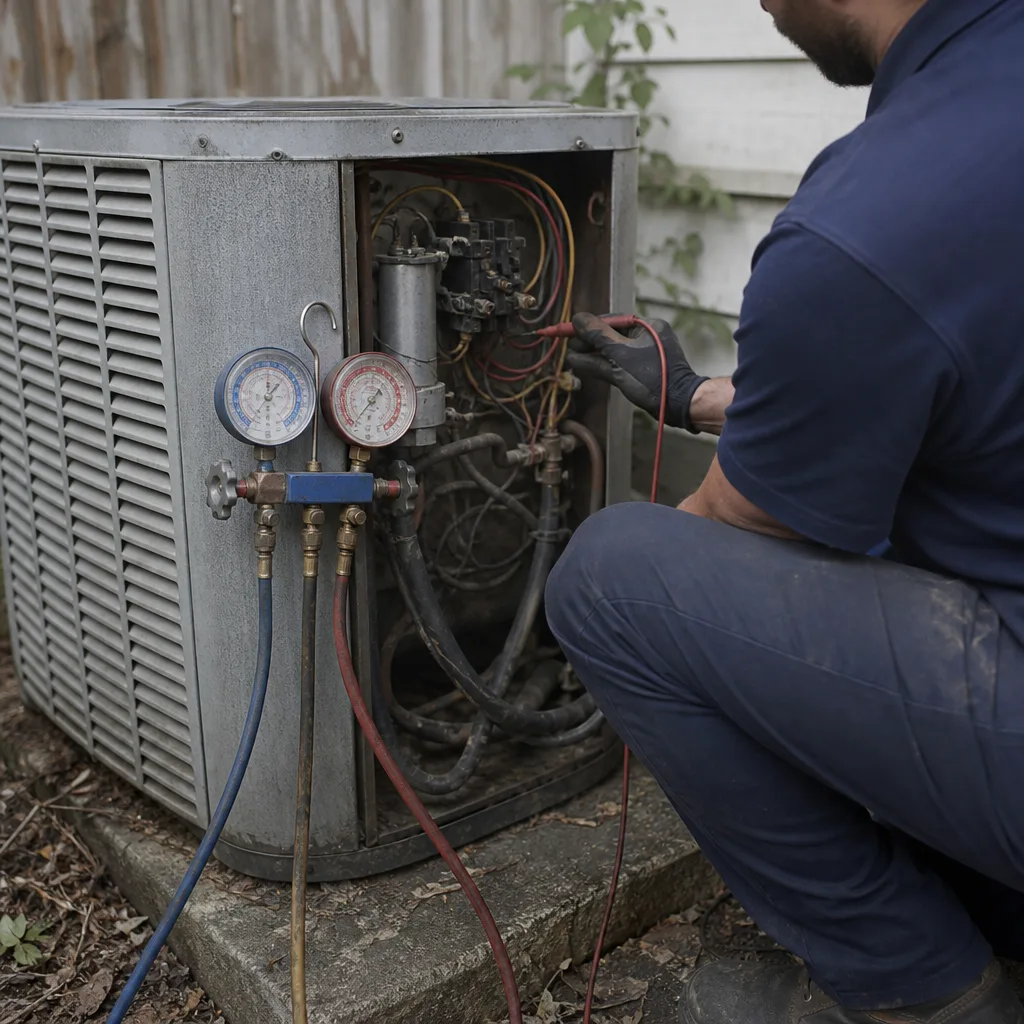 Before
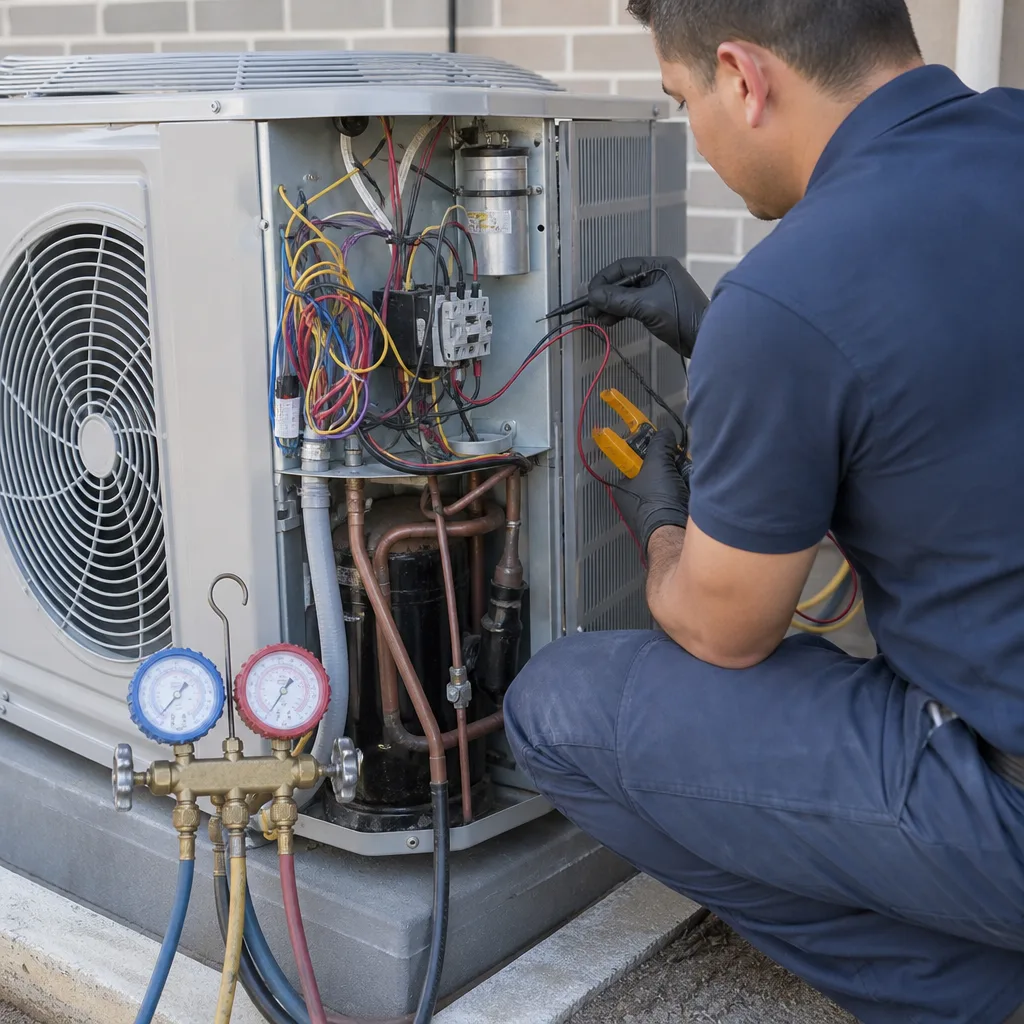
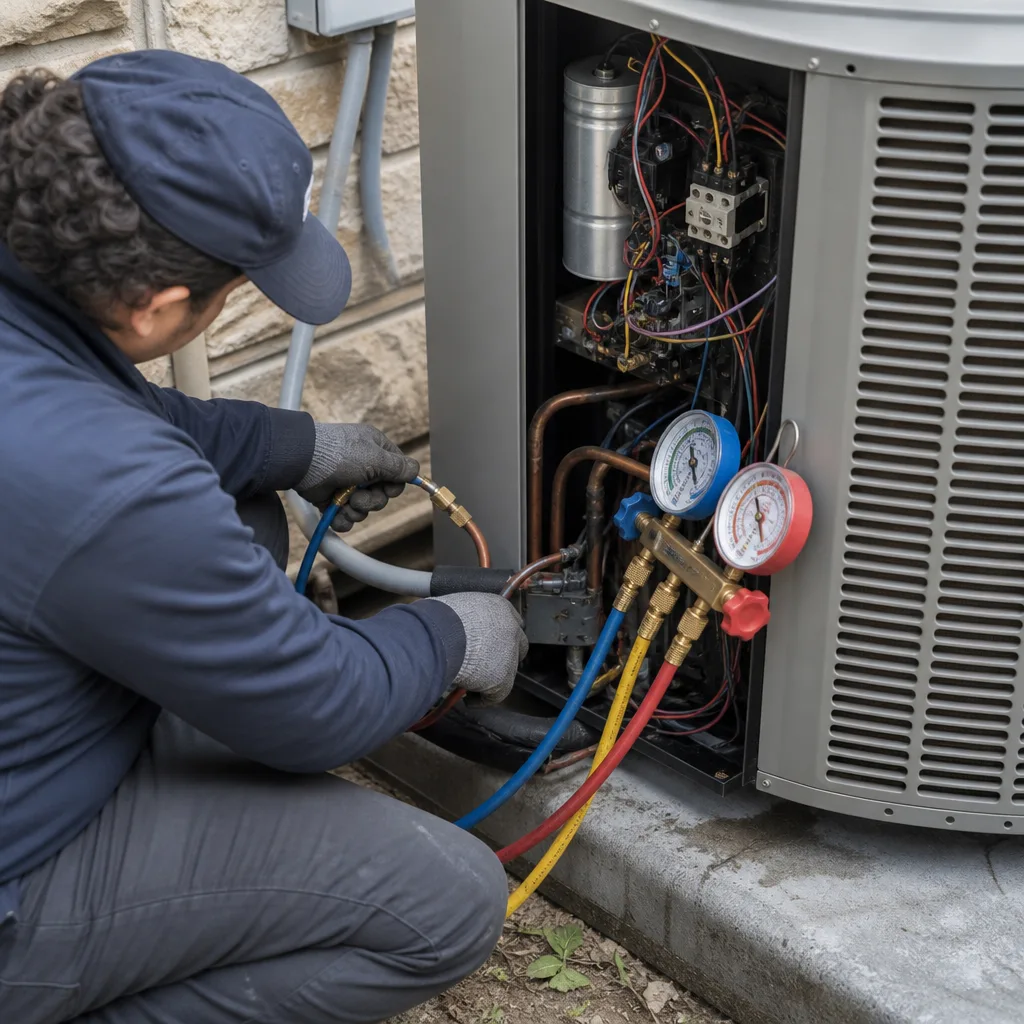 After
After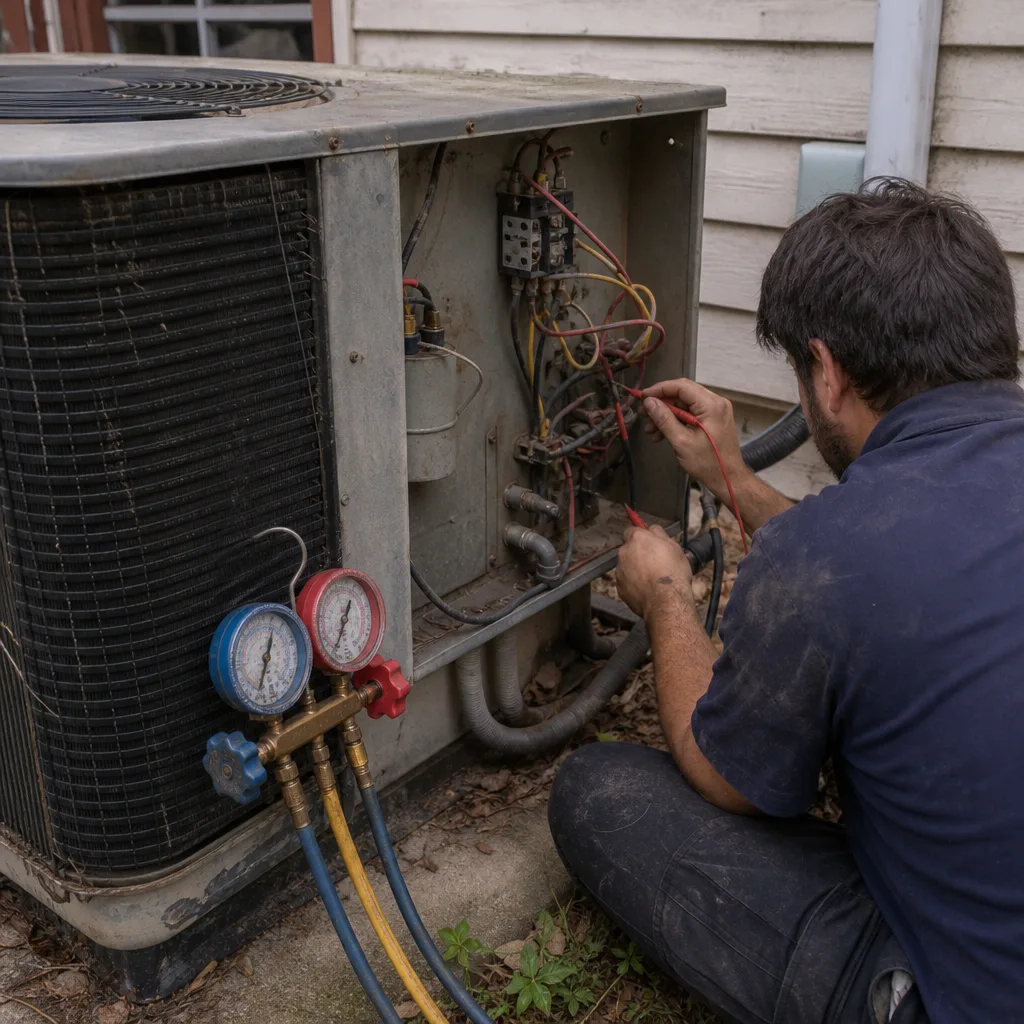 Before
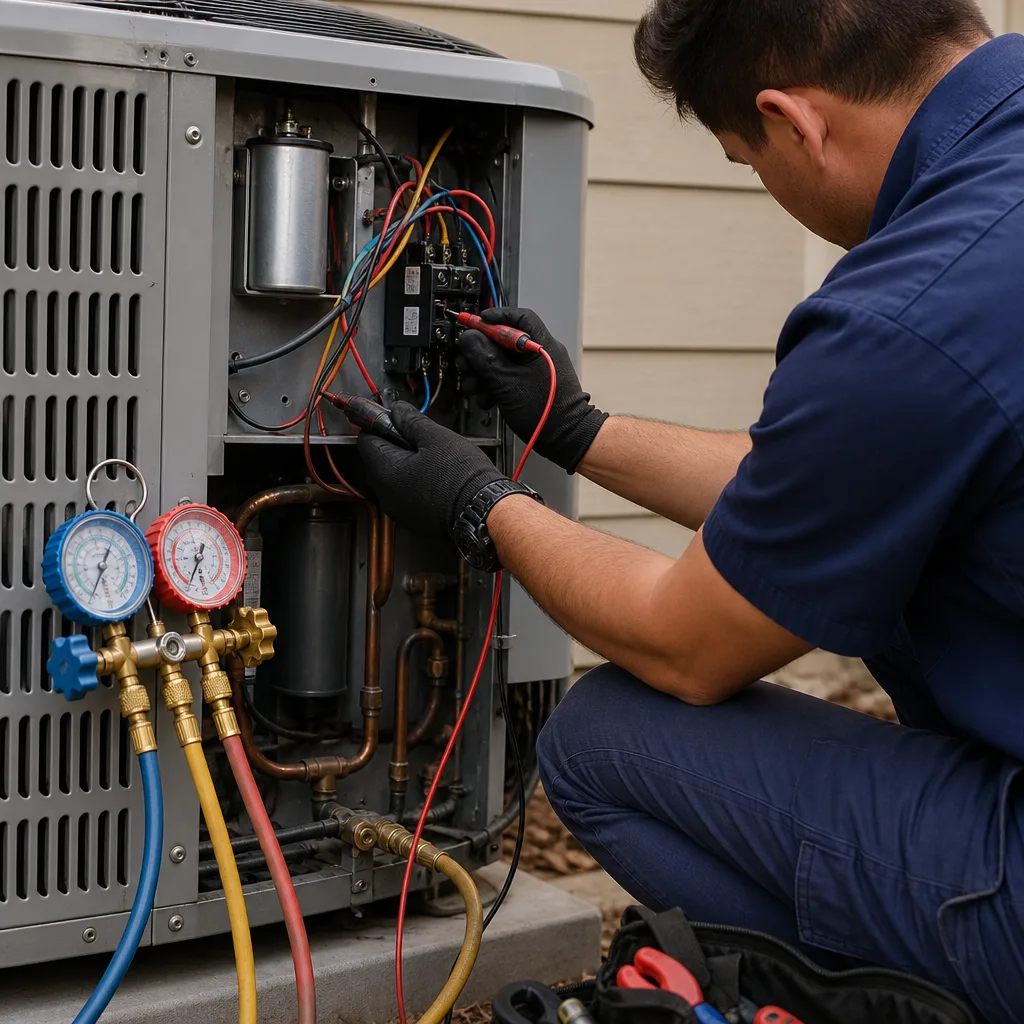 After
After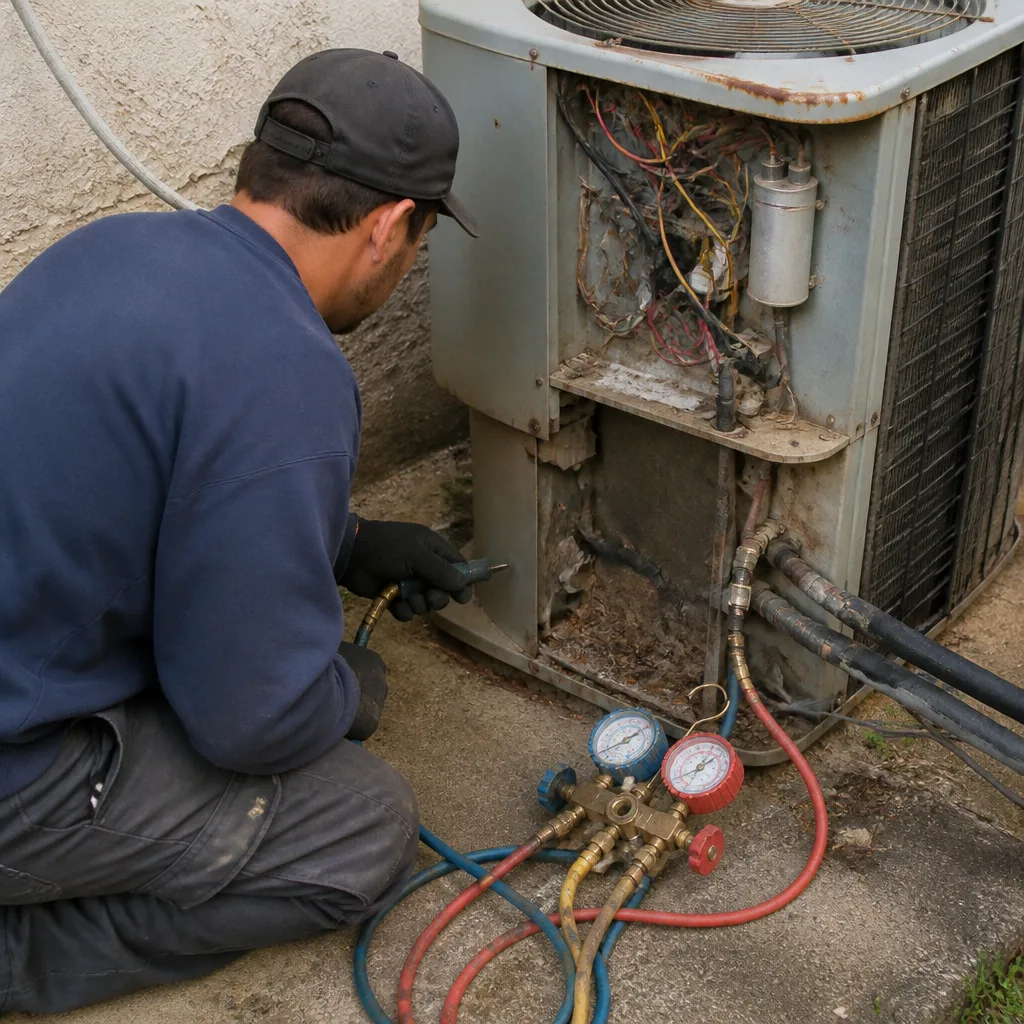 Before
 After
After